A Name That Defines An Industry
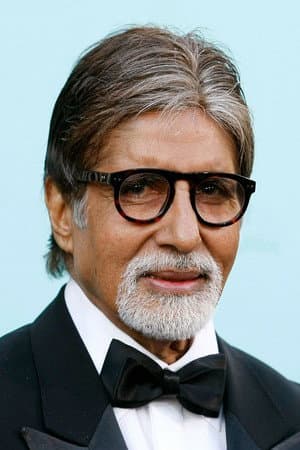
Amitabh Bachchan is a performer in Hindi cinema, born on October 11, 1942, and known to audiences by his nickname Big B. The phrase Hindi cinema describes the Mumbai-based film industry that produces films in the Hindi language. Many people outside the region call that industry Bollywood, and this site uses the name in its plain, descriptive sense: a big commercial film tradition centred on Mumbai.
Over a career that has run for decades, Amitabh Bachchan has starred in more than 200 films. That number alone explains why the industry and its audiences have attached so many labels to one person. He has been called the Angry Young Man, the Shahenshah of Bollywood, Sadi ke Mahanayak, which means superstar of the century, and Bollywood's Star of the Millennium. The most famous verdict from outside India came from the French director François Truffaut, who described him as a "one-man industry". The phrase captures how completely a single performer can carry the output of a film industry.
Before any filmography, one through-line stands out. Amitabh Bachchan is willing to hold the moral weight of a story, whether he plays the hero, the patriarch or a voice the audience never sees on screen.
What Connects The Work
His range runs from leading man to authority figure to narrator, and each register carries the same vocal command. He is as likely to be the gravitational centre of a scene as he is the off-screen voice guiding it. The films below show a career that keeps returning to duty, family honour and moral reckoning.
The Films And What Each Contributed
The Defining Role
Sholay (1975) gave him Jai, one of two low-level outlaws recruited by former Inspector Thakur Baldev Singh. Thakur's family has been slain by the bandit Gabbar Singh, and he enlists Jai and Veeru to capture Gabbar and seek revenge. This is the film that fixed the Angry Young Man image in the public imagination: the vendetta-driven hero who acts rather than waits for justice. The role set a template that Hindi cinema would revisit for decades.
The Patriarch And The Family Drama
Mohabbatein (2000) cast him as Narayan Shankar, a stern institutional authority. The part is a reminder that he can dominate a film without being its romantic lead. Kabhi Khushi Kabhie Gham (2001) gave him Yashvardhan "Yash" Raichand, the father whose disowning of his adopted son for marrying beneath the family's standing sets the reunion plot in motion. Veer-Zaara (2004) placed him as Chaudhary Sumer Singh, another senior figure whose approval shapes the fate of young lovers. Across these three, the same concern repeats: family honour, and the cost of breaking its rules.
 Photo: TMDb
The Narrator And The Off-Screen Presence
Lagaan: Once Upon a Time in India (2001) used him as Narrator (voice). Jodhaa Akbar (2008) did the same. Ra.One (2011) gave him the Narrator (voice) role again, and Krrish 3 (2013) placed him as Narrator. The pattern matters: for a stretch of Hindi cinema, his voice was the frame around the story, even when his face never appeared. A narrator in this tradition does more than read lines. He sets the moral weather of the film before a single character speaks.
The Antagonist And The Fantasy Scale
Aankhen (2002) gave him Vijay Singh Rajput, an embittered former bank manager. After his hatred of dishonesty costs him his job, he goes over to the dark side and plots to rob the bank he once managed, a rare turn into outright scheming. Brahmāstra Part One: Shiva (2022) cast him as Guru, a guide figure in a large-scale fantasy about a young man named Shiva and a mysterious connection to the Brahmāstra. Thugs of Hindostan (2018) placed him as Khudabaksh Azaad, a leader of outlaws in a period adventure, echoing the Sholay archetype decades later.
The Brief Appearances That Still Register
English Vinglish (2012) gave him an uncredited turn as a Flight Passenger. The part is small and the film centres on someone else, yet the presence registers. That is the point: even a brief, uncredited appearance becomes a talking point when he takes it.
Why A Reader Outside The Region Should Know The Name
Return to the "one-man industry" line and it becomes practical rather than poetic. A performer whose output and popularity were once large enough could stand in for the industry as a whole. That is a rare position in any film tradition.