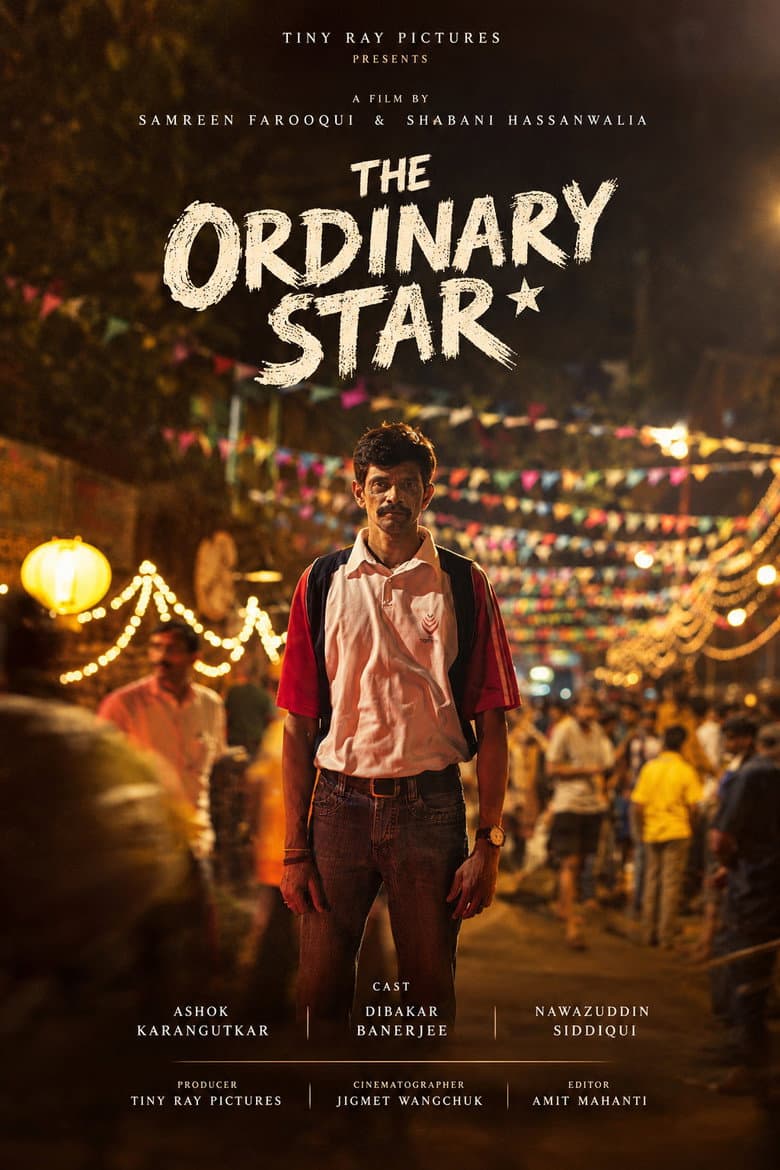
Ayushmann Khurrana: A Career In Hindi Cinema is the story of a performer who found his footing by playing people who could plausibly live next door. He arrived in Hindi cinema in 2012 with Vicky Donor, playing Vicky Arora in a romantic comedy built around an unusual situation, and the role earned him the Filmfare Award for Best Male Debut. That award is a useful landmark for readers outside India: the Filmfare Awards are the long-running honours given by the Hindi film press, roughly the industry's closest equivalent to a combined critics and popular-vote ceremony. The debut mattered less as a trophy than as a signal. Here was a lead who could carry off-centre material into wide view. The years since have tested that instinct across comedy, thriller, social drama and fantasy. The results form one of the clearer maps of Hindi cinema's middle ground.
The Through Line: Ordinary Men, Uncommon Choices
The outline of the career is a run of men who look ordinary and are asked to do something difficult with that ordinariness. After a brief setback following his debut, Dum Laga Ke Haisha (2015) cast him as Prem Prakash Tiwari, a small-town husband inside a marriage arranged around expectations he had never thought to examine. The film is remembered as both a commercial and critical success, and it set a template that recurs: a likable man forced to confront his own assumptions. What makes the pattern work is that the confrontation is rarely heroic. Prem is not transformed by a grand gesture. He is nudged, embarrassed and slowly changed, which is closer to how most people actually move.
That same instinct for the unremarkable man carried him into the middle stretch of the filmography, where the material widened without losing its footing. Bareilly Ki Barfi (2017) placed him as Chirag Dubey in a romantic comedy of small-town manners, a register he wears easily. Badhaai Ho (2018) gave him Nakul Kaushik, a son whose embarrassment at news that upends his family's settled life turns the comedy into a study of middle-class propriety. In each case the joke and the argument travel together.
The Films: From Small-Town Comedy to Moral Inquiry
Andhadhun (2018) marks the pivot. As Akash Sarraf, a blind pianist drawn into a crime he cannot straightforwardly report, he carried a thriller built on withheld information and unreliable perception. The film asked the audience to distrust what they were watching while trusting the man at the centre, and the performance held that tension. Article 15 (2019) moved him into social drama as Ayan Ranjan, an officer confronting a case that exposes deep inequity, a role that turned the likable persona into a pressure point rather than a comfort.
The 2022 films spread wider again. Doctor G cast him as Dr. Uday Gupta, a male doctor in a field he had not planned for. Anek placed him as Joshua and Aman, an undercover agent working peace negotiations in northeast India. An Action Hero turned the camera on image itself, with Maanav as a screen figure whose public persona becomes a trap. Thamma (2025) brought him into a mystical world as Alok Goyal, a lover defending a forbidden romance against supernatural and family forces. The most recent work is Udta Teer (2026), which gives him Vikrant Thapar and Bilal Ahmad, and Pati Patni Aur Woh Do (2026), which returns him to domestic comedy as Prajapati Pandey, a seemingly perfect marriage in Prayagraj undone by one decision, a chain of misunderstandings and mounting suspicion.
 Photo: TMDb
What the Career Adds Up To
Two threads run through the filmography, and they explain why his name is worth knowing. The first is the ordinary man under pressure: a husband, a son, an officer, a doctor, each asked to reconsider what he took for granted. The second is a willingness to let genre do the arguing, whether romantic comedy, thriller, social drama or fantasy. He has been a dependable centre in films that ask a mainstream audience to sit with an uncomfortable question without losing the joke.
For readers outside the region, he is one of the clearer examples of how Hindi cinema's middle ground works: films built on a recognisable lead, a sharply defined social premise and a tone that can turn from comedy to unease without breaking. Track the titles in order and you watch a screen persona being tested rather than repeated. That is the through line of Ayushmann Khurrana: A Career In Hindi Cinema, and it is why the name travels beyond the films themselves.
For background on the industry's structures and public conversation, the BBC's coverage of Hindi cinema is a useful starting point, as is the cultural reporting of The Guardian.