Saurabh Shukla's career is a story told in faces rather than headlines. For most viewers, his features register long before his name does. He has built a working life out of the parts that surround the centre. No single defining role sums him up. Instead there is the accumulation: the bureaucrat, the policeman, the father, the man with something to hide. The films he appears in tend to place him beside the story's central figure rather than at its heart, and that is precisely where much of his value lies.
The Face You Remember Before The Name
The distinction matters. A leading part carries a film's momentum. The part Shukla tends to play carries its pressure, the sense that the world around the hero has rules, costs and consequences. When a protagonist decides something, that decision only feels like a choice because someone on the other side of the frame is holding a line.
That register runs from small domestic parts to broad comic turns. In Mohabbatein (2000) he plays Sanjana's Father, a role rooted in the family negotiations that surround the central romance. In Baadshah (1999) he is Chief Saxena, part of a comedy built on mistaken identity rather than on realism. The two could hardly sit further apart in tone, and both are recognisably his kind of work: an authority figure in one, a comic foil in the other. Between those poles sits a whole method. He does not play a type so much as a function, and the function changes with the film.
For a reader new to Hindi cinema, a useful piece of vocabulary: "supporting actor" describes a performer who is not the lead but whose part is substantial enough to shape the story rather than decorate it. Shukla is a textbook case. His filmography reads like a map of the industry's institutions rather than a list of star vehicles.
The Films And What Each Added
The titles that most clearly define how audiences know him fall into rough groups. The first is the comic establishment figure. In Nayak: The Real Hero (2001) and Lage Raho Munna Bhai (2006) he plays men inside institutions, giving the comedy a surface of official seriousness to push against. In Kick (2014) he is Brijesh Mehra, adding a family presence to a film that runs on spectacle. The joke in each case depends on him being believable first.
The second group is the ordinary man caught in a serious machine. Barfi! (2012) casts him as Sub-Inspector Sudhanshu Dutta, a policeman in a story that is tender rather than adversarial. PK (2014), where he appears as Tapasvi Maharaj, places him in a film about a stranger asking questions nobody has asked before, and his presence gives those questions a human target. Jolly LLB (2013) is the part most often attached to his name: it won him the National Film Award for Best Supporting Actor, the country's highest recognition for a supporting performance. As a judge, he carries a courtroom's whole weight of procedure and impatience.
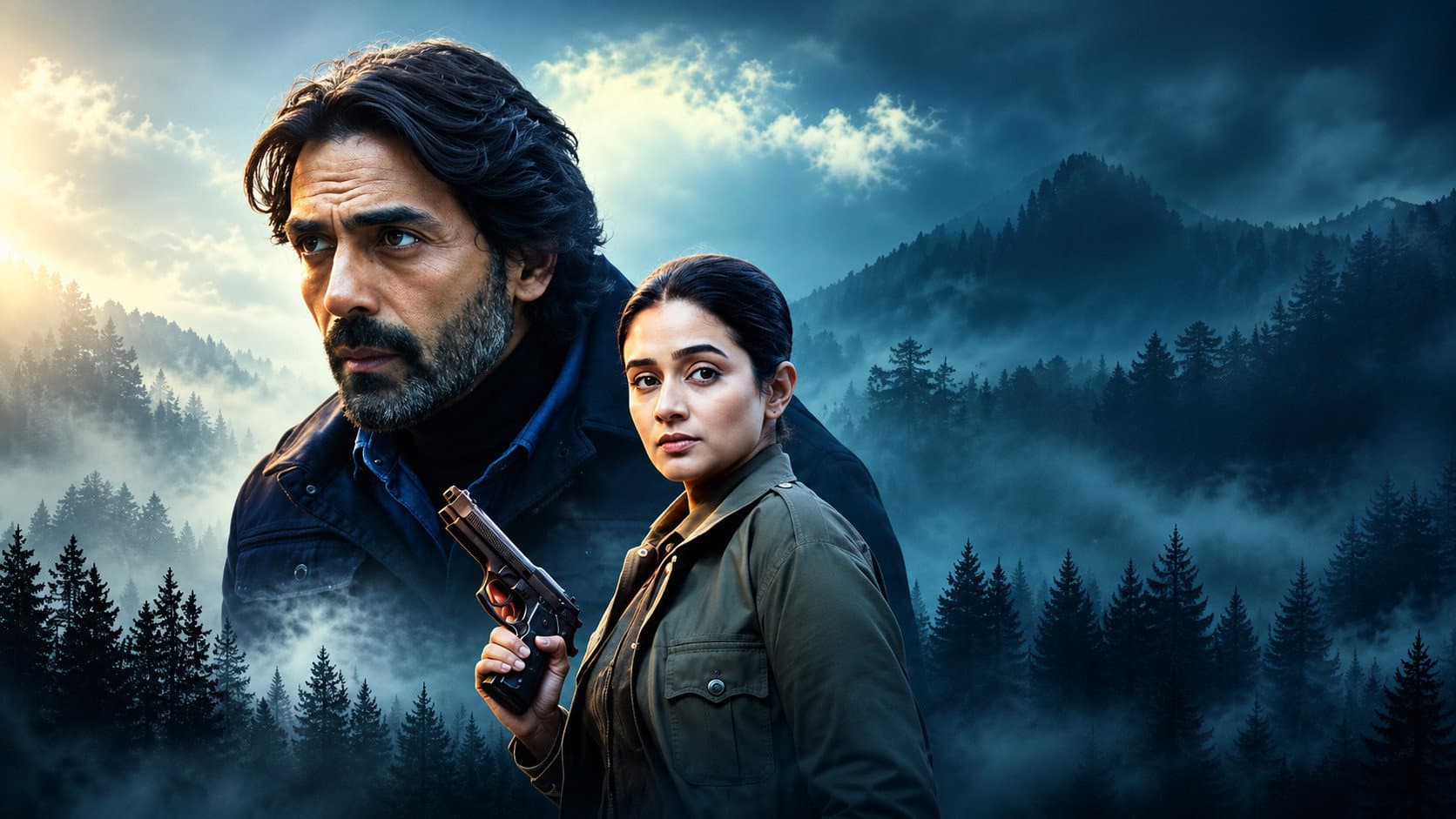
The third, and the deepest well, is the Raid and Drishyam films. Raid (2018) has him as Rameshwar "Rajaji" Singh, known as "Tauji", a man who wields family authority as a kind of shield. In Drishyam 2 (2022) he is Murad Ali, and in Drishyam: The Conclusion (2026) he returns as the same character, an investigator whose job is to reopen what a family has spent years protecting. The plot of the later film turns on Vijay Salgaonkar's past resurfacing as new evidence threatens to expose his secret, and the reopening of the investigation. Shukla's function in that pair of films is structural: he is the outside intelligence pressing against the household, and the drama comes from the meeting of the two. He returns as Rameshwar Singh in Raid 2 (2025), opposite the same family world, and as Justice Sunderlal Tripathi in Jolly LLB 3 (2025), taking his judge into a third instalment. In Subedaar (2026) he appears as Prabhakar, in a film about a retired soldier whose civilian life is jolted by a single reckless act. Put together, the films show a performer who is not confined by genre but is consistent in what he provides.
What Has Changed And What Has Not
The clearest pattern is the long return. Since Drishyam 2 he has gone back to Murad Ali in Drishyam: The Conclusion, to Rameshwar Singh in Raid 2 and to Justice Tripathi in Jolly LLB 3. Sequels have become a mainstay of Hindi cinema, and each one turns earlier work into an investment: a role with a history in it. For a viewer arriving late, that means an unusual thing: several of his most visible roles can only be fully read with the earlier film in mind.