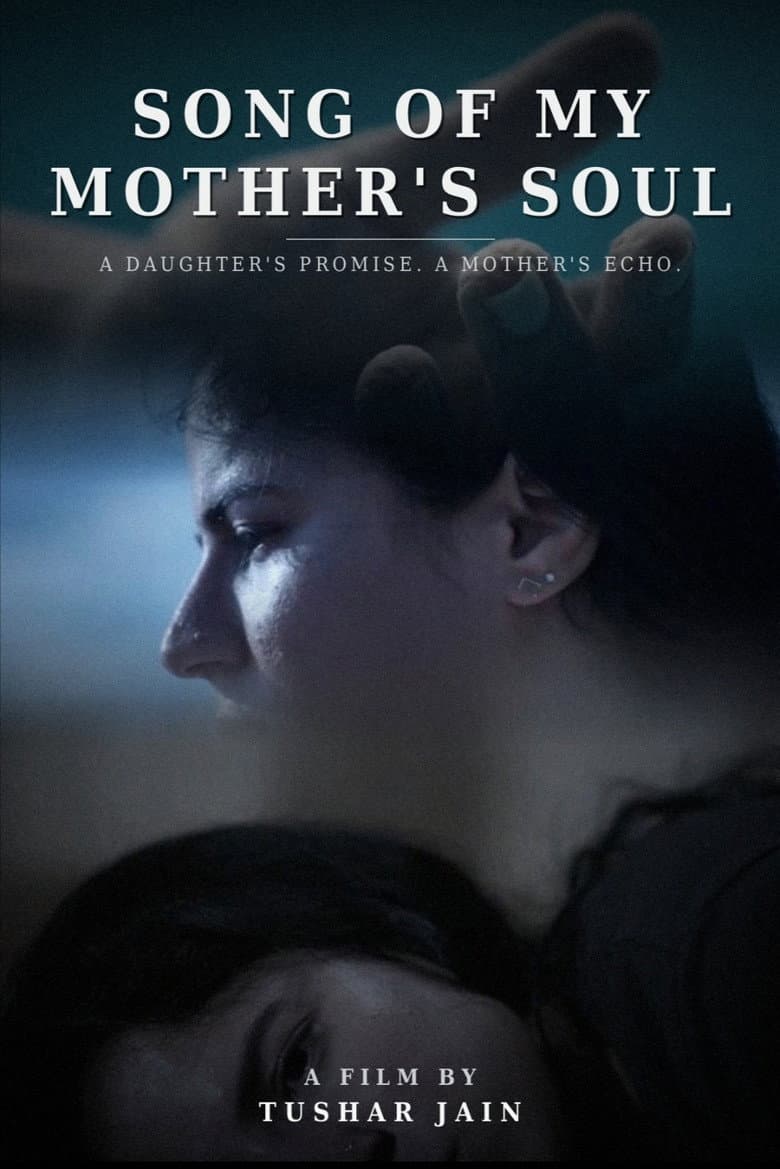
There are films that announce themselves with thunder, and then there is Song of My Mother's Soul, a twenty-minute Hindi short that slipped into theatres on September 26 with barely a whisper and has been quietly refusing to leave the minds of those who have seen it. Directed by Tushar Jain, the film centres on Dina, a sound recordist, and her mother, a classical singer whose voice once filled rooms and now barely carries across one. Between them lies everything that was never said aloud.
The premise is deceptively simple. A daughter who works in sound. A mother who is losing her own. As the older woman's health declines, Dina begins recording - not songs, necessarily, but presence. Breath. The rustle of fabric. A cough swallowed halfway. The hum of a raga half-remembered. Jain treats the microphone not as a tool but as an instrument of grief, and the film's emotional architecture rests on the quiet, stubborn hope that memory can be stored somewhere other than the mind.
What makes this such a striking piece of filmmaking is how it uses the grammar of audio to talk about distance. Dina spends her working life capturing voices that aren't her mother's, and the film lets that irony sit without comment. Their conversations, when they happen, are halting. Sentences begin and are abandoned. Silences stretch. And yet, when Dina plays back what she's recorded, something shifts - the same silences suddenly sound fuller, as though the tape caught what the ear missed. It's a lovely, unforced idea, and the film trusts it completely.
Hindi cinema has a long, occasionally exhausting tradition of the mother-daughter melodrama, all thunderous confrontations and swelling strings. Song of My Mother's Soul does something else. It borrows the textures of classical music - the patience of an alap, the way a note is allowed to decay rather than be cut off - and applies them to the rhythm of the story itself. Scenes don't so much end as dissolve into the next. Nothing is underlined. Everything is meant to be heard.
At roughly twenty minutes, the film has no room to sprawl, and Jain's restraint will read as either discipline or withholding, depending on the viewer. This is not a work that reaches for a grand reconciliation. It circles the same question from several angles: what do you owe someone whose time is running out, and what do you do with the sounds that remain once they're gone? The film doesn't answer so much as hold the question up to the light.
To be clear, this is not a commercial proposition. There is no ensemble to speak of, no familiar casting to lean on, and the film's release has been largely invisible in the usual marketing sense. The metadata offers no cast names, and audiences have had to discover it the old-fashioned way - by word of mouth, by curiosity, by the kind of recommendation that passes between people who care about what short-form Hindi cinema is capable of when it stops trying to impress and starts trying to listen.
And perhaps that's the point. Song of My Mother's Soul is a film about attending to things before they vanish. Dina records compulsively not because she's sentimental but because she understands, better than most, that the human ear forgets. Timbre fades first. Then rhythm. Then the particular way a person inhales before speaking. By the end, we're not sure whether the film is Dina's tribute to her mother or a warning to the rest of us: pay attention now, or spend your life chasing the playback.
Jain, working in a register that owes more to documentary patience than to conventional Hindi narrative, has made something small and specific that nonetheless feels universal. There is nothing in it that shouts "important film." There is nothing in it that shouts at all. It simply sits with its characters, listens, and asks us to do the same.
Whether it finds the audience it deserves remains an open question. What's clear is that Song of My Mother's Soul is the sort of quiet, formally curious work that tends to outlive its own release window - discovered late, discussed endlessly, and impossible to fully shake once heard. Some films are watched. This one is listened to.