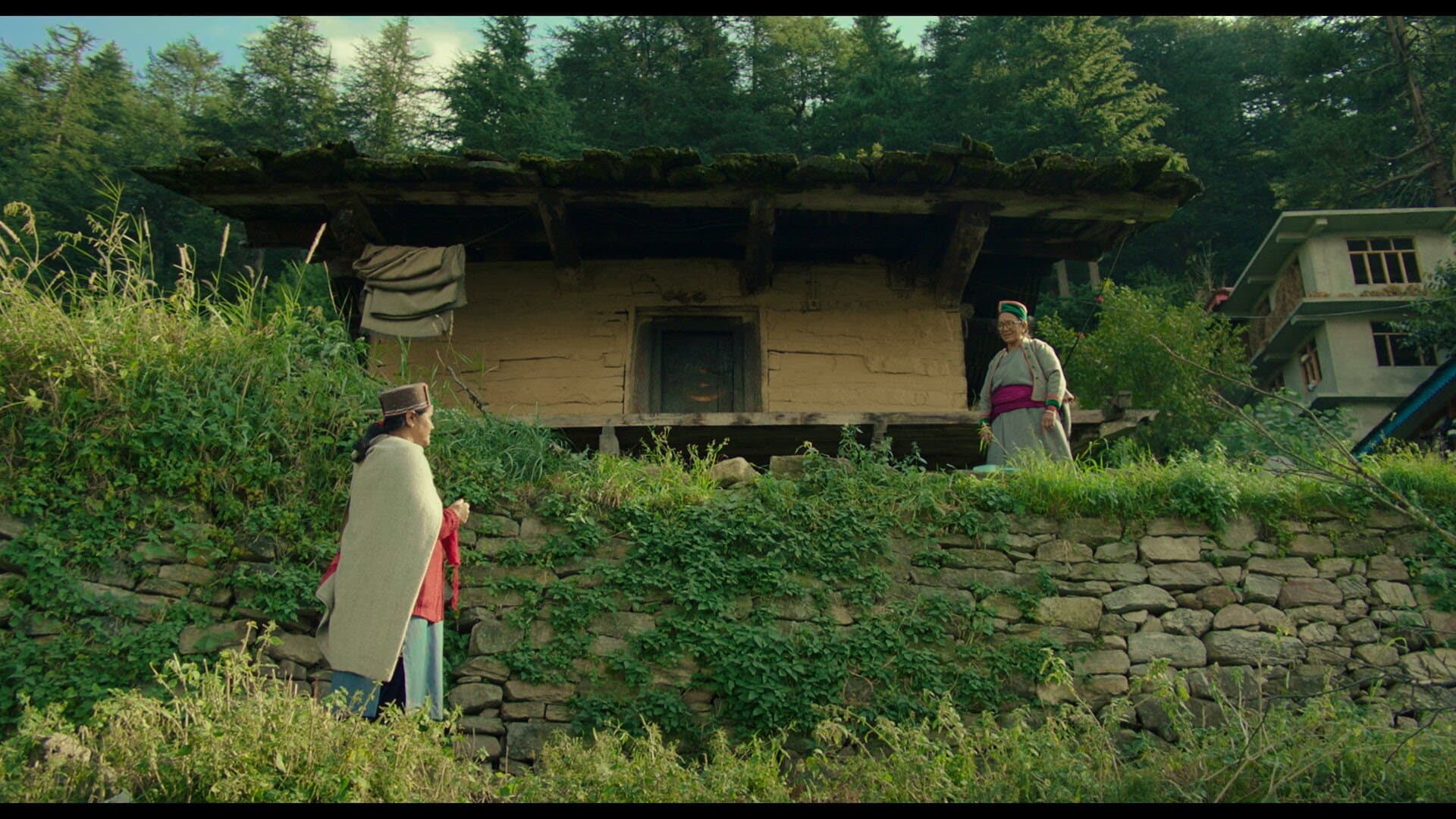
The opening image lands with the quiet force of a held breath: a woman in a dim room, a childbirth turning dangerous, and no doctor for miles. In the remote Himalayan village of Kandar, the midwife at the centre of Nihaarika Negi’s “Tenfa” has nothing but her training, her nerve, and a rapidly closing window. What she needs is a wild herb, one that tradition says can pull a mother back from the edge. What she doesn’t have is anyone left who can reliably find it.
That premise, simple and elemental, is the engine of a 29-minute Hindi drama that arrives in cinemas on October 29, 2026, after a festival run that has kept industry chatter alive without giving much away. Negi, a director whose work has circled questions of land and belonging, shoots the film in a register that feels less like a medical thriller than an elegy with a ticking clock. The search for the herb becomes a journey across terrain visibly wounded by hydropower projects, rivers rerouted, hillsides carved open, and with them a whole vocabulary of local knowledge slipping away.
The film’s central trio carries that loss in their bodies. The midwife, practical and increasingly desperate, is the outsider’s entry point. The elderly grandmother who alone can identify the plant is the keeper of a memory that the younger generation has had little reason to learn. And the granddaughter, a teenager caught between her grandmother’s world and the pull of a modernising India, becomes the film’s most quietly radical figure: the bridge that might hold, or the link that snaps. Cast details have been kept under wraps, unusual for a Bollywood-adjacent production but consistent with Negi’s preference for letting faces arrive unburdened by expectation. Early viewers have noted that the performances feel lived-in rather than performed, though the film’s deliberate pace will test audiences accustomed to quicker rhythms.
What distinguishes “Tenfa” from the run of rural dramas is its insistence on sound as a form of cartography. An old Kinnauri folksong, passed down through the grandmother’s line, becomes the women’s guide through the scarred landscape. The melody functions as a map, a memory aid, and a small act of defiance. As the three women walk, the song surfaces and resurfaces, and the film argues, without speechifying, that tradition and technology are not opposites but tools that can be picked up in the same hand. The hydropower dams that changed the rivers also changed the songs, and Negi treats both losses as the same wound.
At 29 minutes, “Tenfa” is a short film by commercial standards, but it carries the density of a feature. The compressed runtime forces an economy that serves the material: every shot of a damaged riverbank, every pause before the grandmother speaks, lands with intent. The film’s title, left deliberately unexplained in the marketing, has become a small obsession among those who have seen it, a puzzle that the story itself eventually resolves for the patient viewer.
The timing of the release is not accidental. “Tenfa” emerges into a Hindi film landscape increasingly willing to make room for regional realities, though it remains rare to see a Himalayan village rendered with this level of specificity rather than as generic backdrop. Negi’s film refuses the postcard. The mountains here are not majestic; they are wounded, and the people who live among them are neither saints nor victims but simply people trying to keep a child alive and a language breathing.
Whether “Tenfa” will find the audience it deserves is an open question. Its release window is crowded, and its subject matter, for all its urgency, carries no obvious spectacle. But the film has something rarer than spectacle: a coherent moral vision, delivered at a human scale. The midwife’s search for a single plant becomes a search for everything that has been allowed to disappear, and the grandmother’s song becomes the thread that might lead them back. In a season of loud, expensive films, “Tenfa” asks only 29 minutes and offers, in return, a piece of the mountains that feels genuinely earned.