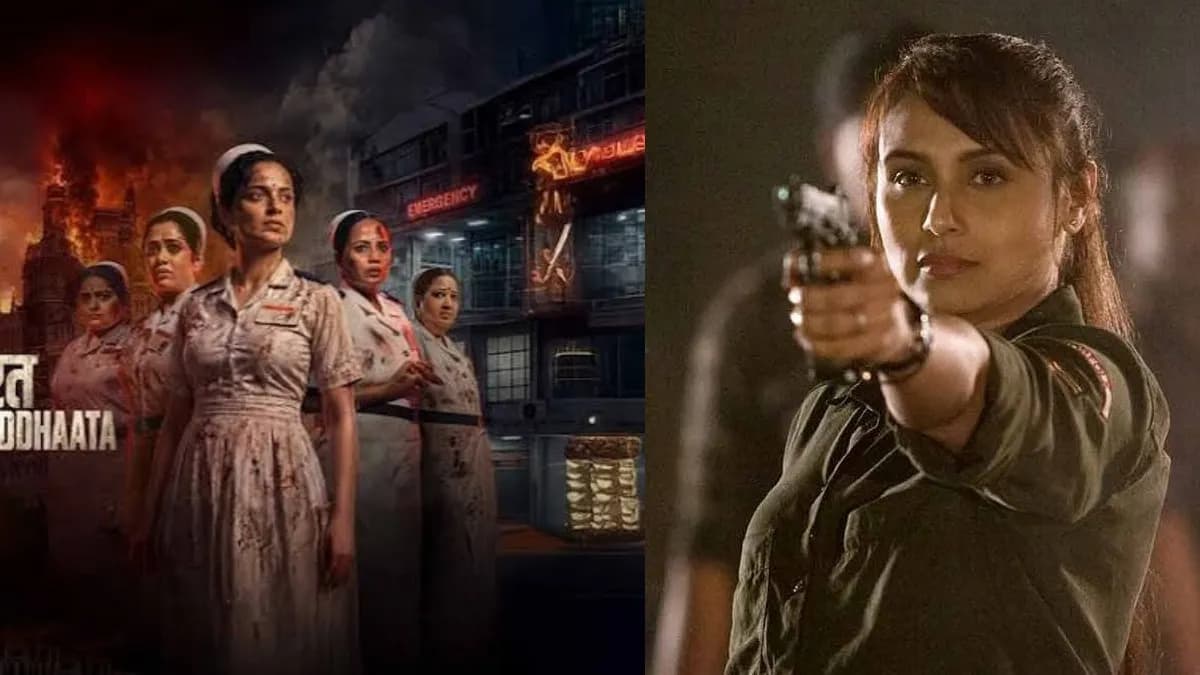
Five Hindi films that place women squarely at the center of their own stories have been making waves for their unflinching portrayal of resilience, with audiences particularly gravitating toward narratives where female leads don’t just survive but actively dismantle the obstacles in their path. From period dramas steeped in mythology to gritty action thrillers set in contemporary urban India, these movies collectively underscore a growing appetite for cinema that treats female ambition and defiance not as a subplot, but as the main event.
The conversation around women-led narratives in Bollywood has shifted considerably over the past decade, moving beyond the confines of family dramas or romantic supporting roles. The current crop of films, which includes everything from the mythological epic Bharat Bhhagya Viddhaata to the hard-hitting Mardaani, reveals a clear trend: filmmakers are increasingly willing to let their heroines be messy, angry, and unapologetically forceful in their pursuit of justice or self-determination. What ties these five distinct features together is not just their leading ladies, but the sheer weight of the adversity they are forced to confront and conquer.
The Mythological Arena: A Woman’s Battle for Agency
At the forefront of this movement is Bharat Bhhagya Viddhaata, a film that takes a well-known mythological framework and reimagines it through a distinctly feminist lens. The narrative centers on a woman who is thrust into a position of cosmic and political responsibility, expected to be a passive symbol of virtue but instead choosing to wield her newfound power to rewrite the rules of her world. The adversity here is twofold: she must battle external demonic forces while also dismantling the patriarchal structures within her own court, where every advisor and elder doubts her capacity to lead. What makes the film particularly compelling is its refusal to soften her journey; she makes strategic errors, faces betrayal, and suffers public humiliation, yet her eventual triumph feels earned rather than preordained. The visual grandeur serves as a backdrop to what is essentially a quiet, internal war for self-belief against a system that demands her submission.
The Cop Who Refuses to Look Away
In stark contrast to the mythological setting, Mardaani drops the audience into the brutal, gritty reality of a police officer’s daily grind. The film’s power does not come from elaborate action set pieces or high-octane chases, but from the relentless, dogged pursuit of a human trafficking racket by a woman who is overworked, under-resourced, and constantly underestimated by her male superiors. The adversity here is systemic; she fights not only a ruthless criminal syndicate but also a bureaucratic machinery that would rather sweep the case under the rug. Her leadership is not defined by loud proclamations but by quiet, obsessive investigation, and the film earns its stripes by showing the psychological toll this takes on her personal life. She does not emerge unscathed or vindicated in a grand public ceremony; instead, her victory is a small, private acknowledgment that one girl’s life was worth her own sacrifices. This grounded realism is what makes the portrayal feel so revolutionary - her strength is not supernatural, it is simply a stubborn refusal to accept the status quo.
Beyond the Binary of Victim and Vigilante
While these two films anchor the list, the other three entries expand the definition of what conquering adversity can look like. One film, a courtroom drama, places a woman lawyer against a deeply entrenched legal fraternity that treats her as an outsider despite her impeccable track record. Her battle is not with a single villain but with the language of the law itself, which has been written to exclude women like her. Another, a survival thriller, strands its lead in a harsh, unforgiving wilderness, where the enemy is not a person but nature and her own physical limitations, forcing her to confront a lifetime of internalized self-doubt. The final entry is a social drama that follows a middle-aged woman who, after a lifetime of domestic servitude, decides to pursue an education, facing ridicule from her own children and neighbors. In each case, the adversity is deeply personal and relatable, yet the filmmakers refuse to offer easy catharsis. The women do not magically transform into warriors overnight; they stumble, cry, and nearly give up, which makes their eventual perseverance resonate on a human level.
A Growing Canon of Complexity
What is most striking about this collective body of work is the departure from the two-dimensional portrayal of women as either long-suffering martyrs or one-note action heroes. These films are unified by a commitment to interiority; we are given access to their fears, their anger, and their occasional selfishness, making them feel like fully realized people rather than symbols. The success of such varied narratives signals a clear message to the industry: audiences are hungry for stories where the female perspective is the default, not the exception. Whether it is a goddess battling destiny or a police officer battling corruption, the core theme remains the same - that adversity is not a life sentence, but a crucible that can forge an unbreakable will. As these films continue to generate discussion, they pave the way for more nuanced, messy, and empowering roles for women in Hindi cinema, proving that the lead’s gender is irrelevant when the story is this gripping.
Source: Filmibeat