Ikkis (2026) - Sriram Raghavan’s War Drama | Film Overview
Photo: TMDb
The year is 1971. A 21-year-old tank commander, outnumbered and outgunned, disobeys a direct order to retreat. He holds the line at the Battle of Basantar, destroying four Pakistani tanks before his own is hit, and he dies in the flames. For that act, Arun Khetarpal becomes the youngest recipient of the Param Vir Chakra, India’s highest military honour. His story is the stuff of legend, the kind of patriotic cinema that Bollywood usually smothers in slow motion and bombast. But when Sriram Raghavan - the man behind the paranoid noir of Andhadhun and the gritty cat-and-mouse of Raat Akeli Hai - takes the helm, you can expect something far more unsettling. His new film, Ikkis, releasing January 1, 2026, is not a jingoistic war epic. It is a ghost story about memory, duty, and the quiet horror of what we leave behind.
The film’s title, meaning "twenty-one," refers to Arun’s age at death, but it also captures the brutal arithmetic of conflict: a life reduced to a number on a memorial plaque. Raghavan’s genius is to avoid the obvious chronology. We don’t open on the battlefield. We open in 2001, on a dusty road in Sargodha, Pakistan, where a frail, elderly Brigadier Madan Lal Khetarpal (a transformative Dharmendra) is making a pilgrimage. He is not there for geopolitics. He is there to visit his ancestral home, now a stranger’s house, and his old alma mater - the very institution that shaped his son - now on the other side of a border drawn in blood. It is a profoundly melancholic frame, and it gives the entire film the texture of a memory that refuses to heal.
Raghavan, working from a script that weaves between timelines, uses this 30-year-later journey as a spine. Through the father’s grief-stricken eyes, we flash back to Arun’s brief, bright life. Agastya Nanda, stepping far outside the breezy charm of his debut, is a revelation as the young officer. He plays Arun not as a fearless automaton, but as a boy who loved jazz records and cricket, who wrote long letters home, and who understood, with terrifying clarity, that his duty might cost him everything. The training sequences at the Indian Military Academy are shot with a documentary-like rigor, but Nanda’s performance is all internal conflict. When he jokes with his fellow cadets, there’s a shadow behind his smile - the weight of knowing he might not come back.
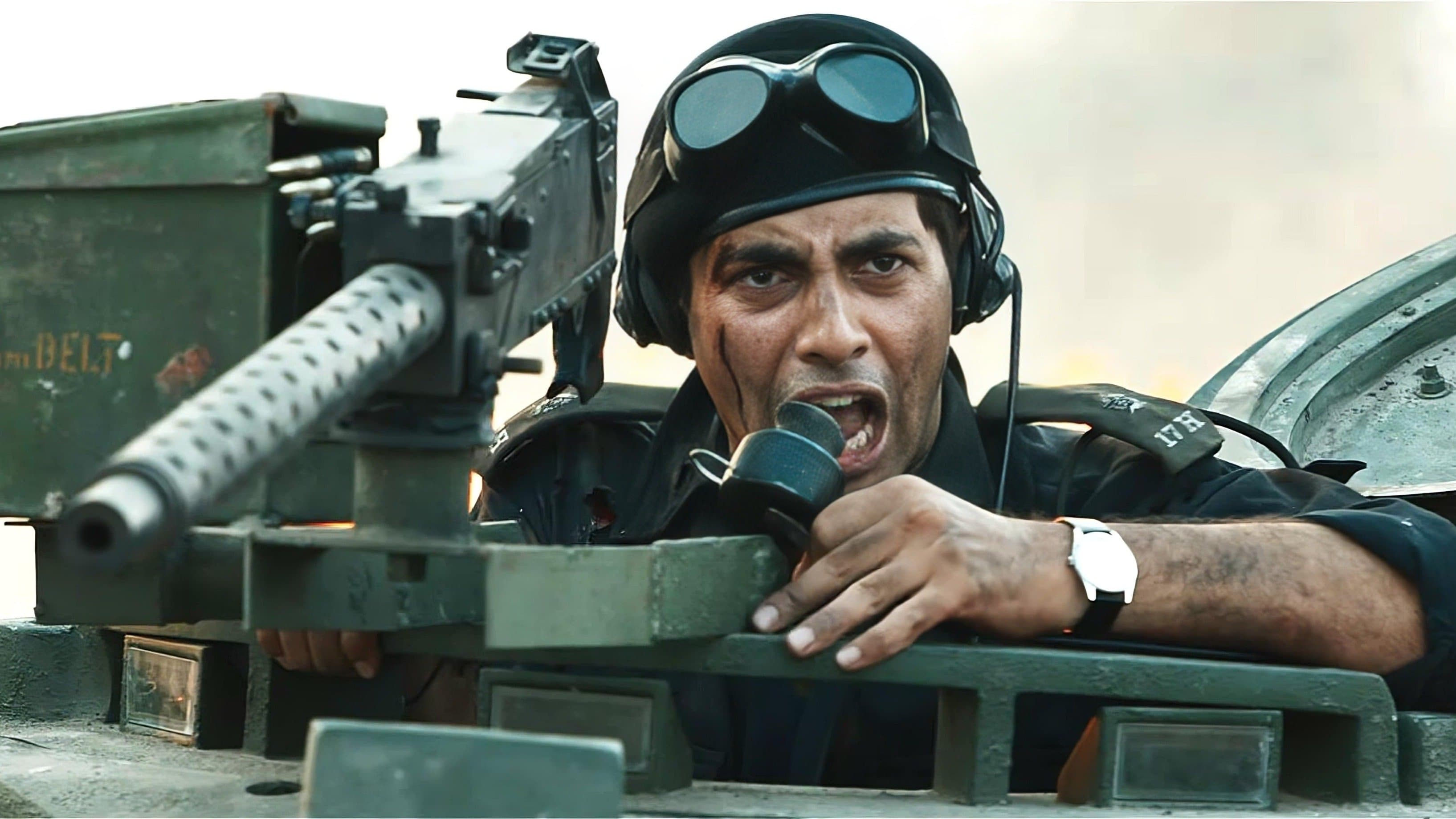
The war sequences, when they arrive, are brutal and disorienting. Raghavan avoids the clean, epic wide shots of a Border or a LOC Kargil. Instead, the Battle of Basantar is rendered in mud, smoke, and chaos. The tanks are claustrophobic steel coffins. You feel the heat, the jolt of every shell, the scream of jammed hatches. It is here that Jaideep Ahlawat appears as Brigadier Jaan Mohammad Khan, a Pakistani commander who is not a caricature villain but a professional soldier - tired, tactical, and haunted by the same machinery of death. In a haunting scene, the two enemies never meet, but their fates are sealed by a radio crackle of an order. It’s a devastatingly human choice that elevates the film beyond flags and anthems.
The supporting cast is impeccable. Suhasini Mulay, as Arun’s mother, delivers a gut-punch of quiet devastation in a single scene where she refuses to accept a folded flag. Rahul Dev brings steely, heartbreaking authority to Lt Col Hanut Singh, the commanding officer who gave that doomed order. And Simar Bhatia, as Kiran, a glimpse of a romance that never gets to bloom, provides the film’s most aching "what if." But the soul of Ikkis remains Dharmendra. In his twilight years, the actor finds a new gear. His Brigadier Madan Lal is a man of rigid military discipline, yet his grief is a raw, trembling thing. Watching him trace the faded initials his son carved into a school desk in Sargodha - a desk that now belongs to a Pakistani student - is the kind of acting that doesn’t feel like acting at all.
What makes Ikkis truly remarkable is its refusal to offer catharsis. There’s no triumphant anthem at the end, no flag unfurling over a vanquished enemy. Instead, the film circles back to the father, standing at his son’s grave, listening to the wind. The futility of war is not a political statement here; it is a personal ache. Why do we send our children to die for lines on a map? The father can’t answer it. The director doesn’t try. He just lets the silence hang, heavy as a tank’s armour.
At 148 minutes, it’s a demanding watch, and its TMDb score of 6.2 suggests it won't be everyone’s cup of masala tea. But for those who want cinema that asks questions instead of answering them, Ikkis is a sobering masterpiece. It doesn’t celebrate a hero. It mourns a son. And in that mourning, it finds a truth about sacrifice that no parade can ever honour.