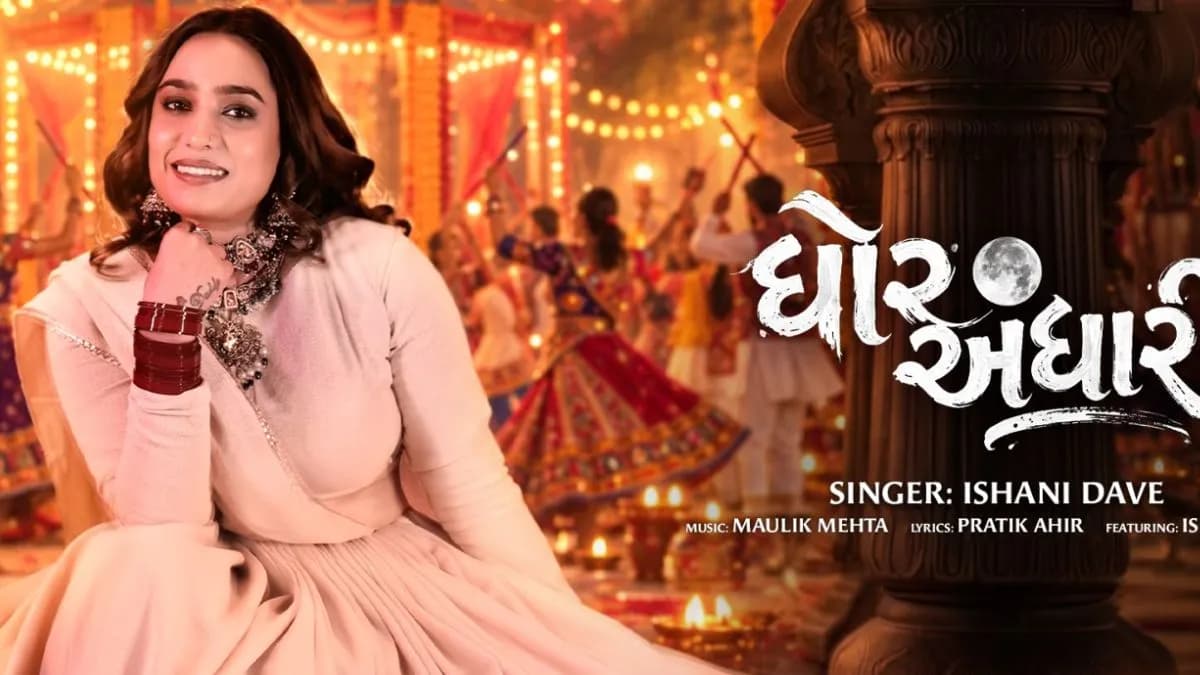
The festive season has added another tune to its playlist. Singer Ishani Dave has unveiled a brand new garba track titled Ghor Andhari, timed to arrive as Navratri celebrations get underway across India. The song marks Dave's latest contribution to a genre she has become closely associated with over the past few years, and it lands squarely in the middle of the busiest musical window on the Gujarati calendar.
For the uninitiated, Ishani Dave is one of the more recognizable young voices in the Gujarati music space, with a catalogue that leans heavily on folk-rooted material and festival releases. Garba, in particular, has been a consistent thread in her work, and a new track from her during Navratri is less a surprise than an expected fixture. Even so, the timing of Ghor Andhari places it directly into competition with a crowded field of Navratri releases, when labels and independent artists alike rush to stake a claim on the season's playlists.
What the Song Brings to the Navratri Lineup
The title itself offers a clue to its mood. Ghor Andhari translates roughly to "deep darkness," an image that sits interestingly against the bright, communal energy usually associated with garba nights. Traditional garba lyrics frequently draw on imagery of night, moonlight, and the arrival of the goddess, so a title invoking darkness is well within the idiom rather than a departure from it. What matters more for listeners is whether the track delivers the rhythmic backbone dancers need, and early indications suggest the song is built around a traditional dhol-driven arrangement rather than a heavily electronic production.
That distinction has become a talking point in recent Navratri seasons. As garba playlists have grown more polished and pop-facing, purists have argued that the form's percussive core is being sanded down. Dave's previous festival releases have generally struck a middle path, keeping the acoustic weight of the dhol and the shehnai while allowing for contemporary mixing. Whether Ghor Andhari follows that template will likely determine how it fares on the eight-night circuit, where a track either enters the rotation at community grounds or it doesn't.
A Crowded Season for New Music
Navratri has become something of a release window in its own right. What was once a period when a handful of established singers dominated the market now sees a steady stream of singles, EPs, and full-length garba albums arriving within the same fortnight. Streaming has widened the audience considerably, pushing Gujarati festival music well beyond Gujarat to diaspora communities in the United States, the United Kingdom, Canada, and Australia.
For an artist like Dave, that expanded reach cuts both ways. A strong garba single can travel quickly through dance groups and event organizers abroad, embedding itself in Navratri programmes from New Jersey to Leicester. But the same openness means the competition is no longer limited to a few household names. Every season brings a wave of newcomers hoping to land the one track that becomes inseparable from that year's celebrations.
Why Garba Releases Carry Extra Weight
There is also a commercial logic to releasing during Navratri that goes beyond streaming numbers. Garba tracks have a second life as live performance material. Singers who deliver a hit during the festival can expect bookings at Navratri events for years afterward, turning a single release into a recurring source of income and visibility. For younger artists, it is one of the few moments in the calendar when Gujarati-language music commands mainstream attention across India, with television coverage, radio spots, and social media clips amplifying reach far beyond the core audience.
Dave has navigated this landscape before, and Ghor Andhari reads as a deliberate continuation rather than a reinvention. The song's release arrives without the kind of oversized promotional machinery that accompanies some festival singles, which itself suggests a confidence in the existing audience built around her name.
What to Watch For
For listeners, the immediate question is simple: does the track work on the dance floor? Garba is participatory before it is anything else, and a song survives the season only if dancers keep requesting it. Community organizers and choreographers typically settle the matter within the first few nights, and their verdict tends to stick.
Beyond this year's celebrations, the release also adds to Dave's growing festival catalogue, strengthening a niche that has served her well. Whether Ghor Andhari becomes a permanent fixture in Navratri rotations or simply a seasonal entry, it reinforces her position as one of the more dependable voices in contemporary Gujarati garba music. For now, the song is out, the nights are long, and the dhol is already playing.
Source: Filmibeat