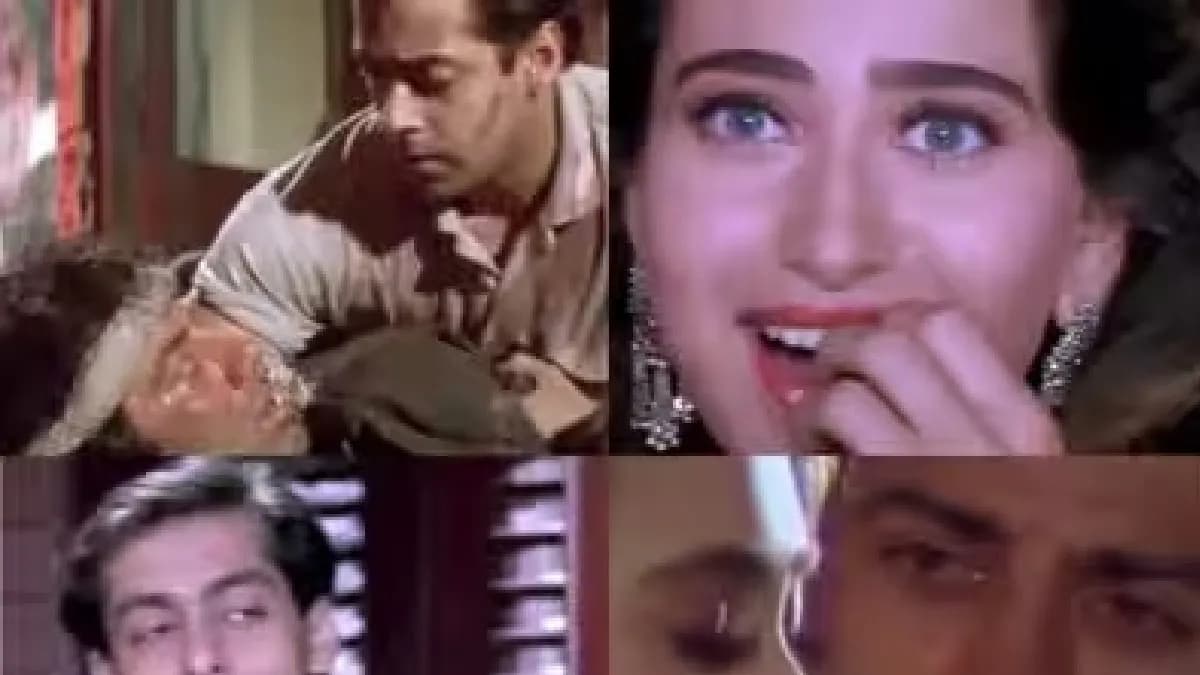
Thirty years ago, a romantic action saga starring Salman Khan, Sunny Deol, and Karisma Kapoor stormed into theaters and refused to leave. The film, which has since been celebrated for its explosive chemistry and chart-topping soundtrack, achieved a rare milestone by running for an astonishing 75 weeks in select cinemas. As the movie marks its 30th anniversary today, it serves as a reminder of a bygone era when a single film could dominate the box office for over a year, long before the advent of digital releases and OTT platforms.
While the film is often remembered for its larger-than-life action sequences and the palpable tension between its three leads, its legacy has been somewhat overshadowed by the monumental success of other projects in the careers of those involved. For Salman Khan, for instance, the anniversary has sparked renewed interest in his filmography, though fans might be quick to point to his later works, such as the universally beloved Bajrangi Bhaijaan, as the definitive turning point in his stardom. Yet, for those who were there in the mid-90s, this particular film was a cultural event that defined the era’s obsession with masala blockbusters.
The film’s extended theatrical run was no small feat. Back in the 1990s, a 75-week run was a badge of honor reserved for only the most legendary of films, a testament to the audience’s appetite for repeated viewings. The movie’s success was driven by a potent mix of high-octane drama, a love triangle that kept viewers guessing, and a soundtrack that dominated radio charts. In an age without 24/7 cable or social media, the buzz was built entirely on word-of-mouth, and it was that organic, devoted following that kept the box office registers ringing for nearly a year and a half.
The casting of Salman and Sunny in the same frame was itself a marketing masterstroke. Both actors were at the peak of their powers, commanding massive fan bases that did not always overlap. Pairing them with Karisma Kapoor, who was rapidly emerging as a top-tier leading lady, created a trifecta of star power that was almost impossible to resist. The chemistry between the three was palpable, and their on-screen interactions were a major draw for audiences who flocked to see the drama unfold. The film’s director managed to balance the two male leads’ intense personas while giving Kapoor a role that was substantial enough to hold her own, a rarity for action films of that period.
Nostalgia has a powerful pull, and this anniversary offers a chance to revisit not just the film itself, but the era it represented. It was a time when moviegoing was a ritualistic experience, when families would dress up for a Sunday show and the interval bell was as anticipated as the climax. The 75-week run is not just a trivia fact; it’s a testament to the resilience of the industry and the deep connection between filmmakers and a loyal audience. Today, such longevity is nearly impossible to replicate, given the sheer volume of content competing for attention.
For the uninitiated, the film’s plot revolved around themes of revenge, sacrifice, and redemption - standard fare for the genre - but the execution was anything but standard. The action was gritty, the dialogues were punchy, and the emotional core was strong enough to anchor the explosions. The film also benefited from a memorable supporting cast that added depth to the narrative, though the spotlight always remained fixed on the trio at its center. The movie’s legacy is also carried by its music, which remains a nostalgic favorite composed with a signature melodic flair that has since become iconic.
As the date rolls over to August 24, 2026, the conversation around this film has resurfaced, with fans and film critics alike taking to social media to share clips, dialogues, and behind-the-scenes anecdotes. The hashtag trends, and for a brief moment, the digital world is transported back to a time when theaters were packed for months on end. It’s a bittersweet feeling for many who grew up watching the film, a blend of joy at the memories and a pang of longing for a simpler time in cinema.
The film’s enduring popularity also raises a question: what makes a movie run for 75 weeks? It’s not just about a big opening weekend. It requires a staying power that comes from a positive consumer experience, a repeat-value that prompts viewers to go back not just once, but multiple times. It also demands a cultural resonance, a film that becomes part of the social fabric, referenced in daily conversations and schoolyard arguments. This movie achieved all that and more. It created phrases that are still uttered today, and its scenes are etched into the collective memory of a generation.
Looking back, it’s clear that this film was a harbinger of things to come for its stars. For Salman, it reinforced his status as a bankable action hero, a title he would carry for decades. For Sunny, it was another feather in his cap, solidifying his image as the angry young man of Bollywood. And for Karisma, it proved she could hold her own amidst such machismo, paving the way for a career that would eventually include critically acclaimed roles. While the film itself may not be discussed as frequently as some of its stars’ other works, its impact is undeniable. It stands as a milestone in their collective journeys, a snapshot of a time when three superstars collided on screen to create a cinematic earthquake that shook the box office for 75 glorious weeks.
Source: Filmibeat