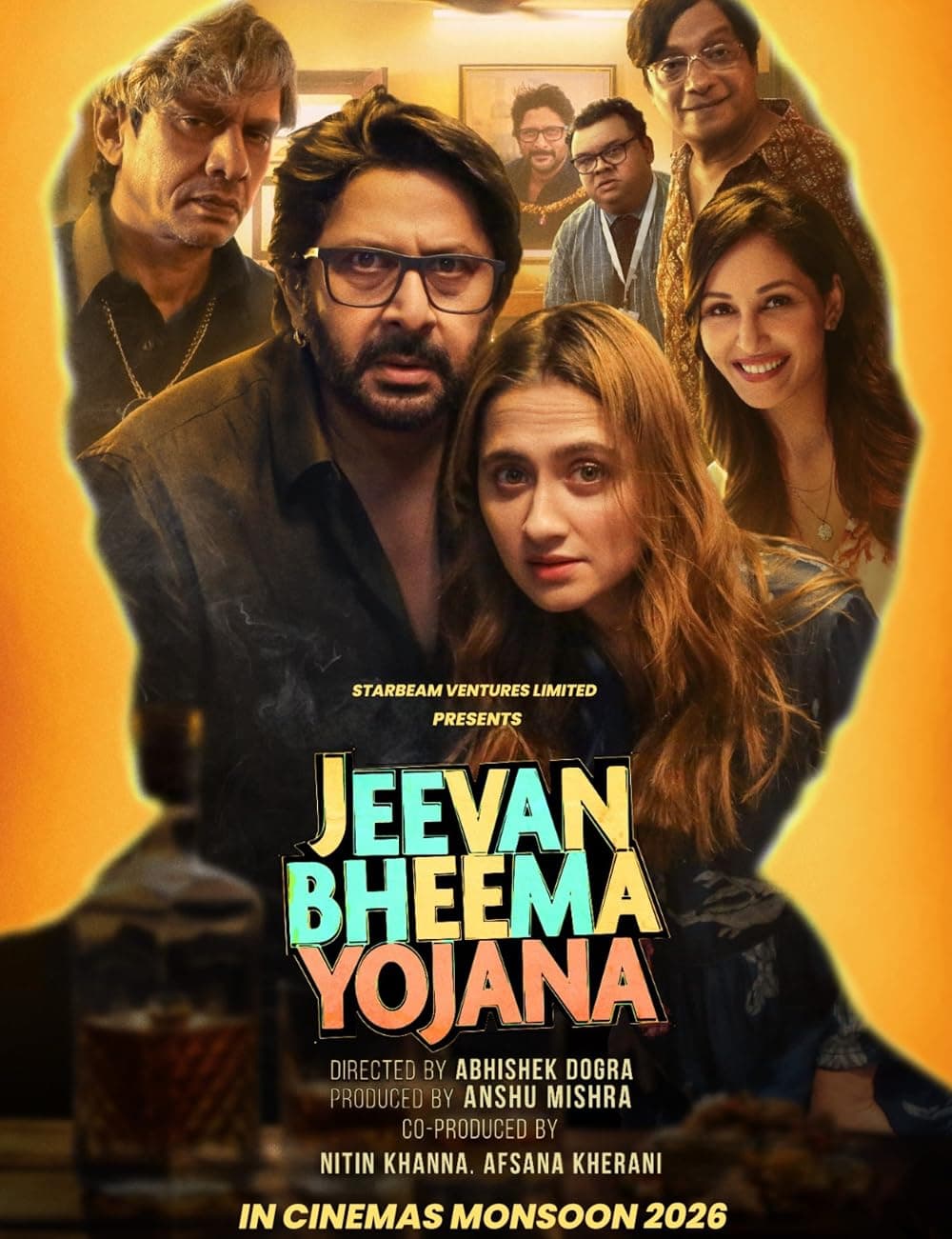
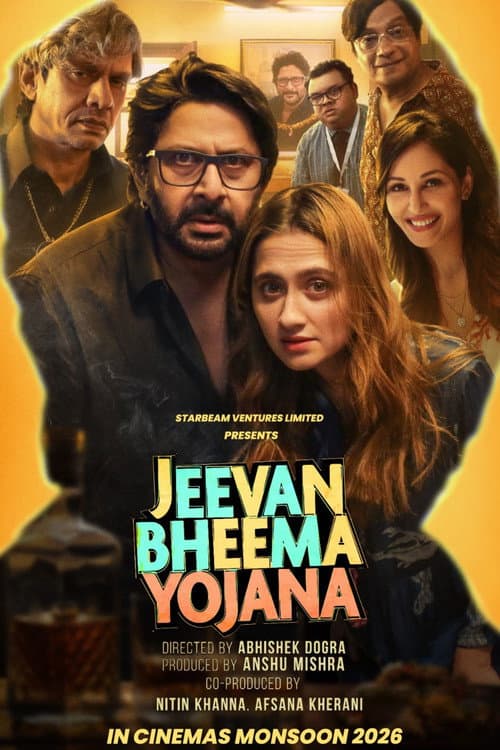
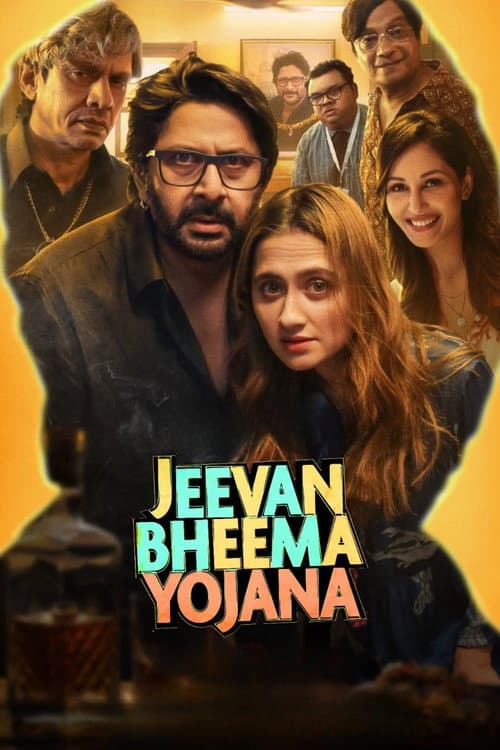
The first thing you notice about Arshad Warsi in the film’s opening scene is the exhaustion. Not the actor’s exhaustion, but the character’s - a man who has crunched the same numbers a hundred times and still ended up in the red. That man is Jeevan, a middle-class striver whose every bright idea seems to dissolve into another loan. By the time we meet his equally harried wife Yojna (Sanjeeda Sheikh), the audience understands exactly why a wild, almost suicidal gamble might feel like the sanest option available. Jeevan Bheema Yojana, which hit theatres yesterday, takes that premise and runs with it - straight into a maze of mistaken identity, stolen diamonds, and the kind of chaos that only Bollywood’s finest character actors can conjure.
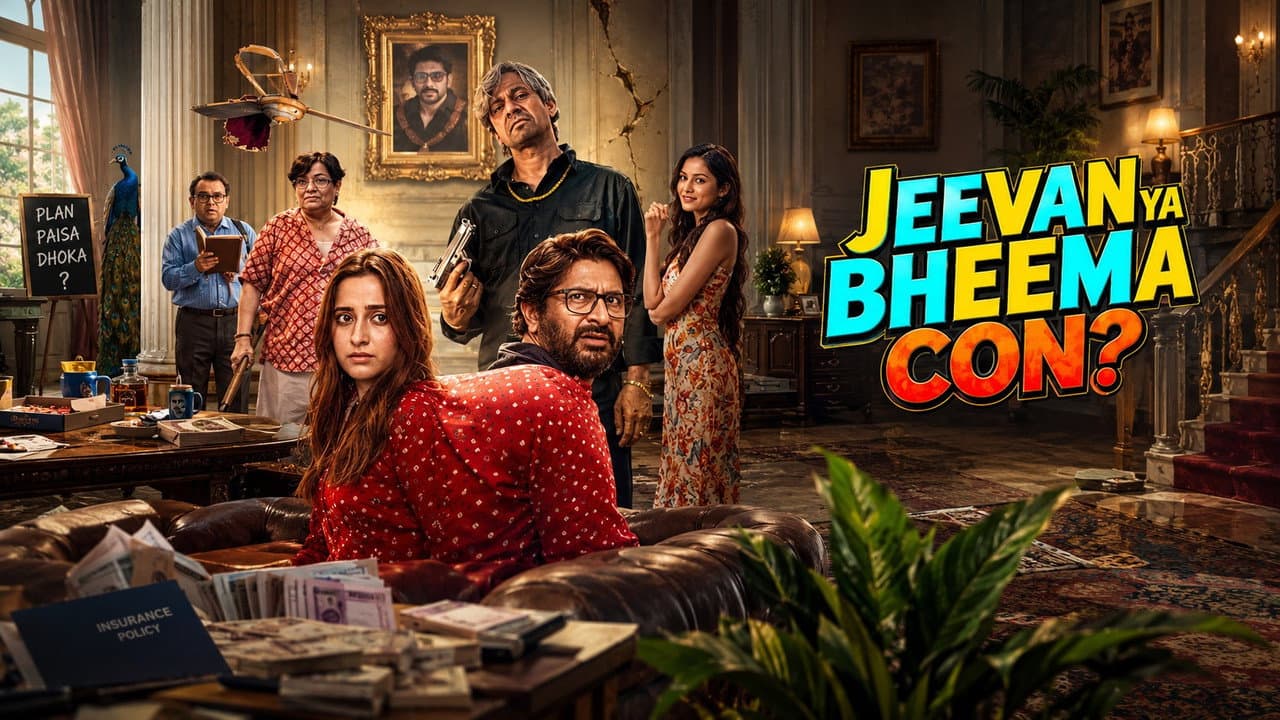
Directed by Abhishek Dogra, the film opens with a deceptively simple conundrum. Jeevan and Yojna are drowning. Their small business has failed, lenders are circling, and the couple’s arguments have taken on the weary rhythm of a recurring nightmare. Then enters Bheema - a stranger with Jeevan’s exact face, played by Warsi with a swagger that his counterpart lacks completely. A chance meeting sparks an audacious plan: take out a hefty insurance policy on Jeevan, then have Bheema stand in for the inevitable, profitable “accident.” What could possibly go wrong? As it turns out, everything, because Bheema is not merely a drifter with a lucky smile. He is a man deeply embedded in a diamond smuggling racket, and his associates - led by a wonderfully oily Vijay Raaz - have very specific expectations about where their merchandise has gone.
What makes the film work is its tonal tightrope act. Dogra never lets the comedy undercut the real, gnawing dread of financial ruin, nor does he allow the crime plot to become so grim that the jokes feel irresponsible. The script earns its laughs through situational irony and timing, not punchline shortcuts. Warsi, pulling double duty, delivers his best dual-role performance since his earliest days in comedy. His Jeevan is a man perpetually on the verge of tears, his posture crumpled like a rejected loan application. His Bheema, meanwhile, walks like he owns the pavement and speaks with a lazy confidence that suggests he has never once worried about an EMI. Watching the two share screen space - through clever editing and body-language differentiation - is a masterclass in physical acting. You never doubt for a second that they are different people, even before the plot forces them into each other’s clothes and lives.
The supporting cast elevates every scene they touch. Vijay Raaz, as the smuggler’s fixer with a philosophical bent, delivers a monologue about the nature of greed that deserves to be quoted for years. Pooja Chopra plays a sharp-nosed police inspector who smells something rotten, while Brijendra Kala nearly steals the entire film as a perpetually bewildered insurance agent who cannot quite process the paperwork piling up on his desk. Even the smaller roles - Madhu Anand Chandhock as a suspicious neighbour, Jaywant Wadkar as a corrupt broker - feel fully realized, each adding a layer of texture to this world of desperate schemers and petty crooks.
At 120 minutes, the film rarely drags. Dogra shoots Mumbai not as a glossy postcard but as a city of crowded trains and narrow gullies, where secrets have nowhere to hide. The pacing is brisk but never frantic, allowing the central conceit - that one man’s salvation is another man’s catastrophe - to breathe. There is a particularly tense sequence involving a hotel room, a suitcase full of stolen gems, and a case of mistaken identity that plays like classic farce, with doors slamming and alibis crumbling in real time. Yet underneath the slapstick beats, the film keeps asking a surprisingly serious question: how far are ordinary people willing to go when the system offers them no exit?
Sanjeeda Sheikh deserves special mention. Yojna is no mere accomplice; she is the brains of the operation, the one who calculates the odds and shields her husband from his own panic. Sheikh plays her with a steely pragmatism that slowly cracks as the body count of lies mounts. Her scenes with Warsi - both the anxious version and the dangerous impersonator - are electric, capturing the strange intimacy of a marriage tested by an unspoken crime. The film does not pretend that its heroine is a saint, but it also refuses to punish her for her desperation. That nuance gives Jeevan Bheema Yojana a moral complexity rare in this genre.
Ultimately, the title is a pun that cuts both ways. On the surface, it refers to a life insurance plan - a literal scheme for survival. But underneath, it asks whether a shared risky venture can actually bind two people together, or whether it will pull them under. Without spoiling the climax, the film lands on a resolution that feels earned, tying up its loose threads with a final flourish that respects the audience’s intelligence. It is not a grand statement about society, nor does it pretend to be. It is simply a very funny, very tense, very human story about people who try to cheat fate and discover that fate has a wicked sense of humour.
For Hindi Movie Buzz readers looking for a smart, crowd-pleasing entertainer that values craft over spectacle, Jeevan Bheema Yojana is an easy recommendation. Warsi proves once again that he is among our most undervalued leading men, capable of carrying a film on the strength of a raised eyebrow or a nervous twitch. And Dogra announces himself as a director who understands that crime comedies work best when the stakes feel real. It opened quietly on a Friday with no massive marketing push, but word of mouth should build fast. This is the kind of film that finds its audience - those who miss the era when Bollywood could make you laugh, wince, and think, sometimes all in the same breath. Go see it. Your policy on good cinema will thank you.