Kareena Kapoor Khan: A Career In Hindi Cinema is a study in range. Her name has been part of Hindi cinema for more than two decades. For readers who follow the industry from a distance, the useful way to understand her is not through gossip or box-office chatter but through the shape of her filmography. Hindi cinema, often called Bollywood in casual use outside India, is the Mumbai-based film industry that releases stories in the Hindi language for audiences worldwide. Within that industry, she has built a career on shifting between glossy family entertainment and smaller, character-driven parts.
Her debut came in Refugee (2000), as Nazneen Ahmed. The performance earned her the Filmfare Award for Best Female Debut. Filmfare is the long-running Indian film publication whose annual awards are among the most closely followed markers of achievement in Hindi cinema. That first recognition set a template she has followed since: move between registers rather than settle into one.
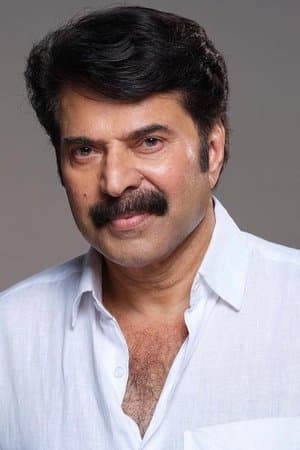
 Photo: TMDb
A Career Built on Range
What connects her choices is not a single genre but a willingness to move. She has anchored big ensemble dramas, carried comedies, and taken on roles that sit at the edge of the mainstream. The result is a body of work that reads less like a straight line and more like a set of deliberate turns, each one testing a different register.
Consider the span. Omkara (2006) and Dev (2004) sit at one end, adaptations and ensemble dramas built on heavy material. Golmaal 3 (2010) and Bodyguard (2011) sit at the other, broad entertainers built around a familiar face. Between them lie the romance of Main Prem Ki Diwani Hoon (2003), the comedy of Hulchul (2004), the marriage drama of Bewafaa (2005), and the science-fiction scale of Ra.One (2011). A performer who can hold all of that is not chasing one audience. She is collecting several.
The Films That Shaped the Career
From Family Drama to Romance
Kabhi Khushi Kabhie Gham (2001) placed her in a large family drama about a young man trying to reunite his relatives after his father disowned an adopted brother for marrying a woman of lower social standing. The film gave her one of her most quoted characters, Pooja "Poo" Sharma Raichand, a young woman whose comic vanity became part of the film's appeal. Main Prem Ki Diwani Hoon (2003) cast her as Sanjana in a romantic triangle. Hulchul (2004) put her in a comedy where two people from feuding families pretend to fall in love as part of a revenge plot, only for the fake romance to become real, with Kapoor Khan as Anjali Pathak. Bewafaa (2005) followed, with her as Anjali Sahai in a story built around marriage and loyalty. Chameli (2003) sits apart from all of these, a smaller film that showed a different instinct at work.
The Middle Years and the Bigger Canvas
Jab We Met (2007) is the film most often cited as the turning point. Her work in that romantic comedy brought her the Filmfare Award for Best Actress, and it remains the clearest example of her comic timing carrying a film.
3 Idiots (2009) then placed her as Pia Sahastrabudhhe in a story about three students at a prestigious university and their clashes with a strict dean. The film reached an enormous audience and made her a familiar face well beyond the usual Hindi cinema viewership. Golmaal 3 (2010) kept her in the comedy space, while Bodyguard (2011) and Ra.One (2011) showed her in two very different modes, the latter as Sonia S. Subramanium in a science-fiction setting. Talaash (2012) followed, and Bajrangi Bhaijaan (2015) cast her as Rasika in a story that travelled across borders.
 Photo: TMDb
Recent Work and a New Kind of Lead
Laal Singh Chaddha (2022) gave her the role of Rupa D'Souza, and Crew (2024) placed her as Jasmine Kohli at the centre of an ensemble. Singham Again (2024) brought her in as Avni Singhham, part of a cop-focused series that weaves a good-versus-evil narrative drawn from the Ramayana.
The most recent title in the confirmed filmography is Daayra (2026), where she plays DCP Ajooni Kohli. DCP is short for Deputy Commissioner of Police, a senior rank in the Indian police service that signals authority rather than support.