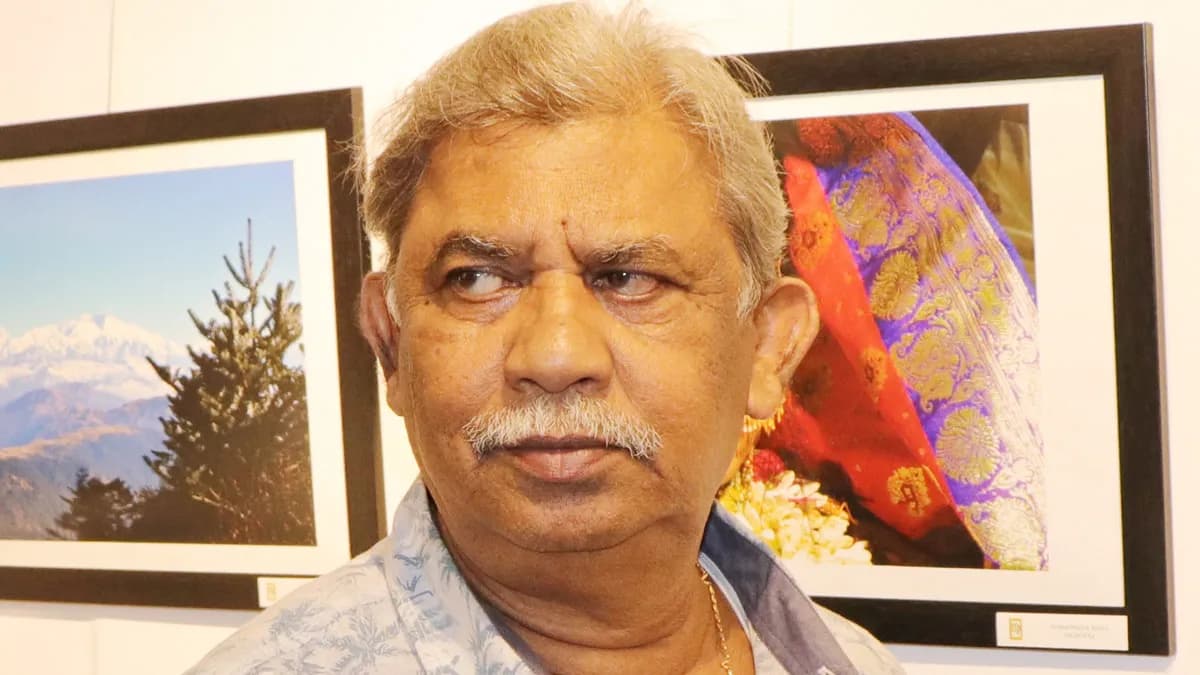
Raja Sen Dies At 71: National Award-Winning Bengali
Renowned Bengali filmmaker Raja Sen, National Award winner, dies at 71 after prolonged illness. Read his legacy and impact on Indian cinema.
Advertisement
Renowned Bengali filmmaker Raja Sen, National Award winner, dies at 71 after prolonged illness. Read his legacy and impact on Indian cinema.
The Bengali film industry is in mourning today following the passing of acclaimed director Raja Sen, who died at the age of 71 after a prolonged illness. The National Award-winning filmmaker, known for his deeply humanistic storytelling and nuanced portrayals of everyday life, leaves behind a body of work that has profoundly shaped contemporary Indian cinema.
Sen’s health had been a matter of concern for close friends and colleagues over the past year, with the veteran director largely staying away from public events. While his family has not released an official statement detailing the exact cause of death, those close to the production fraternity confirmed that he had been battling a chronic ailment for some time. His demise marks the end of an era for a generation of film lovers who grew up watching his quietly powerful narratives unfold on the big screen.
A Journey Through the Lens
Born into a culturally rich household in Kolkata, Sen’s early life was steeped in literature, music, and theatre. He initially worked as an assistant director before making his independent debut in the mid-1980s, a time when Bengali cinema was navigating the transition between the towering legacies of Satyajit Ray and Mrinal Sen and a new wave of independent voices. Raja Sen carved his own path with a style that was distinctly observational, often focusing on the subtle emotional conflicts within families and communities rather than sweeping melodrama.
His films were celebrated for their authentic casting and unhurried pacing, with many of his works revolving around the complexities of middle-class existence in Bengal. Critics frequently noted his ability to extract deeply affecting performances from both seasoned actors and newcomers, a skill that made his projects a desired destination for performers seeking meaningful roles. It was this very consistency that earned him the National Award for Best Feature Film in Bengali, a recognition that cemented his standing as one of the region’s most significant cinematic voices.
A Legacy of Quiet Revolution
While Sen never sought the limelight the way many of his contemporaries did, his influence on the next generation of filmmakers was immense. Directors working in the parallel cinema space have often cited his early works as a template for grounding stories in lived reality, using minimal technical embellishments to let the narrative breathe. His films were regularly featured at international film festivals, where they were praised for their universal themes of love, loss, and reconciliation, all set against the distinct backdrop of rural and urban Bengal.
Beyond the awards and screenings, Sen was also known as a generous mentor. Several young screenwriters and assistant directors who passed through his crews have gone on to establish their own careers, crediting him with teaching them the discipline of the craft. In interviews over the years, he frequently spoke about the importance of patience in filmmaking, arguing that truth on screen often emerges when a director allows silence to speak as loudly as dialogue.
Industry Reactions Pour In
News of his death spread quickly through the film community, prompting an outpouring of tributes from actors, technicians, and political leaders. Many of the actors who collaborated with him on his most famous films, including those who won individual accolades for their work under his direction, expressed their grief on social media, calling him a "director’s director" and a "true artist of the people." A prominent Bengali actor, who worked with Sen on three films, described him as a "quiet giant" whose generosity on set was matched only by his uncompromising artistic standards.
The West Bengal government is expected to offer official condolences, and a number of cultural organizations have announced plans for a memorial screening of his most iconic works. Fans have begun gathering at his residence in South Kolkata, leaving flowers and lighting candles in remembrance. A last rites ceremony is scheduled to be held later this week, with the film fraternity expected to attend in large numbers to bid farewell to a master storyteller.
Looking Back at a Storied Career
Raja Sen’s filmography, though not extensive by commercial standards, is marked by a remarkable consistency in quality. He often worked with limited budgets, yet his films never appeared constrained, a testament to his resourceful direction and his keen eye for cinematic composition. Several of his later works delved into themes of aging and memory, bearing a reflective quality that seemed to anticipate this final chapter of his life.
In a career spanning nearly four decades, he told stories that were rooted in the specifics of Bengali life yet resonated far beyond regional boundaries. His passing leaves a void that will be hard to fill, but his films remain, continuing to offer audiences a tender, wise, and deeply felt perspective on the human condition. As the industry grieves, there is also a collective sense of gratitude for the treasure of work he leaves behind.
Source: Filmibeat
Advertisement
Advertisement