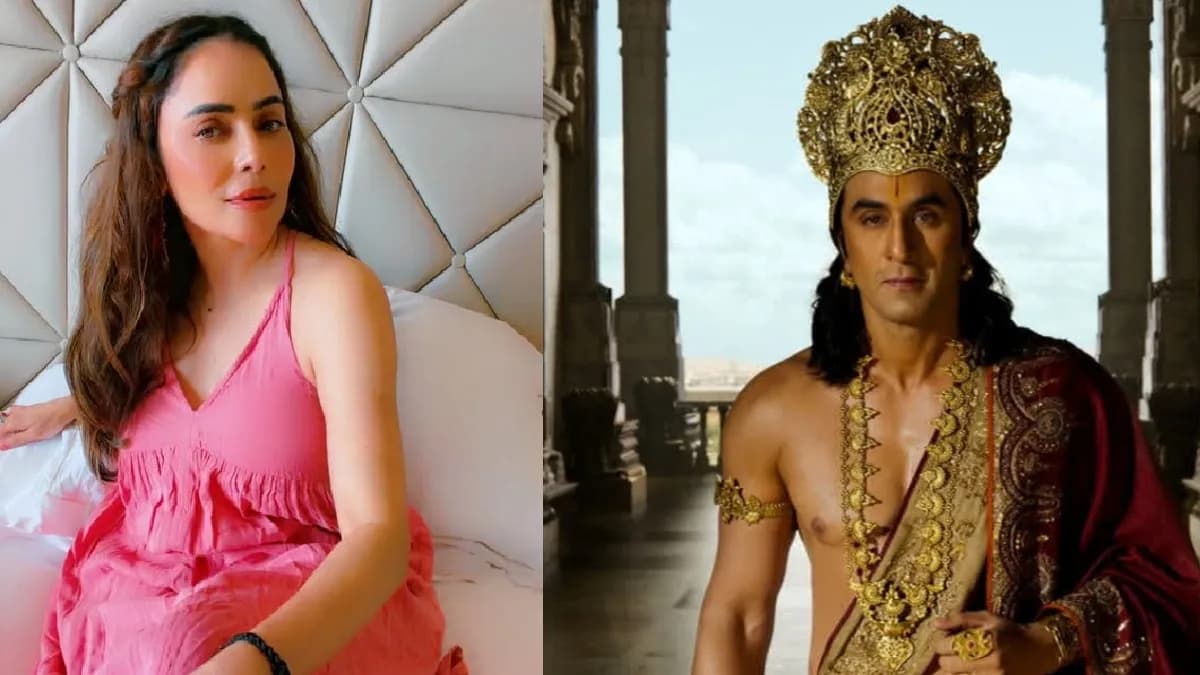
Ramayana Row: Nikita Rawal Demands Ranbir Apologise |
Who is Nikita Rawal? She urges Ranbir Kapoor to apologise for his beef remark amid Ramayana controversy, sparking a boycott trend online.
Advertisement
Who is Nikita Rawal? She urges Ranbir Kapoor to apologise for his beef remark amid Ramayana controversy, sparking a boycott trend online.
The simmering controversy surrounding Nitesh Tiwari's ambitious Ramayana adaptation has taken a sharp new turn, with a relatively unknown social media personality now at the center of a demand that has split the internet down the middle. Nikita Rawal, whose name has suddenly trended across platforms, has publicly called upon lead actor Ranbir Kapoor to issue a formal apology over a past remark concerning beef, adding the hashtag "Iska Boycott Kar Do" to her posts. The call has ignited a fresh wave of debate, forcing the film's production into an uncomfortable spotlight weeks before its scheduled release.
Rawal’s demand is not rooted in any new interview or leaked footage. Instead, it resurrects a years-old statement reportedly made by Kapoor during a promotional appearance, where he casually discussed his dietary preferences in a manner that has now been construed as offensive by certain sections of the audience. While the exact wording and context of that original remark remain a matter of heated dispute, Rawal has framed it as a direct affront to the cultural and religious sentiments associated with the epic. Her central argument is simple: that an actor portraying Lord Ram, a figure of immense devotion for millions, cannot be seen as having disrespected the values that the character embodies.
What makes Rawal’s intervention notable is not her celebrity status - she has virtually no filmography or public profile to speak of - but the velocity with which her call has spread. Within hours of her post, the hashtag had accumulated thousands of mentions, with a mix of support and derision. Her followers, many of whom were previously unfamiliar with her, have amplified the message, while critics have dismissed her as a fringe figure attempting to manufacture relevance ahead of a major release. The episode highlights a persistent pattern in the Hindi film industry, where a single social media post can destabilise months of carefully managed promotional strategy.
The film's team has, so far, maintained a strategic silence. Neither Kapoor nor the production house has issued a direct response to Rawal’s demand, a move that insiders suggest is intended to avoid giving further oxygen to the story. However, the lack of a rebuttal has allowed the narrative to fester, particularly on platforms where outrage often outpaces nuance. Kapoor's absence from the discussion has been interpreted by some as an admission of guilt, while others see it as a prudent refusal to engage with what they consider a manufactured controversy.
This incident is not occurring in a vacuum. Over the past year, the religious and cultural framing of Bollywood projects has become a recurring flashpoint, with several high-profile films facing calls for boycotts based on perceived slights. The Ramayana project, given its subject matter, was always likely to be a lightning rod for such tensions. By casting Kapoor, a star with a progressive public persona, the filmmakers had already invited scrutiny. Rawal’s intervention has effectively weaponised that pre-existing tension, turning a casting choice into a litmus test of faith and loyalty.
The demand for an apology also raises uncomfortable questions about the boundaries of accountability. Should an actor’s past personal statements, made in a different context and presumably without malicious intent, permanently disqualify them from portraying revered figures? Rawal’s position appears to be an absolute one, leaving no room for explanation or repentance. She has not specified the exact wording of the apology she seeks, only that it be public and unequivocal, a condition that many find impractical given the vague nature of the original complaint.
Meanwhile, the boycott hashtag has become a battleground. Some users, claiming to represent devout viewers, have pledged to avoid all screenings of the film unless the demand is met. Others have pointed out the logical inconsistency of punishing a film that employs thousands of artisans, technicians, and support staff for a remark made years ago by one actor. The debate has overshadowed earlier conversations about the film’s visual effects, casting choices, and musical score, all of which were previously generating positive buzz.
For Kapoor, the situation is a delicate balancing act. An unconditional apology would likely appease his critics but might be perceived by his fans as a sign of weakness, particularly if the original remark is proven to be a misinterpretation. A refusal to apologise, however, risks reinforcing the boycott narrative and could potentially dent the film’s opening day collections. His silence, for now, is a calculated gamble, betting that the storm will subside once the next news cycle arrives.
Nikita Rawal, for her part, appears uninterested in offering a path forward. In subsequent posts, she has doubled down on her position, praising those who have joined her call and urging her followers to spread the message beyond their immediate circles. Whether she is a genuine activist or an opportunist, her impact has been undeniable, at least for the moment. The fundamental question remains whether an anonymous voice can actually derail a multi-crore production, or whether this will fade as just another day on the chaotic timeline of Indian film discourse. For now, all eyes are on Kapoor’s next move, and on how a studio navigates the increasingly treacherous waters between cinematic expression and cultural expectation.
Source: Filmibeat
Advertisement
Advertisement