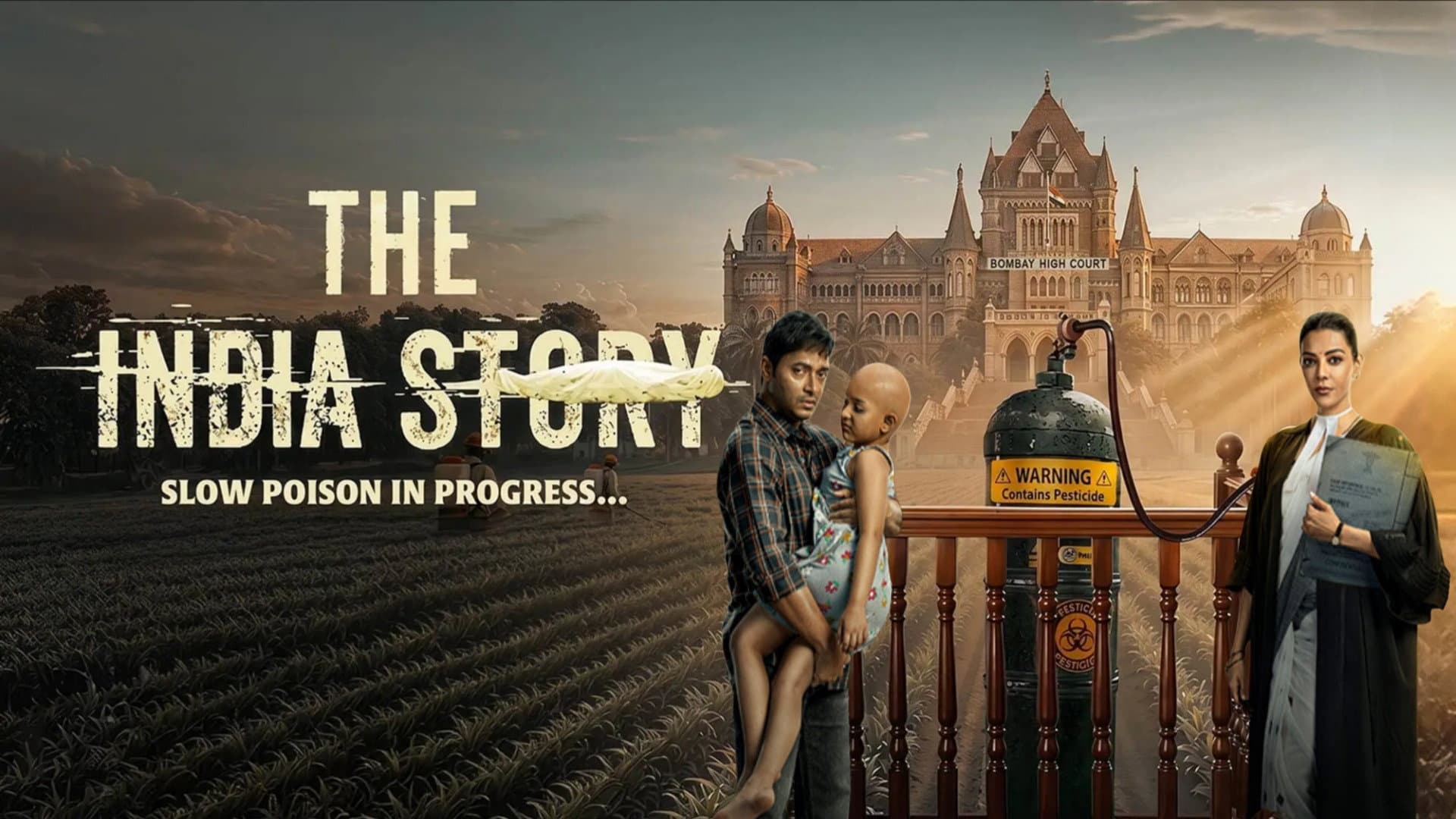
The year is 2026, and the summer blockbuster season has come and gone. Yet, as the monsoon clouds gather over Mumbai, the conversation in film circles isn’t about a mindless action spectacle or a frothy rom-com. It is about a quiet, searing thunderclap that arrived in theatres on July 24th - a film called The India Story. Directed by Chettan D K, this 130-minute Hindi-language drama-thriller isn’t just a movie; it’s a diagnosis. And with its TMDb rating still stubbornly at zero - likely because critics have been too busy shaking their heads in grim recognition to log in - it has already become the most urgent film of the year.
The premise is deceptively simple. A community, anonymous and sprawling, begins to crumble under the weight of an invisible enemy: pesticide contamination. What starts as a few unexplained illnesses spirals into a full-blown public health catastrophe. The water is bad, the soil is poisoned, and the bodies are piling up. But The India Story is not a disaster film in the Roland Emmerich mold. There are no crumbling skyscrapers here, only crumbling immune systems. The real spectacle is the slow, grinding machinery of denial.
At the heart of this maelstrom is Kajal Aggarwal, delivering a performance that feels less like acting and more like bearing witness. She plays a community health worker, a woman whose initial faith in the system is systematically dismantled. Aggarwal has always possessed a steely grace, but here, Chettan D K strips away the gloss. Her eyes carry the hollow exhaustion of someone who has read one too many medical reports and made one too many house calls to homes where a child’s fever no longer feels routine. It is a career-best turn, grounded not in melodrama but in the quiet, stubborn resolve of a person who realizes that the only thing more dangerous than the poison in the ground is the apathy in the boardroom.
She is not alone. The film assembles a formidable ensemble, each actor a cog in the narrative’s brutal machine. Shreyas Talpade, as a harried local journalist, provides the film’s frantic pulse. He is the one running on caffeine and righteous anger, chasing a story that everyone wants buried. His scenes with Aggarwal crackle with a shared, desperate alliance. Then there’s the formidable trinity of Murali Sharma, Manish Wadhwa, and Atul Tiwari, who portray the varying faces of institutional rot. Sharma, in particular, is chilling as a mid-level bureaucrat who delivers lines about “regulatory protocols” with the practiced ease of a man who has long ago traded conscience for career advancement. Wadhwa, as the corporate liaison, embodies the sleek, sociopathic charm of an industry that calculates the cost of cleanup versus the cost of compensation, and finds the latter more palatable.
What elevates The India Story beyond a typical "issue-based" drama is Chettan D K’s directorial precision. He doesn’t shout; he accumulates. The runtime is generous, but it never feels bloated. Instead, it allows the dread to simmer. Scenes of community meetings devolve from reasoned pleas to desperate shouting. Laboratory reports are read with the tension of a thriller’s final reveal. Sham Mashalkar and Kamlesh Sawant, as local farmers and community elders, ground the film in a palpable sense of place. Their weathered faces tell a story of their own - of trust betrayed, not just by a company, but by a nation that promised to protect them. Trisha Sarda, as a young, ambitious lawyer, enters the fray in the final act, wielding legal jargon like a weapon against the monolithic silence.
This is where the film crosses from being a straightforward narrative into a broader, bitter allegory. The title, The India Story, is not an accident. It is a provocation. Chettan D K is asking us to look at the version of India we often prefer to ignore - the one where industrial negligence is a feature, not a bug, of development. The film posits that the real "India Story" isn’t just about GDP growth or technological leaps; it’s also about the people who pay for that progress with their health, their land, and their lives.
There is a grim, relentless logic to the screenplay that refuses to offer easy catharsis. The fight for accountability is messy, punctuated by dead ends and the casual gaslighting of those in power. The film’s most devastating scene isn’t a dramatic confrontation in a courtroom. It’s a quiet moment between Aggarwal’s character and a mother who has lost her son, where they speak in hushed tones about the future. There are no answers, only a shared understanding that the fight is all they have left.
The India Story arrives at a time when we are saturated with true-crime documentaries and whistle-blower exposes. Yet, by filtering this reality through the lens of Bollywood - albeit a gritty, uncompromising branch of it - the film achieves a different kind of resonance. It uses the grammar of commercial cinema to tell a story that is fundamentally anti-commercial. It is not designed to make you feel good; it is designed to make you see clearly. It is a grim, thought-provoking, and essential piece of filmmaking. It’s a film that doesn’t just ask you to watch, but to reckon. And in a cinematic landscape often accused of being detached from reality, The India Story is a blazing, uncomfortable exception.