Karna Not a Tragic Hero? Sharad Devarajan Explains |
Advertisement
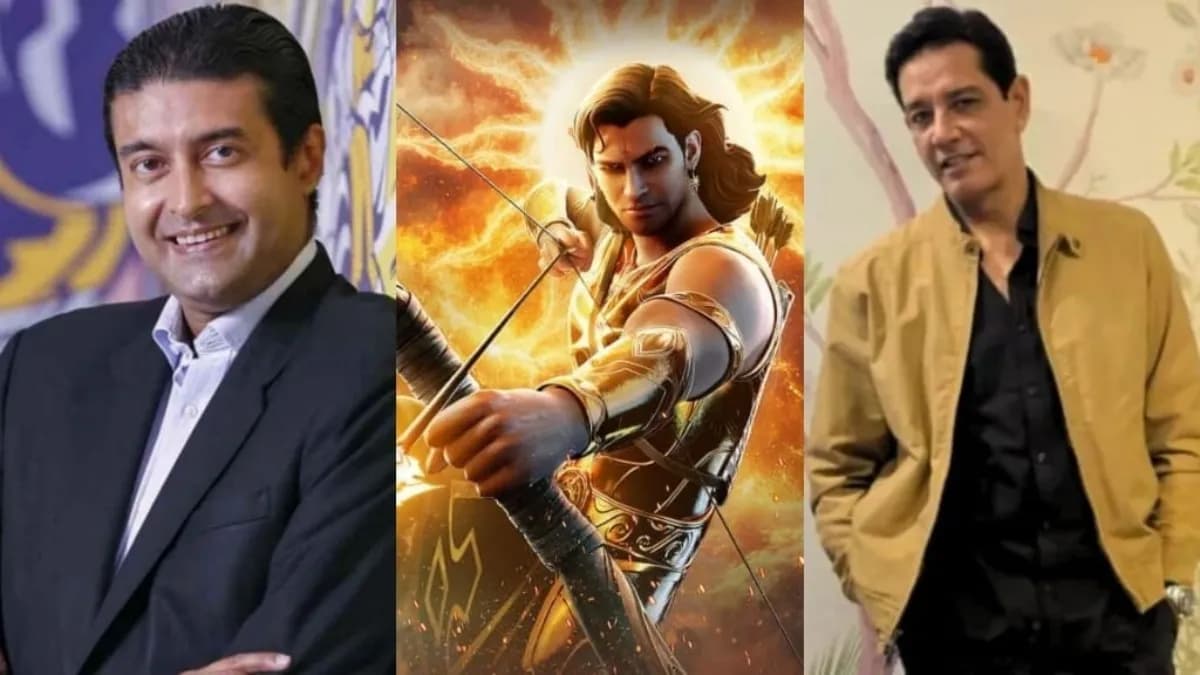
In an exclusive chat, Sharad Devarajan reveals why Karna isn't a tragic hero and credits Anup Soni's powerful voice in The Legend of Karna.
The upcoming animated feature The Legend of Karna is generating significant buzz in the Indian film industry, and its creator, Sharad Devarajan, is keen to reshape how audiences perceive one of the Mahabharata's most complex figures. In a recent exclusive interaction, Devarajan pushed back against the long-held label of "tragic hero" that has often been attached to Karna, offering a fresh perspective on the character’s journey. The co-founder of Graphic India, who has been the driving force behind bringing the epic’s warrior to the big screen, insists that the narrative is less about fate’s cruel hand and more about the choices made in the face of immense adversity.
Speaking candidly, Devarajan argued that the conventional framing of Karna as a victim of destiny undersells his agency. He explained that the story, as depicted in the film, is not one of a man crushed by circumstance but rather of a warrior who consistently makes conscious decisions, even when those decisions lead to painful outcomes. This interpretation, he suggests, elevates Karna from a figure of pity to one of profound moral complexity, whose story resonates with modern audiences who understand that life’s trials are often defined by the responses they elicit, not the trials themselves. For Devarajan, the tragedy does not lie in Karna’s birth or his loyalty to Duryodhana, but in the deeply human conflict between personal honor and the demands of a larger, unforgiving war.
A key element in bringing this nuanced vision to life, according to Devarajan, was the vocal performance of actor Anup Soni. The creator was effusive in his praise for Soni, crediting the actor’s deep, resonant voice as instrumental in shaping the film's emotional core. Devarajan noted that Soni did not just read lines; he infused the character with a quiet dignity that perfectly aligned with the director's vision of a hero who is not defined by his losses but by his unyielding principles. The choice of Soni, known for his work in television and film, was described as a casting decision that unlocked a level of gravitas that a purely visual interpretation might have missed.
Devarajan elaborated on the process, explaining that Soni’s delivery brought a sense of lived experience to the dialogue. The subtle inflections, the pauses, and the raw emotional weight in his voice allowed the animation to breathe, creating a performance that feels both timeless and immediate. He compared the voice actor’s contribution to that of a musician interpreting a composer’s score, where the notes are written, but the soul comes from the performer. For Devarajan, Soni’s work was the final piece of the puzzle, transforming Karna from a mythological caricature into a flesh-and-blood figure whose internal struggle is palpable in every scene.
The film aims to be a visual spectacle as well, with Devarajan hinting at a style that combines epic scale with intimate character drama. He pointed out that the animation was specifically designed to support the story's philosophical undertones, avoiding the trap of over-stylized action that often dominates the genre. The focus, he stressed, remains on Karna’s inner world, with the battlefield serving as a backdrop to the more significant conflict within his mind. This approach, he believes, will set the film apart from other mythological adaptations, appealing not only to younger viewers but also to those seeking a more substantive narrative.
When asked about the potential for a franchise, Devarajan remained focused on the single narrative, stating that the goal was to create a definitive and self-contained story that honors the source material while offering a new lens through which to view it. He acknowledged the weight of expectations that come with adapting such a beloved character but expressed confidence that the film’s grounded approach to his psychology would resonate more deeply than a simple retelling of events. The creator’s reverence for the source material was evident, as he repeatedly stressed the importance of respecting the original text while still allowing for artistic interpretation.
Beyond the voice cast, Devarajan highlighted the collaborative nature of the project, describing it as a global effort that brought together Indian storytelling with international animation talent. He noted that this fusion was intentional, aiming to create a visual language that feels authentic to the epic’s Indian roots while possessing a cinematic polish that can compete on a global stage. This commitment to quality, he argued, is the only way to do justice to a story with such profound cultural significance. The result, he hopes, will be a film that sparks conversation and invites viewers to reconsider the lessons of the Mahabharata in a contemporary context.
As the release approaches, the buzz around The Legend of Karna continues to build, fueled in large part by Devarajan’s bold re-framing of the central character. By rejecting the simplistic label of "tragic hero," he is inviting audiences to engage with Karna on a more challenging and rewarding level. With Anup Soni’s voice acting as the emotional anchor, the film appears poised to offer a thoughtful and visually stunning exploration of duty, loyalty, and the price of a single, irreversible choice. Whether this new interpretation will change the discourse around the character remains to be seen, but it has certainly captured the attention of those eager for a more sophisticated take on Indian mythology.
Source: Filmibeat
Advertisement
Advertisement