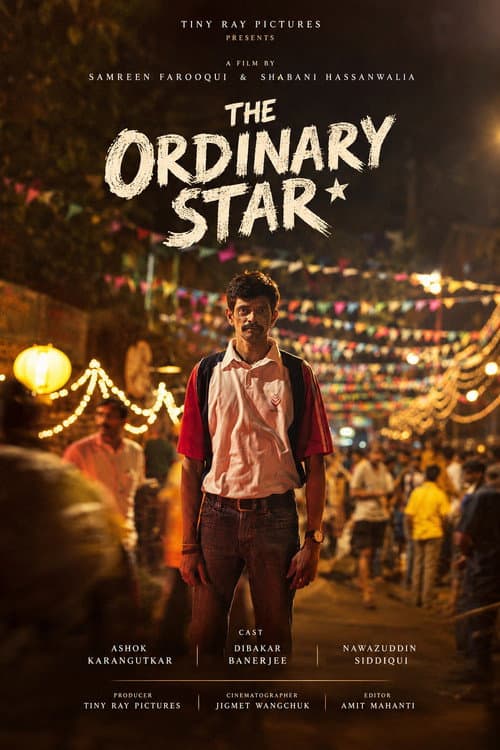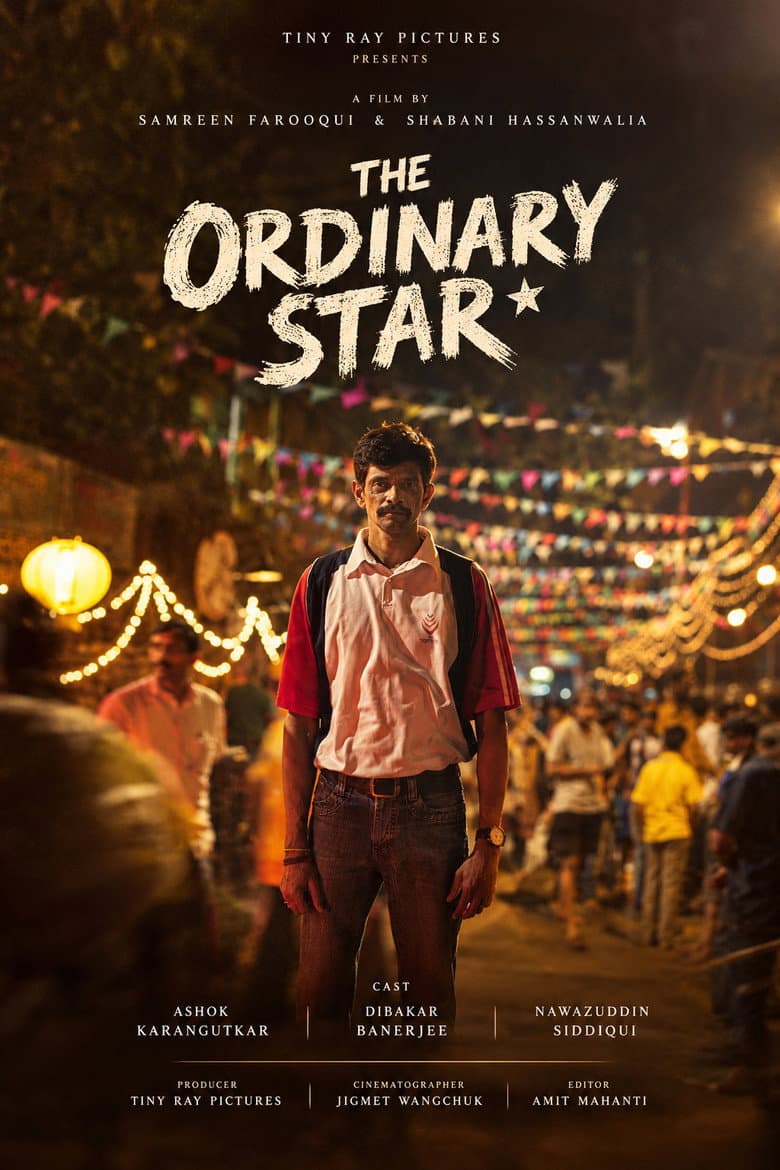
There is a particular kind of irony that haunts the making of a film. To capture a life on camera, someone else's life often has to be rearranged, borrowed, or quietly consumed. Samreen Farooqui's new documentary, The Ordinary Star, takes that irony and turns it into its entire subject. The film arrives in theatres on October 29, 2026, and it is not the kind of documentary that comforts you. It interrogates you.
The setup is deceptively simple, almost anecdotal. Back in 2013, Dibakar Banerjee was assembling his segment for Bombay Talkies, the anthology that marked a century of Indian cinema. He cast Nawazuddin Siddiqui as Porandar Vithal, a character drawn from the world of a short story by Satyajit Ray. To ground the performance, Siddiqui was asked to study Ashok, the actual resident of the room the actor would occupy during the shoot. That instruction - study this man, become him, then leave him behind - is where Farooqui's camera begins its work.
Release Date & Where to Watch
The Ordinary Star opens in Indian cinemas on October 29, 2026, three weeks after today's date. It is a theatrical documentary release, which is itself a statement in a market where non-fiction cinema rarely gets a big-screen push. The film runs just 65 minutes, a tight, uncluttered runtime that suits its essayistic temperament. For audiences accustomed to streaming documentaries that pad themselves into series, this brevity should feel like a deliberate choice rather than a limitation. Expect a limited but curated rollout in major metros, with the possibility of expansion depending on word of mouth. Given its subject matter - the mechanics of filmmaking itself - it will likely find its most enthusiastic audience among cinephiles, film students, and anyone who has ever wondered what happens to the people who inspire fictional characters.
Cast & Crew
Farooqui directs, and she has spent much of her career in the documentary space, which means she understands that the camera is never neutral. Here, she turns that understanding on her own tribe. The film features Dibakar Banerjee and Nawazuddin Siddiqui as themselves - the fiction director and the actor, both participants in a process that the documentary then pulls apart. Ashok, the real resident whose life fed the construction of Porandar Vithal, is the quiet centre of gravity. The documentary filmmakers who worked alongside the fiction crew are also part of the fabric, making this a film about three intersecting modes of image-making: fiction, documentary, and the strange hybrid that emerges when the two collide. The original language is Hindi, and the industry is Bollywood, though the film's concerns are universal to anyone who has watched a crew descend on a real place and call it a set.
Story & What to Expect
Do not expect a conventional behind-the-scenes featurette. The Ordinary Star is not interested in the glamour of production or the anecdotes that actors tell on talk shows. Instead, it ponders the nature and cost of the cinematic process - its invasiveness, its need to devour so that it can create, and the endless search to live a life less ordinary.
The film traces how a character gets built. Banerjee, working from Ray's source material, shapes a fictional figure. Siddiqui, tasked with inhabiting that figure, studies a man who never asked to be a template. Ashok feeds the construction through his own life, his own memories, his own ordinary routines. Bit by bit, a fictional person named Porandar Vithal takes shape, and the raw material is a real human being who remains, in the end, exactly where the camera found him. The documentary watches this exchange with clear eyes. It asks who benefits when a life becomes research. It asks what the actor owes the subject. It asks whether the finished film - the one that wins acclaim and enters the canon - carries a debt that nobody intends to repay.
There is also the matter of the title itself. The Ordinary Star is a contradiction, and Farooqui knows it. Cinema is built on the promise that ordinary people can become extraordinary, that a face plucked from a crowd can become iconic. But the documentary turns that promise over and examines its underside: the ordinary person who stays ordinary while someone else's career is made from their ordinariness. That is the uncomfortable heart of the film.
Why It's Worth Watching
Because it is rare. Documentaries about filmmaking usually celebrate the craft. This one questions it. Farooqui has made a film that sits at the intersection of ethics and aesthetics, and she refuses to resolve the tension. Banerjee and Siddiqui are both formidable presences, and watching them be examined rather than simply admired is a genuinely novel experience. The 65-minute runtime means there is no fat, no filler, no sentimental detours.
It is also worth watching because it arrives at a moment when the industry is being asked harder questions about whose stories get told and who gets to tell them. The Ordinary Star does not offer slogans. It offers a mirror. For anyone who loves Hindi cinema and still wants to understand what it costs, this is essential viewing. The film opens on October 29, 2026. Bring your curiosity, and perhaps a little guilt.