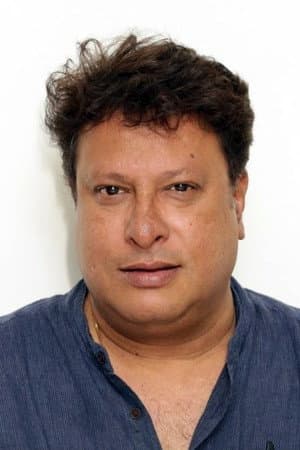
Tigmanshu Dhulia has never really stepped away from filmmaking, even during the stretches when his name wasn't plastered across a release calendar. The director, writer and actor has kept busy in front of the camera and in the writers' room over the past few years, which is precisely why his decision to return to the director's chair with Ghamasaan has drawn so much attention. In an exclusive conversation, Dhulia explained that the pull wasn't nostalgia or a gap in his schedule - it was the material itself.
"Story Gave Me Opportunity To..." he began, before laying out what drew him back. The short version: the narrative handed him something he hadn't been offered in a while, and that was enough to make him commit.
A Story Worth Stepping Behind The Camera For
Dhulia's filmography has long been defined by an interest in the messy overlap between power, ambition and ordinary life. From his early work in television to the features that cemented his reputation, he has consistently gravitated toward stories where the setting matters as much as the plot. According to the filmmaker, Ghamasaan fit that instinct without feeling like a repeat of anything he had done before.
He described the project as one that arrived at the right moment, carrying a premise that allowed him to explore territory he found genuinely fresh. For a director who has spent years being offered variations on the same rural-crime template, that distinction matters. Dhulia has spoken in the past about the difficulty of finding scripts that don't feel like leftovers, and he suggested Ghamasaan cleared that bar early.
The title itself, with its connotations of encroachment and uneasy possession, hints at a story rooted in conflict - though Dhulia was careful not to reduce the film to a single genre label. He framed it instead as a character-driven piece that happens to operate within a tense framework, which is a familiar space for him but one he wanted to approach from a different angle.
Why The Return Took Time
It would be inaccurate to describe Dhulia's career as dormant. He has remained visible as an actor, appearing in projects helmed by other directors, and he has continued to develop material behind the scenes. That dual existence - performer and filmmaker - has shaped how he now chooses what to direct.
He acknowledged that saying yes to a directing assignment carries a different weight than accepting an acting role. Directing demands months of preparation and a level of ownership that acting, for him, does not. That calculus meant several projects passed through his hands without him committing. Ghamasaan was different, he indicated, because the story gave him a reason to invest that time rather than simply occupy the chair again.
There's also the question of expectation. Every new Dhulia film arrives with audiences measuring it against his best-known work, and he is clearly aware of that pressure. Rather than run from it, he framed the return as an opportunity to work with a clean slate - a story he could serve without worrying about whether it matched a template audiences already had in their heads.
What The Director Is Emphasizing
Throughout the conversation, Dhulia returned to a single idea: the story has to justify the effort. He did not lean on marketing language or tease specific plot points. Instead, he talked about the internal logic of the narrative - how characters behave under pressure, how a setting shapes decisions, how conflict emerges from circumstance rather than contrivance.
That approach is consistent with how he has discussed his craft before. Dhulia tends to speak about films as problems to be solved rather than products to be sold, and Ghamasaan appears to have presented him with a problem he found worth solving. He described the material as giving him room to work with themes he cares about while avoiding the sense that he was repeating himself.
He also made clear that returning to direction was not a statement about anything larger - not a comeback narrative, not a response to industry trends. It was simpler than that. A story came along, it held his attention, and he decided to make it.
The Road Ahead
Details around Ghamasaan remain closely guarded, and Dhulia offered no timeline for when audiences might see the finished film. He declined to discuss casting, production specifics or release plans, keeping the focus squarely on why he said yes rather than what comes next.
For now, the takeaway is straightforward. One of Hindi cinema's more distinctive directing voices is preparing to step behind the camera again, and the reason he gives is the one filmmakers usually cite when the work matters to them: the story gave him something to do that he hadn't done before. Whether Ghamasaan delivers on that promise is a question only the finished film can answer - but Dhulia, at least, sounds like a director who found his reason.
Source: Filmibeat