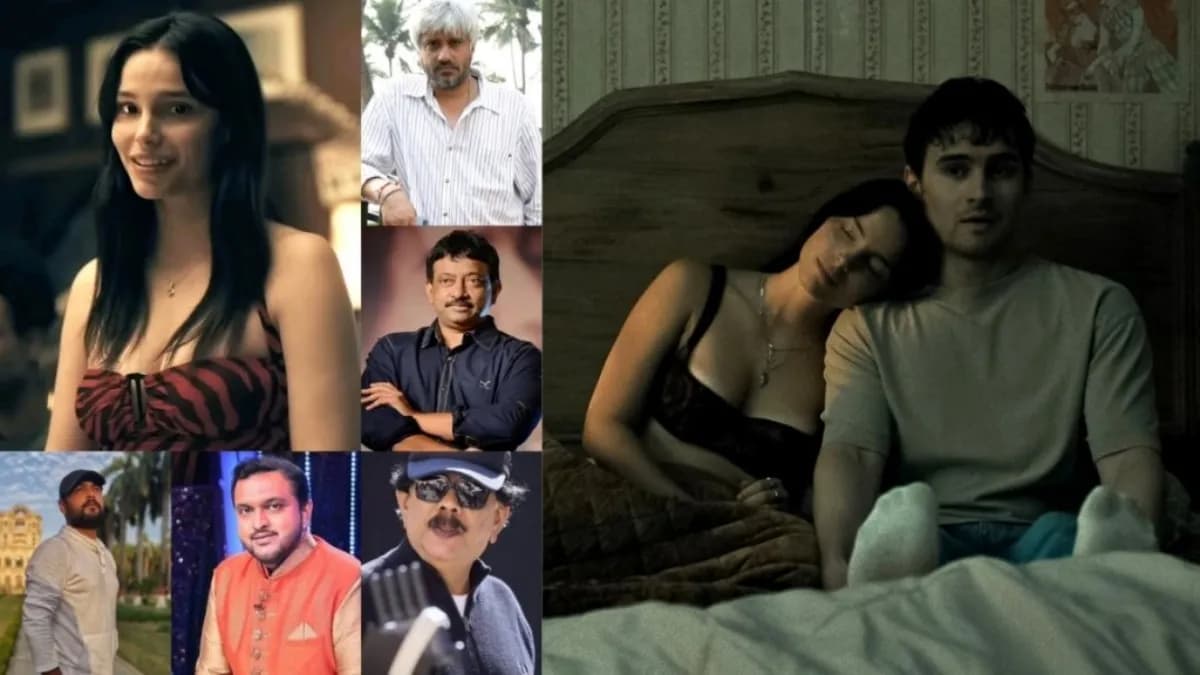
The conversation around remakes in Hindi cinema usually circles the same question: who should direct the next big adaptation? This week, film buffs are floating a different kind of wish list - a set of filmmakers they would love to see mount their own interpretation of Obsession. The title in question is a Korean original, and the idea is not a straight scene-for-scene remake but a director's personal reading of its psychological core. The names being tossed around range from Amar Kaushik, known for blending horror with small-town humour, to Ram Gopal Varma, the filmmaker who built a career on unsettling crime dramas. The premise has caught on because Obsession is not a plot-heavy thriller that needs a faithful retelling. It is a slow-burning study of desire, jealousy and self-destruction, which makes it fertile ground for directors with strong voices.
That is precisely why the debate has legs. A film like Obsession lives or dies on mood, performance and pacing. Hand it to a director who understands atmosphere, and the material transforms. Hand it to someone who treats it as a suspense set piece, and it flattens. The wish list doing the rounds is essentially an argument about which Indian filmmakers could bring something genuinely new to a story that has already been told once.
Why Obsession Invites Auteur Reinterpretation
The Korean Obsession is remembered less for its twists than for its restraint. It is a film about obsession that refuses to shout, letting tension accumulate through glances, silences and small betrayals. That quality makes it unusually open to reinterpretation. A filmmaker can shift the setting, change the social milieu, or reframe whose perspective drives the narrative, and the story still holds.
For Hindi cinema, that flexibility is a gift. The original's central conflict - a man pulled into a ruinous fixation - can be relocated to a small town, a metropolitan elite circle, or a rural power structure without losing its spine. What matters is that the director has a point of view about obsession itself: whether it is tragic, pathetic, dangerous, or all three at once.
Amar Kaushik's Small-Town Unease
Amar Kaushik tops many of these fan lists for good reason. His films are built on ordinary people in ordinary places who find themselves in extraordinary, often sinister situations. He has a gift for finding dread in daylight, in crowded streets, in the routines of daily life. That instinct would suit Obsession remarkably well. A version set in a small Indian town, where everyone knows everyone and a private fixation becomes public knowledge, could be far more claustrophobic than the original.
Kaushik also works exceptionally well with actors, coaxing performances that feel lived-in rather than performed. Obsession demands that kind of naturalism, since the film's tension depends on the audience believing the protagonist's downward spiral. If he chose to make it, the result would likely be less a remake and more a reimagining rooted in Indian social texture.
Ram Gopal Varma's Return To Psychological Crime
Ram Gopal Varma is the other name that keeps surfacing, and the logic is obvious. He built his reputation on films about men consumed by dangerous impulses, shot with a raw, almost documentary-style energy. His early crime dramas remain touchstones for a generation of filmmakers, and his fascination with the criminal mind has never faded.
A Varma interpretation of Obsession would likely strip away polish and lean into the ugliness of fixation. His camera has always been interested in the moment composure breaks. That makes him a natural fit for a story about a man losing control of his own desires, even if his recent output has been uneven. The fantasy here is a return to form - a filmmaker rediscovering the discipline that made his best work so unsettling.
Other Names In The Conversation
The wish list does not stop at two. Several commentators have suggested directors known for intimate relationship dramas, arguing that Obsession is fundamentally a love story gone wrong rather than a thriller. Others have proposed filmmakers with a background in theatre, pointing out that the original's power comes from performance and dialogue rather than spectacle.
There is also a recurring suggestion that a woman director should take on the material, since the original's treatment of its female characters has been debated by viewers. A female perspective, the argument goes, could reframe the story so that the object of obsession is not merely a plot device but a fully realised person with her own agency.
None of this is confirmed. There is no announcement, no studio attached, no casting chatter. What exists is a conversation among cinephiles who see in Obsession a template worth exploring and in these directors the sensibilities to explore it. In an industry that often plays remakes safe, that conversation is worth having. A faithful copy would add little. A personal, risky interpretation might add everything.
Source: Filmibeat