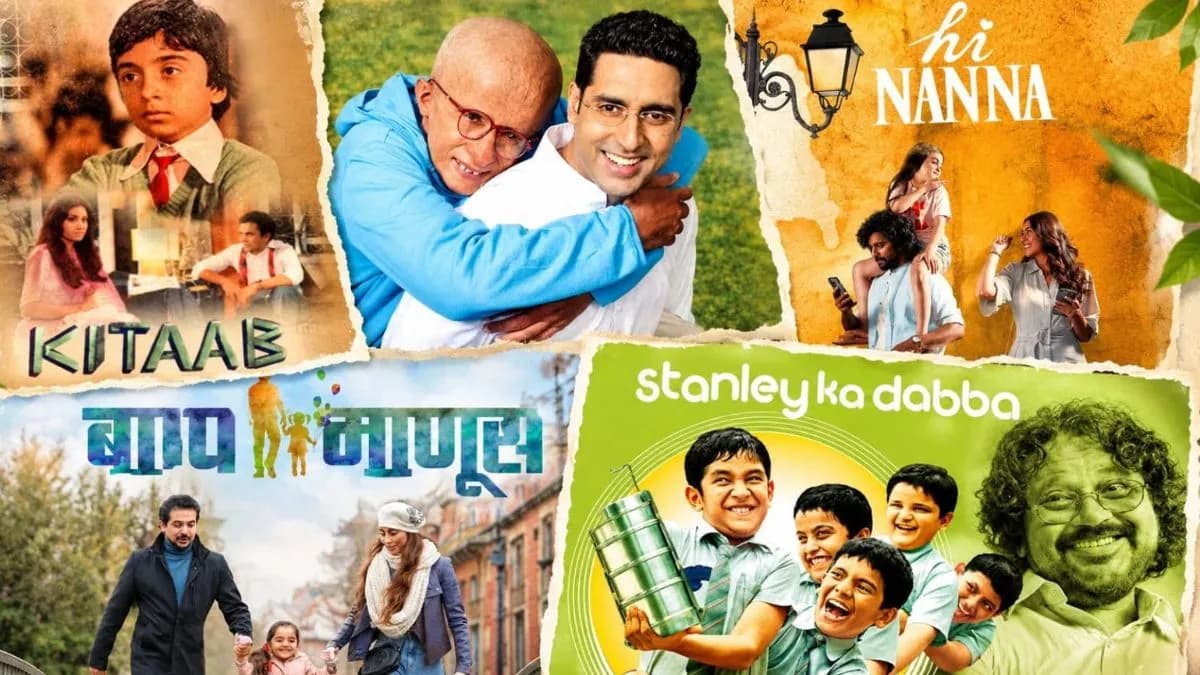
As Children's Day arrives on November 14, Hindi Movie Buzz turns its lens on a quieter truth about Indian cinema: some of its most enduring films are, at heart, stories about what happens to children when the adults around them fail to listen. Across languages and decades, a handful of titles have returned again and again to the same idea - that love, patience and understanding are not luxuries for a child but the ground a childhood stands on. The five films below, drawn from different corners of the industry, make that case with unusual force, and each remains worth revisiting with a young viewer this week.
What ties them together is a refusal to treat childhood as decoration. In these films, children are not props placed in a frame to soften a parent's story; they are the moral centre, and the plot turns on whether the grown-ups surrounding them can rise to the responsibility. Some of the films are decades old, others more recent, but the questions they pose have not aged: how much attention does a child actually need, and what does neglect - even well-meaning neglect - cost?
When the System Fails a Child
Any list of this kind has to begin with "Taare Zameen Par," Aamir Khan's 2007 drama about a boy whose struggles with reading and writing are mistaken for laziness and defiance until a teacher recognises the dyslexia behind them. The film's power lies in its diagnosis of the adults rather than the child: a father who measures worth in marks, a school that sorts children by performance, a family that mistakes pressure for care. By the time the art teacher arrives, the damage has already been done, and the film is honest about how long repair takes.
"Stanley Ka Dabba," Amole Gupte's 2011 film, works in a gentler register but lands a similar blow. Its young hero has no lunch box, and the film watches what that absence means in a classroom where sharing is a ritual and a teacher's cruelty can be casual. The story never lectures; it simply shows how quickly a child learns to hide hunger and shame, and how much a single adult's kindness can restore.
A Child's Voice, Heard or Silenced
"Kahaani" is not a children's film, but its most harrowing passages turn on a child's absence and a mother's refusal to accept the official version of events - a reminder, in a very different genre, that a child's fate is often decided by whether the adults in charge choose to look closely.
"Anjali," Mani Ratnam's 1990 film, centres on a child born with a developmental disability and the family that has to learn how to see her rather than manage her. The film's emotional anchor is the shift in her father, who moves from embarrassment to fierce advocacy, and in her siblings, who discover that love is a practice rather than a feeling.
"Chillar Party," the 2011 children's ensemble film, closes the circle by putting children in charge of their own moral education. When a stray dog and a street child become the target of a local campaign, the neighbourhood kids organise - clumsily, funnily, earnestly - and in doing so expose the prejudices their elders have stopped noticing. The film trusts its young characters with real stakes, which is rarer in Indian cinema than it should be.
What These Films Ask of Adults
Read together, the five films form an argument rather than a list. They suggest that a child's difficulties are rarely the child's alone, and that the adults who help most are the ones willing to be corrected. In "Taare Zameen Par," the turning point comes when a teacher refuses to write off a student; in "Stanley Ka Dabba," the tragedy is that no one asks the obvious question until it is almost too late. The films do not romanticise childhood, either. They show children who are angry, secretive, frightened and, occasionally, cruel - and they insist that all of it deserves a response other than punishment.
That insistence is what makes the films useful on Children's Day, a date that tends to arrive with school functions and greeting-card slogans. The occasion commemorates Jawaharlal Nehru's belief that children should be given freedom and dignity, and the films assembled here take that idea seriously by testing it against hard cases. They ask parents to look at their own expectations, teachers to look past a report card, and neighbours to look at the child on the pavement as a child.
None of the five offers an easy resolution. What they offer instead is a standard - that a child is owed patience before performance, attention before assessment, and understanding even when the behaviour is difficult to like. For families planning a Children's Day viewing, any of these titles will do more than fill an evening. They will start a conversation, and in the best cases, they will change how the adults in the room listen.
Source: Filmibeat