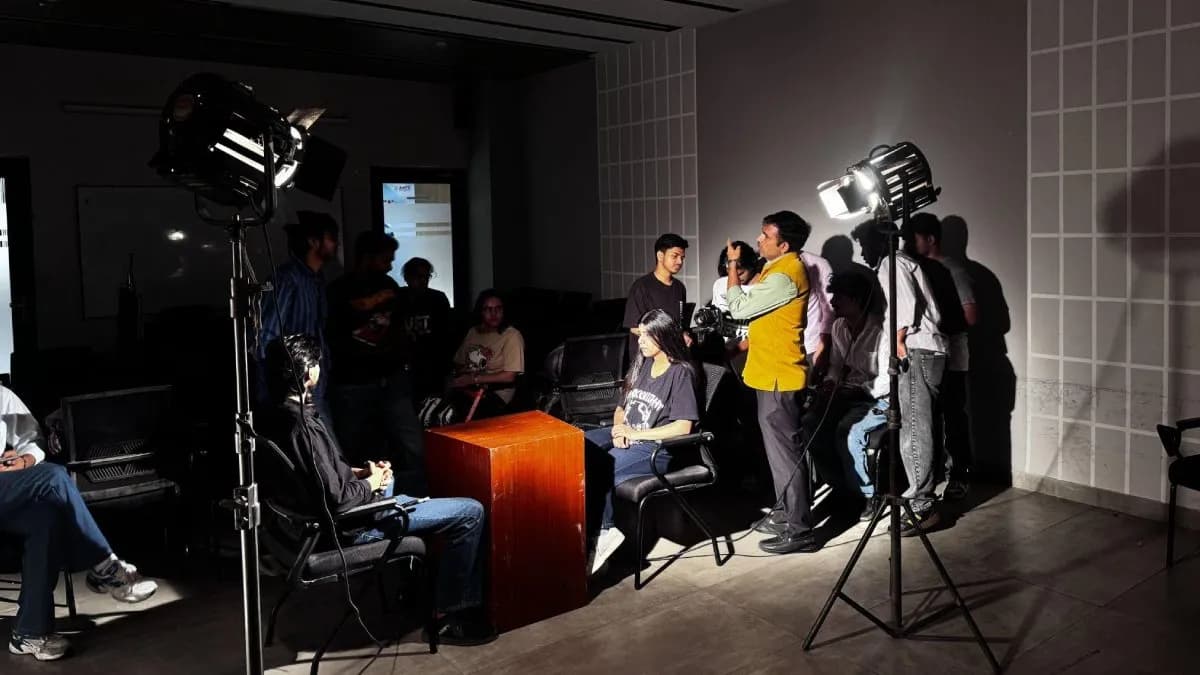
The demand for skilled film directors in India continues to surge as streaming platforms and regional cinemas expand their reach, and a growing number of young storytellers are looking beyond the traditional hubs of Mumbai and Pune for formal training. Among the institutions drawing attention is AAFT University Raipur, which has positioned itself as a serious contender for those seeking a structured path into the world of directional cinema. The university’s film direction course has become a talking point in educational circles, not just for its curriculum but for what it claims to offer in terms of practical exposure and industry connectivity.
AAFT University, an extension of the well-known Asian Academy of Film and Television, has leveraged its parent brand’s legacy in creative education to build a campus that emphasizes hands-on learning. For aspirants, the appeal lies in the opportunity to work with professional-grade cameras, editing suites, and sound stages from the very first semester, rather than waiting until the final year for practical work. The course structure reportedly blends the classical aspects of visual storytelling - scriptwriting, shot composition, and actor direction - with modern digital workflows that are now standard on film sets.
What sets the Raipur campus apart in the minds of many applicants is its focus on regional storytelling alongside mainstream commercial cinema. Faculty members, many of whom have worked on national and international productions, encourage students to explore narratives rooted in Chhattisgarh and central India, a region that has historically been underrepresented in Indian cinema. This approach has attracted students who want to bring authentic local voices to a broader audience, a trend that mirrors the recent success of regional films on OTT platforms. The university’s location in Raipur, a city with growing infrastructure, also offers a less chaotic environment compared to metros, allowing students to concentrate intensely on their craft without the distractions of urban film industry life.
Another significant factor driving enrollment is the university’s emphasis on short film production. Students are required to conceive, direct, and complete several short projects during their tenure, with faculty reviewing each piece in detail. This portfolio-building exercise is seen as crucial, as industry recruiters and film festival juries often look for tangible evidence of a director’s vision rather than just academic grades. The university also organizes annual showcases where selected student films are screened for guests from the film fraternity, providing an early platform for networking - a commodity often considered more valuable than formal qualifications in the entertainment business.
The teaching methodology at AAFT Raipur leans heavily on mentorship. Each student is assigned a senior faculty guide who works with them through the entire process of developing a film, from initial story ideation to the final edit. This one-on-one attention is a selling point for many parents and students who feel lost in the anonymity of large media schools. There is also a structured session on the business of directing, covering budgeting, scheduling, and how to communicate with producers - skills that are rarely taught in theory-heavy courses but are essential for survival in the industry.
While the institution does not have the decades-old alumni network of a Film and Television Institute of India (FTII), its association with the AAFT brand carries recognition among production houses. The course fee structure is positioned as mid-range, making it accessible to students from tier-two and tier-three cities who might find Mumbai’s living costs prohibitive. Furthermore, the university has established MoUs with several production companies for internship opportunities, allowing students to observe professional sets during scheduled breaks. These internships often serve as entry points, with some graduates receiving job offers before their final exams.
Industry observers note that the rise of such private universities is filling a crucial gap - the sheer volume of aspirants far exceeds the seats available in state-run film schools. For every thousand applicants who dream of directing, only a fraction can find formal education, leaving the rest to fend for themselves in unpaid assistantships. Institutions like AAFT Raipur offer a structured alternative that promises a faster route to a basic professional toolkit. Critics, however, caution that no school can guarantee creative genius; the tools are provided, but the vision must come from within.
For now, the trend is clear: aspiring directors are increasingly willing to relocate to non-metro cities for quality education. The cinematic landscape of India is diversifying, and with it, the places where talent is nurtured. AAFT University Raipur represents this shift, betting that the next generation of storytellers is waiting to be found in the heart of the country, not just on the streets of Mumbai. As the media industry continues to value original voices, the choice of where to learn the craft may well become as important as the talent itself.
Source: Filmibeat