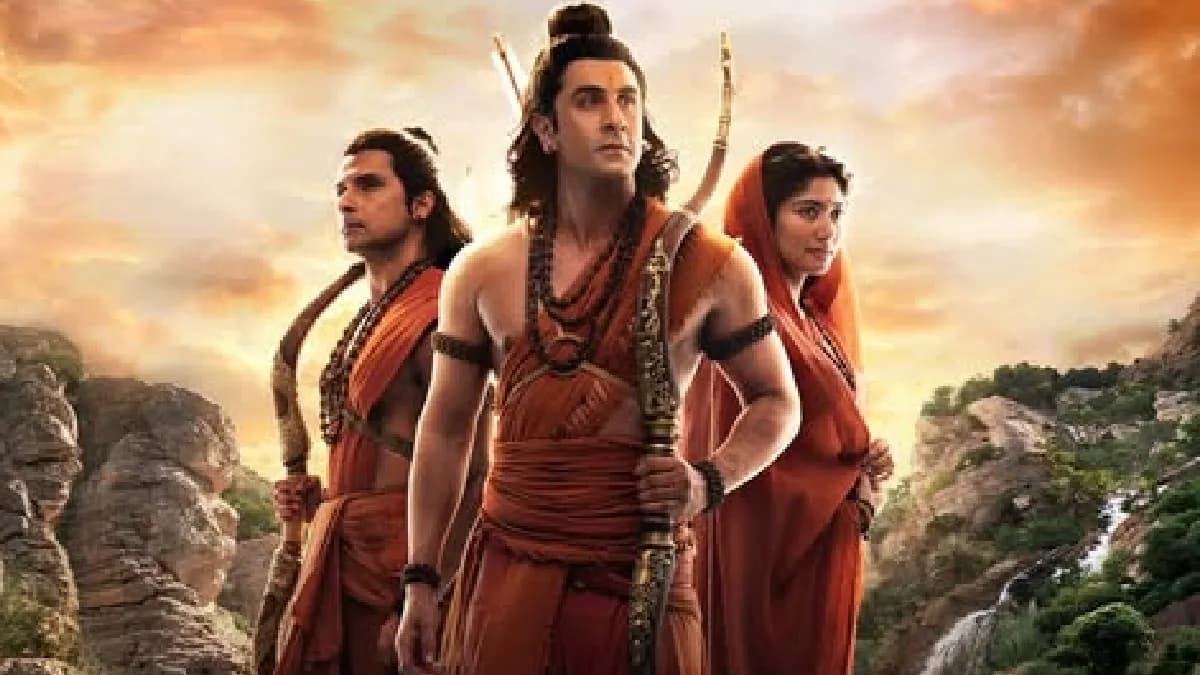
Pankaj Kumar, the cinematographer behind one of Indian cinema's most ambitious undertakings, has offered a promising hint about the second chapter of the Ramayana adaptation. In remarks that have excited fans tracking the two-part project, Kumar indicated that the follow-up installment will expand considerably in scale. The next entry, he suggested, will look bigger in every sense, and will lean more heavily on visual effects to bring its sweeping mythological world to life.
Kumar, a National Award-winning lensman known for his work on films such as Ship of Theseus and Tumbbad, is among the key craftspeople shaping the visual language of the Ramayana films. His comments arrive at a moment when anticipation around the duology is running high, with audiences eager to see how the epic is being translated for the big screen. According to the cinematographer, the second part is being designed as a more elaborate experience than the first, with a noticeably larger canvas and a greater reliance on VFX to render its grander sequences.
The remarks suggest that the filmmaking team is treating the two parts as distinct visual journeys. Where the first installment may emphasize grounded storytelling and introduce the world, the second appears poised to escalate into spectacle, expanding the scale of its settings and the complexity of its effects work. For a story as vast as the Ramayana, that escalation could mean more elaborate battles, more layered mythological environments, and more ambitious set pieces that blend practical filmmaking with digital augmentation.
A Bigger Canvas for the Final Chapter
Kumar's observation that the second part will be "more grand" points to a deliberate creative strategy. Splitting an epic across two films gives the makers room to build toward a climax, and it is natural for the concluding chapter to carry a heavier load of action and large-scale imagery. By indicating a heavier VFX component, the cinematographer is signaling that the visual demands of the story grow substantially as it progresses.
This is a significant detail for viewers who care about how the epic's most celebrated episodes will be depicted. The later portions of the Ramayana involve some of its most visually challenging material, and bringing those passages to the screen credibly requires a sophisticated blend of effects and cinematography. Kumar's comments suggest that the team is aware of that challenge and is investing in the digital tools needed to meet it.
His background makes the remarks especially noteworthy. Kumar's reputation rests on striking, carefully composed imagery and a willingness to push visual boundaries, and his involvement lends credibility to the project's visual ambitions. For audiences who follow the craft behind big productions, his hint that the second part will go bigger with VFX will read as confirmation that the duology intends to deliver a grand cinematic experience.
What the Comments Mean for the Ramayana Duology
The two-part approach itself reflects the scale of the undertaking. Adapting the Ramayana as a feature film requires enormous resources, and dividing the story across two releases allows the makers to carry its narrative arcs without rushing them. Kumar's comments add a new dimension to that picture by suggesting that the second film's production will be even more technically intensive than the first.
It is worth stressing that the cinematographer's remarks, as reported, focus on the broad creative direction rather than particular scenes, schedules, or release details. He is said to be sharing insight into what audiences can expect, and his core message is clear: prepare for a bigger, more effects-driven experience in the second part.
For viewers, the takeaway is the promise of escalation. If the first Ramayana film works to establish the story and its characters, the second appears positioned to deliver on the epic's promise of scale and spectacle. Kumar's description of a grander, more VFX-heavy installment fits that trajectory and gives fans something concrete to anticipate as the project moves forward.
The remarks also underline how central visual effects have become to large-scale Indian filmmaking. Productions rooted in mythology and fantasy increasingly depend on digital artistry to realize worlds that cannot be built entirely on set. With Kumar pointing to more VFX in the second Ramayana film, the duology joins the growing list of major Indian productions in which the effects teams are as essential as the camera department.
For now, Kumar's comments stand as one of the clearer signals about the sequel's creative direction. Those following the Ramayana films can expect the second chapter to be more expansive and more technically ambitious. If the first part lays the foundation, the second, by Kumar's account, is being built to go bigger with more VFX, and that prospect alone is enough to keep the excitement building.
*Source: [Filmibeat](https://www.filmibeat.com/bollywood/news/2026/ramayana-cinematographer-pankaj-kumar-spills-beans-about-ramayana-part-2-it-will-be-more-grand-with-537825.html)*