The theatrical clash between two cinematic tellings of the Ramayana has produced its first clear verdict, and it does not favour Ranbir Kapoor. The Ranbir-led Ramayana has failed to overhaul the lifetime tally of Adipurush, the 2023 adaptation that starred Prabhas, and the shortfall has turned social media into a battleground of comparisons. Prabhas' followers, who have spent years defending Adipurush against a wave of criticism, wasted no time in claiming bragging rights. Their reaction, summed up in the phrase now spreading across timelines - that they never imagined they would one day be flexing about Adipurush - captures the strange reversal at play. A film once written off as a cautionary tale is suddenly being held up as the benchmark that a newer, star-studded Ramayana could not surpass.
The numbers tell a simple story even if the emotions do not. Ranbir's Ramayana, despite the anticipation that surrounded its announcement and release, has finished its run short of the total collected by Adipurush. For an industry that measures prestige in opening weekends and final totals alike, the gap is being read as more than a statistic. It is being framed as a rebuke to the assumption that a fresh retelling of the epic, backed by a major star, would automatically command a bigger audience than the version that came before it. Supporters of the earlier film argue that Adipurush, whatever its detractors said about its visual effects and dialogue, at least drew crowds in numbers that the new release could not match.
A Fandom's Reversal
What makes the reaction notable is the journey Prabhas' fanbase has taken. When Adipurush arrived in 2023, it was met with fierce backlash over its treatment of the source material, and many of the same voices now celebrating its performance had earlier found themselves on the defensive. The comparison with Ranbir's Ramayana has handed them an unexpected opportunity to reframe the debate, shifting attention away from the film's creative choices and towards its commercial resilience. Fan posts have leant into the irony, with the sentiment that nobody expected to be boasting about Adipurush now serving as a rallying cry. The tone is part celebration, part vindication, and it has kept the two films locked together in public conversation weeks after the newer release was expected to fade from the headlines.
The clash also underlines how deeply the Ramayana resides in the country's cultural imagination. The epic's characters, from Rama and Sita to Lakshmana, Bharata, Hanuman and Ravana, are not merely figures from a text but living presences in the everyday consciousness of millions. Any filmmaker who approaches the story inherits a burden that has little to do with budgets or star power. Audiences arrive with expectations shaped by generations of storytelling, and they are quick to judge whether a new version honours that inheritance. That is why comparisons between adaptations rarely stay confined to box-office tables; they quickly become arguments about fidelity, faith and who has the right to interpret the epic for a new generation.
The Shadow of an Older Adaptation
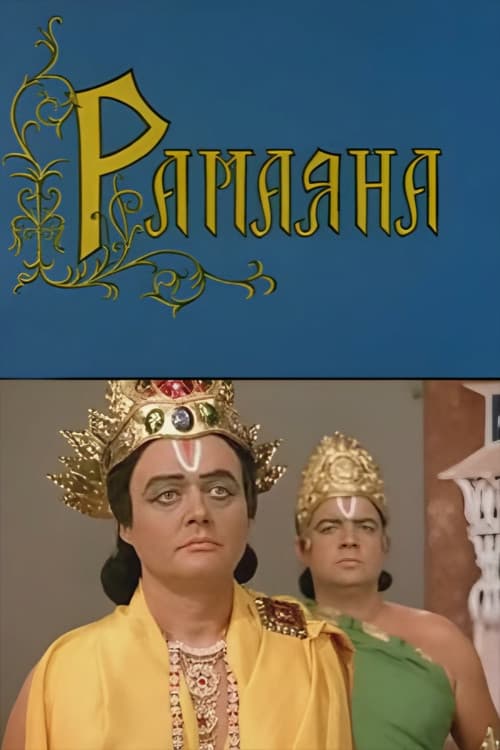
There is a longer history here that the current debate tends to overlook. The Ramayana has been filmed many times, and one of its most unusual adaptations dates back to 1976, when director Vladimir Grave brought the epic to the screen in a Russian-language production classified under the fantasy and family genres. That version, with a cast including Gennadi Pechnikov, Margarita Kupriyanova and Ivan Voronov, treated the narrative as allegory woven together with philosophy and devotion rather than as a straightforward spectacle. Its existence is a reminder that the Ramayana has never belonged to a single film industry or a single generation. Each retelling adds another layer to an already crowded field, and each new release is inevitably measured against those that came before, whether they were made in Mumbai or far beyond it.
For Ranbir's Ramayana, the immediate task is to move past the comparison and let its own merits speak. For Prabhas' supporters, the moment is one to savour, however unexpectedly it arrived. And for the audience at large, the episode offers a familiar lesson: in the crowded marketplace of Indian cinema, no star or budget can insulate a film from the verdict of the box office, and no earlier release is ever too far away to be summoned back into the argument.
Source: Filmibeat