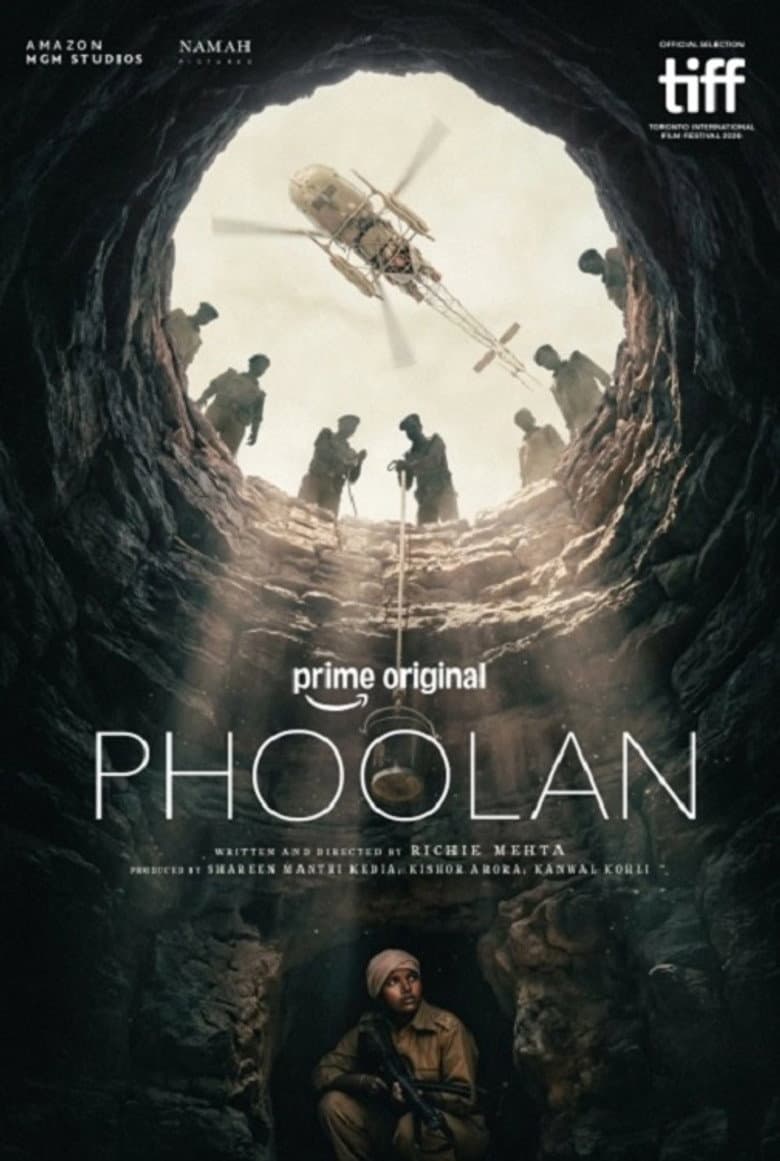
There is a moment in Richie Mehta's new film Phoolan where the noise simply stops. Not the kind of silence that suggests peace, but the kind that arrives when thousands of armed men are holding their breath, waiting for a girl to make a mistake. The film, which releases in theatres today, runs just 113 minutes - a lean, almost startling runtime for a story this sprawling - and yet it contains multitudes. We are told it follows an impoverished seventeen-year-old girl who becomes a famous outlaw and survives a brutal forty-eight-hour siege when thousands of armed men trap her in a village. That is the logline. What Mehta does with it is something else entirely.
Hindi cinema has always had a complicated relationship with the outlaw figure. We have romanticised them, turned them into folk heroes with catchy background scores, given them tragic arcs that feel suspiciously like redemption. Mehta, whose previous work has demonstrated a documentarian's patience and a novelist's eye for detail, seems less interested in myth-making than in the sheer, grinding mechanics of survival. The girl at the centre of Phoolan is not a symbol. She is seventeen. She is impoverished. And she is cornered.
The film arrives without the usual trappings we have come to expect from a Bollywood release of this scale. There are no announced cast names attached to the promotional material, which is either an extraordinary act of confidence or a deliberate choice to keep the focus squarely on the story itself. Given Mehta's track record, I suspect it is the latter. He has never been a director who needs a familiar face to sell a frame. He needs a face that feels like it has lived, and by all accounts, that is exactly what he has found.
What strikes me most about the premise is its claustrophobia. A forty-eight-hour siege is not an epic in the traditional sense. It is a pressure cooker. It is a countdown. The film's brief runtime suddenly makes perfect sense - this is not a life story told from birth to legend, but a single, suffocating episode that defines everything before and after. Mehta has reportedly structured the narrative around that siege, using it as both the spine and the heartbeat of the film. Flashbacks, we are told, are sparse. The past seeps in through glances, through scars, through the way the girl holds a weapon she was never supposed to know how to use.
There is something deeply unsettling about a story where thousands of armed men are required to trap one teenage girl. It suggests a fear that is almost absurd in its disproportion. And yet, we know this is not fiction. We know this woman existed. The film does not shy away from the brutality of that fact. Early viewers have described sequences that are unflinching, almost clinical in their violence. Mehta does not aestheticise suffering. He observes it. The camera stays steady when you wish it would look away.
What remains to be seen is whether Phoolan will find the audience it deserves. The film industry in 2026 is a strange beast. We are drowning in content, in spectacle, in stories engineered to be forgotten the moment the credits roll. A film like this - small in runtime, enormous in spirit, anchored by an unknown face and a director who refuses to pander - feels almost like an act of defiance. It does not ask to be loved. It asks to be witnessed.
The title itself is a choice. Phoolan is not a biopic titled The Life and Times of... or The Legend of.... It is simply a name. A girl's name. The kind of name that could belong to anyone, which is precisely the point. By the time the siege begins, by the time the village is surrounded and the odds are impossible, we are not watching a historical figure. We are watching a child who has been cornered. And when she fights back, we understand exactly why.
This is not a film that will be easy to watch. It is not supposed to be. It is a film that asks you to sit with discomfort, to hold your breath alongside a seventeen-year-old girl, and to remember that some stories are not legends at all. They are simply true. And they are happening still, in villages and fields and forgotten corners of this country, long after the cameras have gone home.
Phoolan is in theatres now. Bring your silence. You will need it.