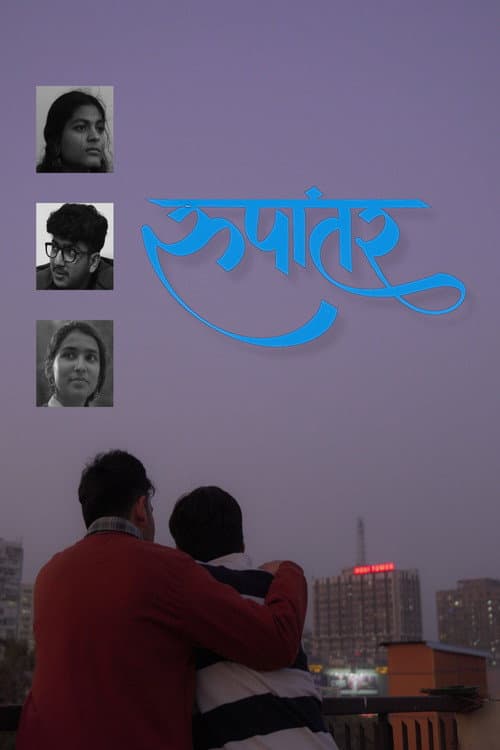
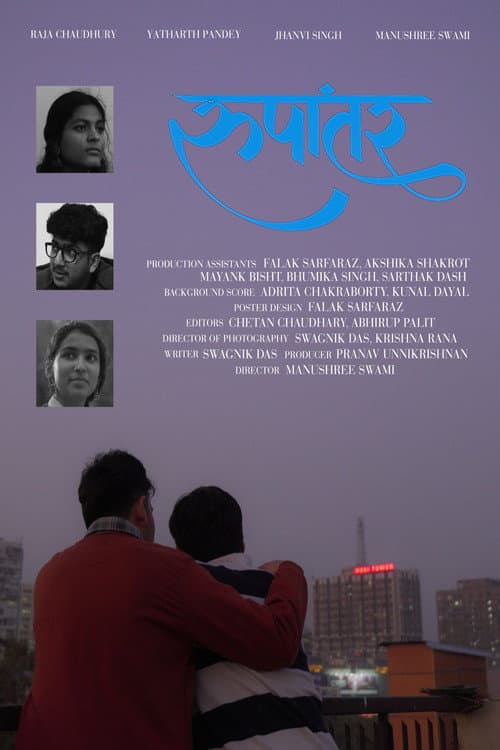
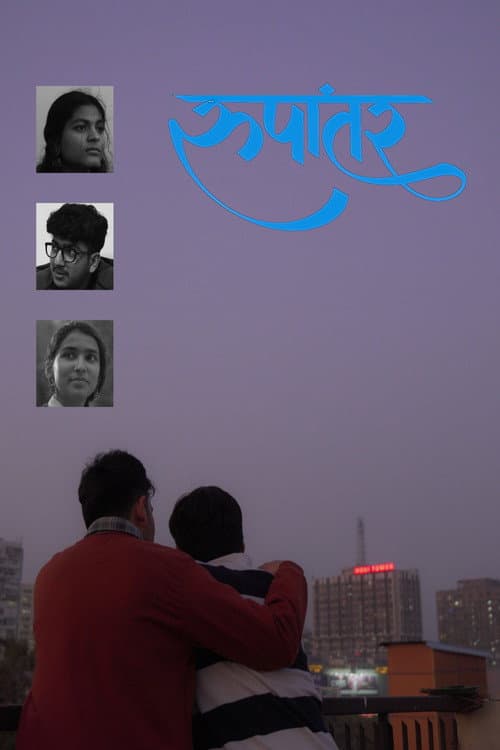
The Hindi film industry has a peculiar habit of sneaking its most profound meditations into the smallest packages. On the eve of its official release, there is a quiet buzz building around a 20-minute dramatic short that promises to punch far above its weight. Coming from a debutant director with a clear vision, “The Transition” arrives on September 6, 2026, not as a spectacle, but as a private conversation - one that you will likely still be replaying in your head long after the credits roll. It is a film that understands that the most seismic shifts in our lives rarely announce themselves with drumrolls; they often happen in the space between two breaths, two glances, two decisions.
Release Date & Where to Watch
Mark your calendars, because this is not a film you will want to catch late. “The Transition” is scheduled for release tomorrow, on September 6, 2026. As a short-form dramatic feature, it is not aiming for a massive wide theatrical rollout. Instead, the film is positioned for the digital-first audience that is hungry for meaningful content that respects their time. While the exact streaming platform has not been officially announced for all territories, industry insiders suggest it will land on one of the leading OTT aggregators that specialize in independent and festival-circuit Bollywood shorts. Given its runtime of just 20 minutes, it is the perfect watch for a Sunday morning with chai, or a late-night introspection session. However, given the modest scale, do not expect a simultaneous global theatrical release. The smart money is on a curated digital premiere, perhaps paired with a complementary feature to create a double-bill experience. For those who prefer the big screen, there may be limited festival screenings lined up in major metros, but the primary viewing experience will be intimate, on your own device, which feels oddly appropriate for the story’s tone. Keep an eye on the film’s official social media handles for the "link in bio" announcement at noon tomorrow.
Cast & Crew
The most intriguing aspect of this project is the synergy between the director and her leading man. At the helm is Manushree Swami, who not only directs but also steps in front of the camera to portray Sunidhi Chaudhary. This dual role suggests a deeply personal project, one where the creator's fingerprints are on every frame. Swami is not a newcomer to the arts, but this marks her most significant directorial statement to date. She has assembled a compact but formidable cast, led by the veteran Raja Chaudhary, who takes on the role of Swaroop Chaudhary. Chaudhary, known for his ability to oscillate between steely resolve and vulnerable fragility, is the anchor here. His presence brings a gravitas that immediately elevates the material.
Opposite him is the rising talent Yatharth Pandey, cast as Bharat Bhatnagar. Pandey represents a newer wave of actors who thrive in grounded, naturalistic performances. The dynamic between Chaudhary and Pandey is the fulcrum upon which the entire narrative of “The Transition” balances. Adding another layer of complexity is Jhanvi Singh, who plays Megha Singh. Singh, who has been making smart choices with her indie roles, portrays the female perspective in this web of change. It is a tight, four-hander ensemble with no excess fat. There is no chorus, no subplot padding; just four performers who appear to be deeply committed to the script’s emotional truth. The casting alone suggests a movie that prioritizes thespian craft over cinematic gloss.
Story & What to Expect
Avoiding spoilers, the film’s logline is deceptively simple: it deals with the shifting dynamics between two families - or perhaps two factions within a larger setup - as they navigate a forced or unexpected change in their circumstances. We see Swaroop Chaudhary, a man presumably set in his ways, played with a world-weary nuance by Raja Chaudhary. He is confronted by Bharat Bhatnagar, played by Yatharth Pandey, who represents a newer, perhaps more pragmatic or idealistic generation. The title “The Transition” is not merely about a physical move or a legal shift; it is about the emotional migration from one state of being to another.
Expect a film that relies heavily on dialogue and silence. Manushree Swami’s direction appears to favor long takes and close-ups that capture the micro-expressions of doubt and resolve. The presence of her character, Sunidhi Chaudhary, suggests a familial tie to Swaroop - perhaps a daughter or a younger relative - who is caught in the crossfire of the ideological tussle between Swaroop and Bharat. Megha Singh’s role, played by Jhanvi Singh, likely serves as an external catalyst or a mirror to the men’s choices. Thematically, the short film genre is perfect for a story about a single, defining moment. Do not expect action sequences or scenic montages. What you should expect is a pressure-cooker environment where a single conversation can change the course of a life. The writing is likely lean, purposeful, and unafraid to end on an ambiguous yet hopeful note. The 20-minute runtime suggests a tight, efficient narrative that cuts all dead weight; this is a story that starts in the middle of the chaos and ends just as the dust begins to settle.
Why It's Worth Watching
In an era where Bollywood often confuses length with depth, “The Transition” is a refreshing anomaly. First, the runtime is a commitment-free investment of your time, but the emotional payoff is disproportionate to its brevity. It respects your intelligence, assuming you can read the subtext without having every motivation spelled out. The opportunity to see Raja Chaudhary in a controlled, intimate setting is a rarity; he is an actor who thrives on subtle direction, and Manushree Swami appears to be the perfect foil to coax out his most muted performance.
Secondly, for fans of Yatharth Pandey, this is a showcase of his range. He is not playing the romantic lead here; he is playing a man with a mission, offering a counterpoint to the established order. The friction between old-school values and new-age urgency is a timeless conflict, but when handled by actors who understand the weight of a pause, it becomes electrifying. Director Manushree Swami’s decision to act in her own film is a double-edged sword, but if the performance is as compelling as her direction promises, it signals the arrival of a major multi-hyphenate talent in the independent circuit.
Ultimately, “The Transition” is worth watching because it is a piece of cinema that trusts its audience. It does not pander. It does not over-explain. It presents a slice of life where characters are forced to evolve, and it asks you to judge the grace with which they do so. For enthusiasts who complain that Hindi cinema has lost its way in the blockbuster maze, this short is a beacon. It reminds us that storytelling, at its core, is about the human heart in conflict with itself. Tomorrow, when you watch it, you are not just watching a movie; you are witnessing a moment of artistic transition for the industry’s future. It is a gentle, powerful nudge to look inward - and that is a journey worth taking.