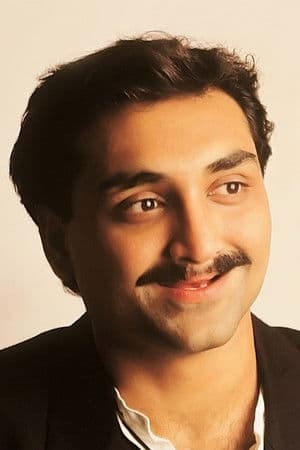
Aditya Chopra is a name that sits on Hindi cinema in two different ways at once. He has worked as a director, a screenwriter and a producer. For readers outside India, his career also offers a practical lesson in how the industry works: the person who shapes a film is not always the one seen on the poster. His confirmed credits show him moving between three jobs across three decades, and the same instinct runs through all of them.
A Career Built On Story First
As a director and writer, Chopra has built his stories almost entirely around love and its obstacles: families, distance, duty and the cost of waiting. As a producer, he has backed films of a very different size and tone, among them spy thrillers and police dramas. The connecting thread is structure. Every one of his films, whether a romance or an action spectacle, is arranged around a clear emotional problem that the plot must resolve.
A word on vocabulary for readers new to the industry. A "story" credit means the person who originated the idea. A "screenplay" credit belongs to whoever shaped that idea into scenes and dialogue. Chopra frequently holds both, along with a directing or producing role. That combination is uncommon, and it explains why his films feel authored even when he is not the one directing. A producer, in Hindi cinema, is often the creative anchor rather than only the money behind a project, and his filmography bears that out.
The Films, And What Each One Added
The romances
Dilwale Dulhania Le Jayenge (1995) is the foundation. Chopra directed it and wrote its story and screenplay. The plot sets the template. Raj, a carefree second generation NRI (a non-resident Indian, meaning an Indian living abroad), falls for Simran, whose strict father has already promised her to a childhood fiancé. Raj follows her to India to win her family over. The film made the abroad-raised hero and the traditional Indian family a subject worth taking seriously. It remains the reference point for everything he wrote afterwards.
Mohabbatein (2000), directed and written by Chopra, and Rab Ne Bana Di Jodi (2008), on which he held directing, writing and producing credits, extended that interest in love tested by authority and by self-image. The later film, about a husband who reinvents himself to court his own wife, shows how far he will push a gentle premise to find its emotional truth.
Befikre (2016), which he directed, and Veer-Zaara (2004), for which he wrote the story and screenplay and produced, round out the romantic side. The first is a looser, more contemporary take on attraction. The second is a sweeping cross-border romance built on separation and sacrifice.
The producing years
From the 2000s onward, producing became the larger part of his work. Ek Tha Tiger (2012), with Chopra as producer and story writer, and War 2 (2025), also producer and story, established a spy universe built on pursuit and identity. Tiger 3 (2023) continues it. Pathaan (2023) and Saiyaara (2025) show his range as a producer: one an action spectacle, the other a smaller romantic drama.
The police procedural gave him another register. Mardaani 3 (2026) follows officer Shivani Shivaji Roy as she hunts those behind the disappearance of young girls. Fan (2016), which he produced, turns obsession with a public figure into a thriller. And Alpha (2026), produced by Chopra, follows a super-soldier raised in isolation who learns the truth about her stolen childhood and joins her long lost sister against her creator. These films share a concern with protection: of daughters, of citizens, of the vulnerable.
Where He Sits In Hindi Cinema
Chopra occupies a rare position. He is a writer-director whose name carries weight with audiences, and a producer whose company has become a home for large-scale popular filmmaking. Three habits define the body of work. He returns to love blocked by family or circumstance. He returns to the outsider who must prove belonging. And he returns, as a producer, to the protector figure.
Why should a reader outside the region know the name? Because in Hindi cinema the producer is often the creative anchor, not just the money, and Chopra's producing credits show a single sensibility spanning romance, espionage and procedural drama. Watching his films in order is a short course in how popular Hindi cinema has balanced tradition against ambition. The titles change. The questions do not.
For the industry's wider history, the British Film Institute and Encyclopaedia Britannica both keep reference material on Indian cinema that helps place a career like this one in context. Aditya Chopra: The Films And The Filmmaking is, in the end, a study in consistency: a body of work that keeps asking the same human questions at ever larger scale.