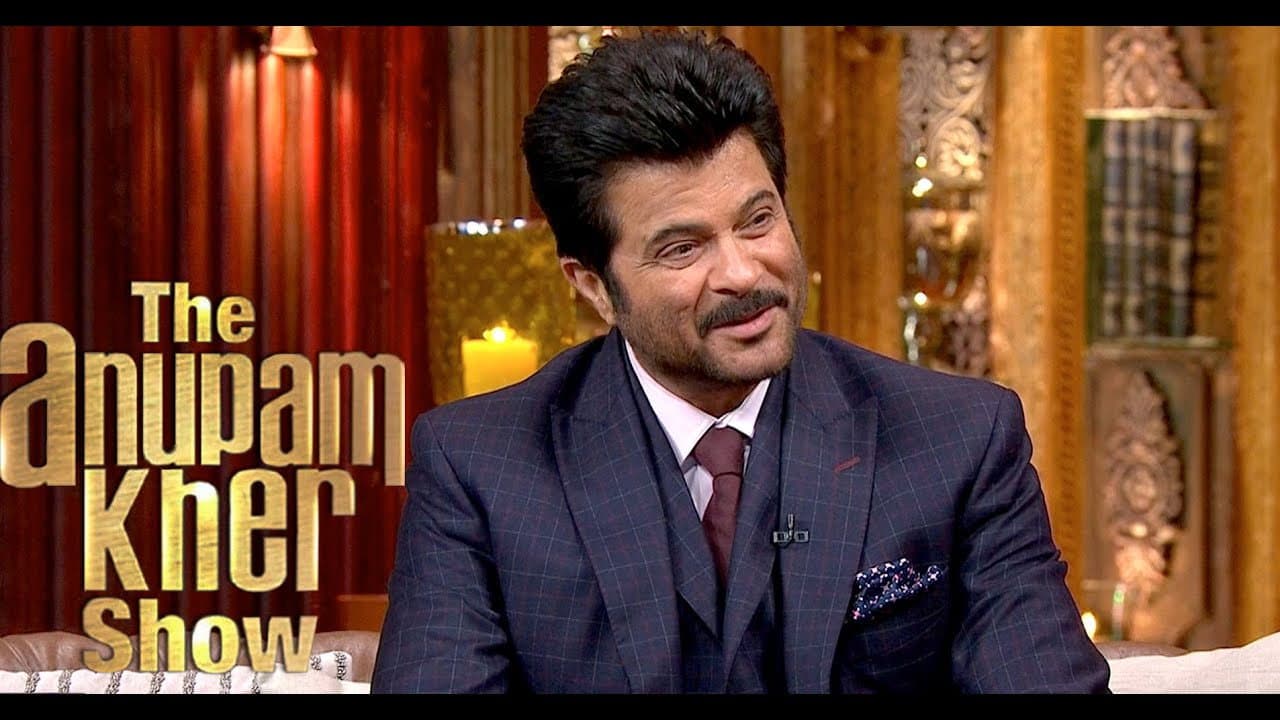
Many viewers outside India have watched Anupam Kher without ever registering his name. He is the father who disapproves, the uncle who jokes, the official who warns. He has worked in Hindi cinema since the early 1980s and has appeared in nearly 400 films, alongside a parallel body of work in theatre that runs to around 100 plays. The Government of India honoured him with the Padma Shri in 2004 and the Padma Bhushan in 2016. Both are civilian honours given for contribution to a field, in his case cinema and the arts, and together they mark a career of unusual length.
What connects the work is range. He moves between the leading role in a small film about a family and a supporting part in the biggest commercial picture of its moment, and treats both as the same job. Anupam Kher: A Career In Hindi Cinema is therefore less a story of one breakout than a study in endurance, craft and adaptability across four decades. The survey below follows the confirmed filmography film by film.
 Photo: TMDb
The Films: From Aagaman to Ranchi Diaries
Early Footing and the Family Drama
Aagaman (1982) marks the start. Falak (1988) follows, with Kher as Jamuna Das, known as JD. Prem Granth (1996) casts him as Swami Dharam Bhooshan, the father of a central character, a reminder that he spent these years playing the older generation while still in his own middle age. Readers outside the region should know one industry convention: a performer can be cast as a parent in one film and a peer in another within the same period, because casting follows the requirement of the story rather than the age of the performer. Watch these three titles together and you see how early he learned to make authority feel lived in rather than announced.
The Comic Register
Aflatoon (1997) gives him Vidya Prakash. Kyo Kii... Main Jhuth Nahin Bolta (2001) gives him Tejpal Singh. Chashme Baddoor (2013) gives him two parts in one film, Suryakant Ranjan and Chandrakant Ranjan. In that film, Seema rejects six marriage proposals arranged by her father and leaves for Goa, and two friends who cannot impress her plot against their own friend, who is dating her, when they learn of it. Comic timing of this kind is deliberate craft: the pause, the misplaced dignity, the face that commits to nonsense. Hindi cinema calls this the comic register, and it is harder than it looks.
The Thriller and the Shadow Role
Aaghaaz (2000) casts him as Balraj Nanda. Shikaar (2000) turns on a darker premise: Sree Nath abandons a poor woman who is carrying his child and marries the daughter of a wealthy man named Saxena, and the film follows the fallout. Baby (2015) places him as Omprakash Shukla in a story about an intelligence team working to stop a plot. These roles turn on threat and authority, the sense that a calm voice can carry menace.
The Landmark and the Producer's Chair
Dilwale Dulhania Le Jayenge (1995) casts him as Dharamvir Malhotra. The film follows Raj and Simran, and her strict father Baldev Singh, and the scheme to win her family over. It is one of the most enduring titles in Hindi cinema. Ranchi Diaries (2017) lists Kher as Producer, a different role from performing. The confirmed filmography also includes Kheer (2017), where he appears as nanu, a grandfather.
Where He Sits, and Why the Name Matters
Bring the threads together and a pattern appears: the father, the comic foil, the authority figure, the man with something to hide. Hindi cinema is often described through its lead performers, and a career built on support and character parts is a less visible but equally long form of stardom. Note that his international recognition rests on a separate group of films, among them Bend It Like Beckham (2002), Bride and Prejudice (2004) and The Mistress of Spices (2005), kept distinct from the Hindi filmography above.
Why should a reader who does not follow Hindi cinema know the name? Because it is attached to a large share of the films that shaped the form. Britannica's overview of Indian cinema and the Indian Ministry of Culture both sketch how deep that tradition runs. Anupam Kher: A Career In Hindi Cinema is, in the end, the story of the face that holds a scene together while the lead gets the song.