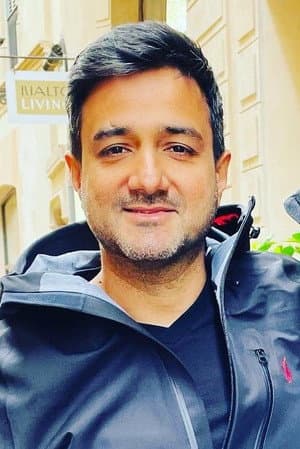
Siddharth Anand: The Films And The Filmmaking is a study of a director who learned his craft on conversation and now builds some of the largest canvases in Hindi cinema. The surname carries weight before he ever stood behind a camera. He is the son of producer Bittu Anand, who made the Hindi film Shahenshah, and the grandson of screenwriter Inder Raj Anand, whose writing credits run across Safar, Sangam and Ek Duje Ke Liye. That lineage explains the craft instinct. It does not explain the range.
A Career Built On Scale And Momentum
His first credited Hindi film work is as a writer. He wrote the screenplay for Hum Tum (2004), a romantic comedy about two people who keep crossing paths, then moved to direction with Salaam Namaste (2005), where he also wrote the screenplay and appeared in a small role as a taxi driver. The sequence is worth noting. He learned structure on intimate, dialogue driven films before he learned spectacle.
Hindi cinema uses the word "package" for a film assembled from songs, spectacle and set pieces, and the move toward that form runs right through the filmography. His films rarely sit still. They move between cities, and later between continents and airspaces, and the storytelling trusts pace over explanation. That instinct is what eventually made him the director studios call when a film needs to feel physically large. Wikipedia's entry on Hindi cinema is a reasonable primer for readers new to the industry's production culture.
The Films, In Order Of What They Added
Romance And The Early Craft
Ta Ra Rum Pum (2007) is the clearest early statement, and its plot summary is disarmingly simple: ace car racer RV and his wife have the world at their feet, an accident turns his world upside down, and he has to reclaim his lost glory. The racing is the hook. The film beneath it is about a family absorbing a reversal of fortune. He directed and wrote the story, and it showed he could carry a mainstream crowd through failure and recovery without losing them.
Bachna Ae Haseeno (2008) widened the canvas to a man looking back at the relationships he mishandled. Anjaana Anjaani (2010), which he directed and co wrote, narrowed it again to two strangers. Together these films built a reputation as a director fluent in urban romance, the kind of Hindi film built on conversation and cities rather than confrontation. Fans who follow Hindi Movie Buzz coverage of the industry's quieter, character led work will recognise the register.
Action And The Move To Franchise Scale
Bang Bang! (2014) is the hinge. He directed it and came out the other side a different kind of filmmaker, one interested in velocity, international locations and set pieces that announce themselves. The romantic instinct did not disappear. It was folded into a bigger machine.
War (2019) consolidated that shift and made him central to Hindi cinema's franchise thinking. He directed, wrote the story and co wrote the screenplay. The plot, Khalid entrusted with eliminating his former mentor Kabir after Kabir turns rogue, rests on a single sturdy idea: the person you were trained by is now the person you must outthink. It gave the industry a template for the large format action film built around two leads in opposition. Hindi cinema's franchise habit is documented in Britannica's overview of Indian film.
Pathaan (2023) pushed the same instincts further. He directed and wrote the story of a soldier captured by enemies, presumed dead, who returns to finish his mission alongside old companions and foes. The package is fully realised here: scale, momentum and a lead who carries the entire machine on presence.
Aviation And The Ensemble
Fighter (2024) is the most technically ambitious entry, and the first on which he is credited as story writer, director and producer. The plot follows India's best combat aviators forming a squadron called Air Dragons after a militant attack in Kashmir, and it turns the aerial action film into an ensemble piece. The producer credit matters. It marks the point where he is not only executing a vision but financing and assembling one.
Why The Name Travels
The films share a temperament more than a genre. They are about professionals under pressure who mask doubt with competence, and they are built to be watched on the largest screen available. The return to the same story shapes, the mission, the mentor, the comeback after a fall, is the consistency, not a repetition.
For anyone outside the region, he is a useful entry point precisely because his films travel. The action titles are engineered for audiences who do not follow Hindi cinema closely. The earlier romances explain where the technique came from. Read together, Siddharth Anand: The Films And The Filmmaking traces a filmmaker who moved from writing small films to authoring some of the biggest ones his industry makes, and who now carries a producer's responsibility as well as a director's.