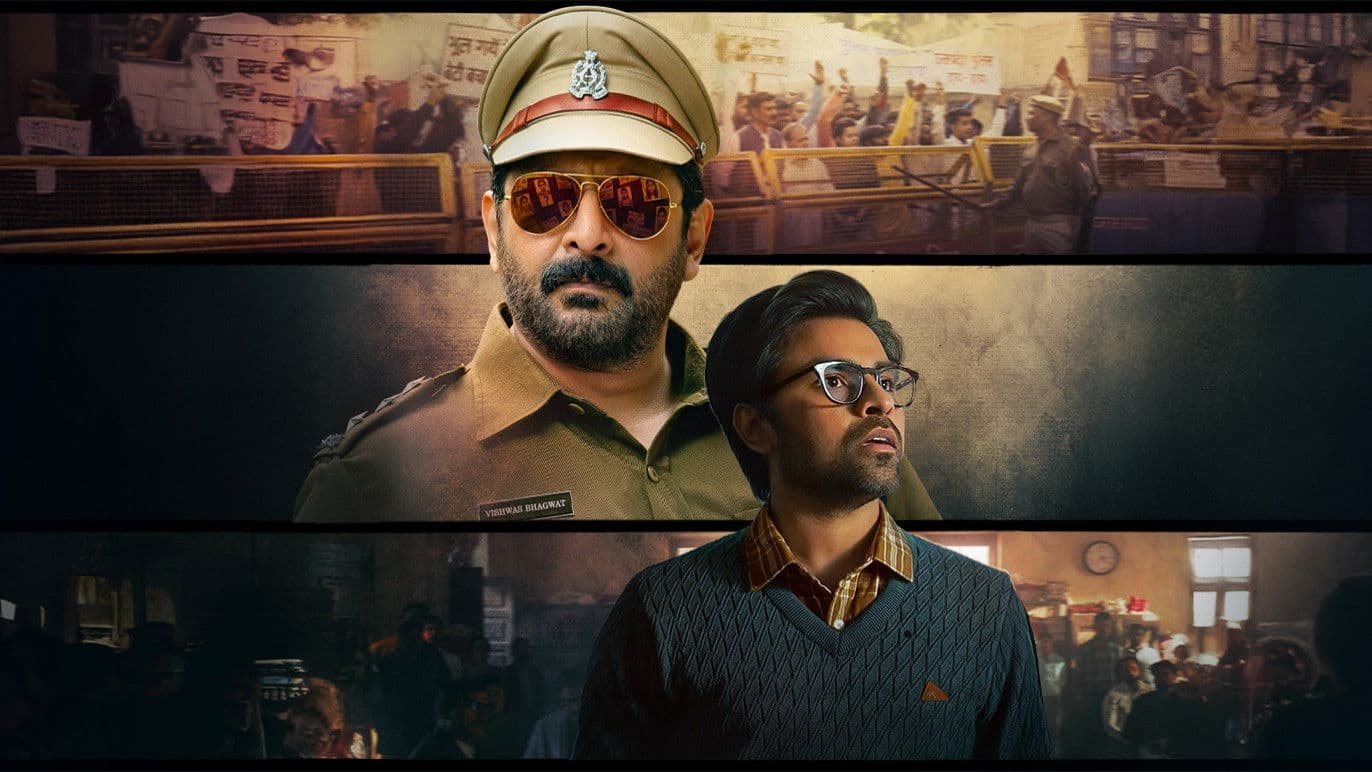
The first thing you notice about Inspector Vishwas Bhagwat is the quiet. Arshad Warsi, that perpetually kinetic spark of Bollywood energy, renders him as a man of almost unnerving stillness. He doesn’t storm into rooms; he occupies them. His eyes do the talking, scanning the mundane horror of a missing-persons file with the weary precision of a man who has seen too many endings and too few answers. That stillness is the heartbeat of Bhagwat - Chapter One: Raakshas, a thriller that doesn't announce its menace with a scream, but with a slow, creeping dread that settles under your skin.
Directed by Akshay Shere, the film, which released on October 17, 2025, begins with a premise so deceptively simple it feels almost procedural: a girl named Poonam has vanished. But as Inspector Bhagwat digs past the surface of a single missing-person report, he uncovers a sinister cartography - a map of disappearing girls, each one a pinprick of tragedy ignored by a system too busy to notice. The script refuses to offer easy catharsis. This isn’t a race against the clock; it’s a slow excavation of rot, where every layer of soil reveals not a body, but a deeper complicity.
What makes Raakshas so effective is its refusal to cartoonify its villain. The titular demon isn't a caped figure in the shadows; he’s the uncomfortable ordinariness of the men around the edges - the officious constable, the unconcerned superior, the neighbor who saw nothing. Jitendra Kumar, in a career-best dramatic turn as Sameer, a journalist with a murky past, provides the film's nervous energy. Where Bhagwat is a still lake, Sameer is the wind that ripples it. Their uneasy alliance is the film’s engine. Kumar’s characteristic neuroticism is repurposed here not for comedy, but for a raw, palpable anxiety. He’s a man who asks questions for a living but is terrified of the answers.
The film’s brilliance lies in its ensemble. Ayesha Kaduskar as Meera, a social worker who first flags the pattern, brings a steeliness that grounds the emotional stakes. She is the film's conscience, the one who reminds Bhagwat - and us - that these aren’t case numbers. Tara Alisha Berry’s Sumitra and Coral Bhamra’s Kavita deliver potent, brief performances that linger, each woman carrying the weight of a story the film wisely doesn’t need to fully tell. Even the smaller roles, like Devas Dixit’s Mahto and Sandeep Yadav’s Mishra, are seasoned with a lived-in authenticity that makes the precinct hallways feel suffocatingly real.
But let’s talk about Warsi. It’s tempting to call this a comeback, but that would be a disservice to a career that never really left. This is an evolution. He strips away every bit of the lovable scamp persona we’ve adored for decades. His Bhagwat is a man haunted by the arithmetic of his failures, a cop who understands that the law is a blunt instrument, and the truth is a jagged shard. He does more with a sidelong glance at a photograph than most actors do with a monologue. The climactic confrontation, which I won’t spoil, is less about fists and more about the quiet, devastating weight of recognition between predator and hunter.
Visually, Shere employs a palette of fluorescent greys and sickly yellows - the color of hospital corridors and interrogation rooms. The runtime of 128 minutes is used with sparing grace. There are no car chases, no slick action set-pieces. The tension is built through sound design - the hum of a faulty tube light, the distant bark of a stray dog, the scratch of a pen on a confession. It’s a deliberate, almost arthouse approach to a mainstream thriller format, and it works.
The TMDb rating of 6.958/10 feels almost too measured for a film this bold. It’s not a perfect picture; the middle act meanders slightly, and the resolution, while thematically resonant, might frustrate those seeking a conventional, tidy ending. But that’s precisely the point. Raakshas is not about the catching of a monster; it’s about what happens to the man who spends his life staring into the abyss. The missing girls are the plot; the missing humanity is the theme.
As the first chapter in a planned saga, it lays its foundations with an audacious confidence. The closing frames leave you unmoored, suggesting that the demon Bhagwat has caught was merely a lieutenant in a larger, more organized army. Bhagwat - Chapter One: Raakshas is a demanding, unsettling, and ultimately rewarding watch. It asks you to sit with discomfort, to pay attention to the silences. And in a cinematic landscape that often shouts, it’s the quietest voice in the room that you’ll find hardest to forget. It’s not just a thriller; it’s a chilling X-ray of a society that has learned to look away. Inspector Bhagwat refuses to. You won’t be able to, either.