Four months after its theatrical release, Chand Mera Dil still has people arguing in group chats. Some fans defend it fiercely. Others walked out of theatres in May feeling like they’d been promised a breezy college romance and handed something much heavier instead. Both reactions are valid, and that tension is exactly what makes Vivek Soni’s second feature worth revisiting as the year winds down.
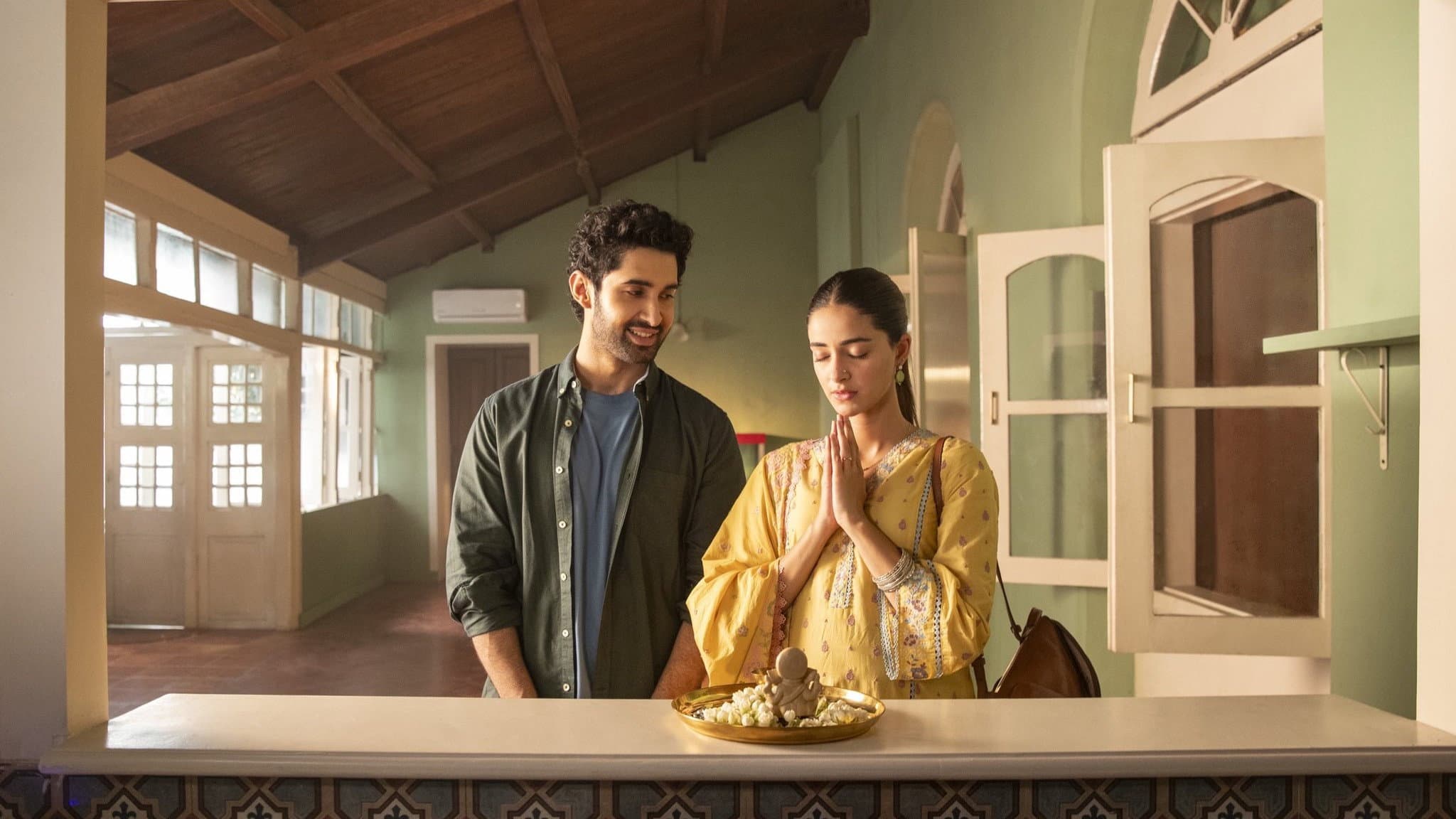
The film opens on a campus that feels instantly recognizable - canteen benches, borrowed notes, the particular electricity of a first serious crush. Aarav, played by Lakshya, is the kind of charming but aimless student Bollywood has given us before. Ananya Panday’s Chandni Prasad is sharper, more focused, and she knows it. Their romance begins with the usual montages, and for a while Chand Mera Dil plays like comfort viewing.
Then it shifts.
Soni, working from a screenplay that refuses easy resolutions, pulls the rug out somewhere around the midpoint. A family crisis, an unexpected financial burden, and suddenly these two twenty-year-olds are doing math about rent and medical bills instead of planning trips. The film’s central question isn’t whether they love each other. It’s whether love can survive when ambition and obligation start pulling in opposite directions.
It’s a familiar premise, but the execution is what lingers. Soni shoots the second half in tighter frames, more interiors, more silences. The dialogue gets shorter. That formal restraint mirrors what’s happening to Aarav and Chandni: they stop explaining themselves to each other, and the distance grows in the gaps.
Panday deserves real credit here. She’s been dismissed by critics before as a lightweight presence, but Chandni requires her to move through guilt, resentment, and a stubborn kind of hope - sometimes in a single scene. There’s a moment involving a phone call to her mother (Charu Shankar, quietly devastating) that lands like a small earthquake. Lakshya, meanwhile, has the trickier job of making Aarav’s frustration sympathetic rather than petulant. He mostly succeeds, particularly in the film’s final act when his character has to choose between being right and being kind.
The supporting cast does solid work with limited screen time. Paresh Pahuja’s Kevin could have been a stock friend-turned-rival, but he gets a brief, effective moment that reframes his behaviour. Aastha Singh’s Jyotsna adds a welcome jolt of unpredictability. Manish Chaudhary and Iravati Harshe, as Aarav’s parents, sketch a whole marriage in about three scenes.
Where the film divides audiences is its ending. Without spoiling anything, let’s just say it isn’t the reunion some viewers expected. It’s also not a tragedy. It’s something messier - a choice that feels true to the characters the film has built, even if it frustrates the romantic in all of us. TMDb users have settled on a 5.5 out of 10, which probably says less about the film’s quality than about how badly people wanted a different third act.
At 142 minutes, Chand Mera Dil is not a tight film. The first hour meanders, and a subplot involving a college principal (Atul Kumar) never quite earns its place. But when the film works, it works because it refuses to treat young love as trivial. It takes seriously the idea that growing up is often a series of small betrayals - of plans, of promises, of the people we thought we’d be.
Four months on, I keep thinking about a line late in the film where Chandni tells Aarav that love isn’t a feeling anymore, it’s a decision. It’s the kind of line that could sound corny in a lesser movie. Here, it lands because the two hours preceding it have earned the weight. Chand Mera Dil isn’t the film its marketing promised. It’s something harder and more honest - a romance about what happens after the romance. For some, that will be a disappointment. For others, it’s precisely the point.