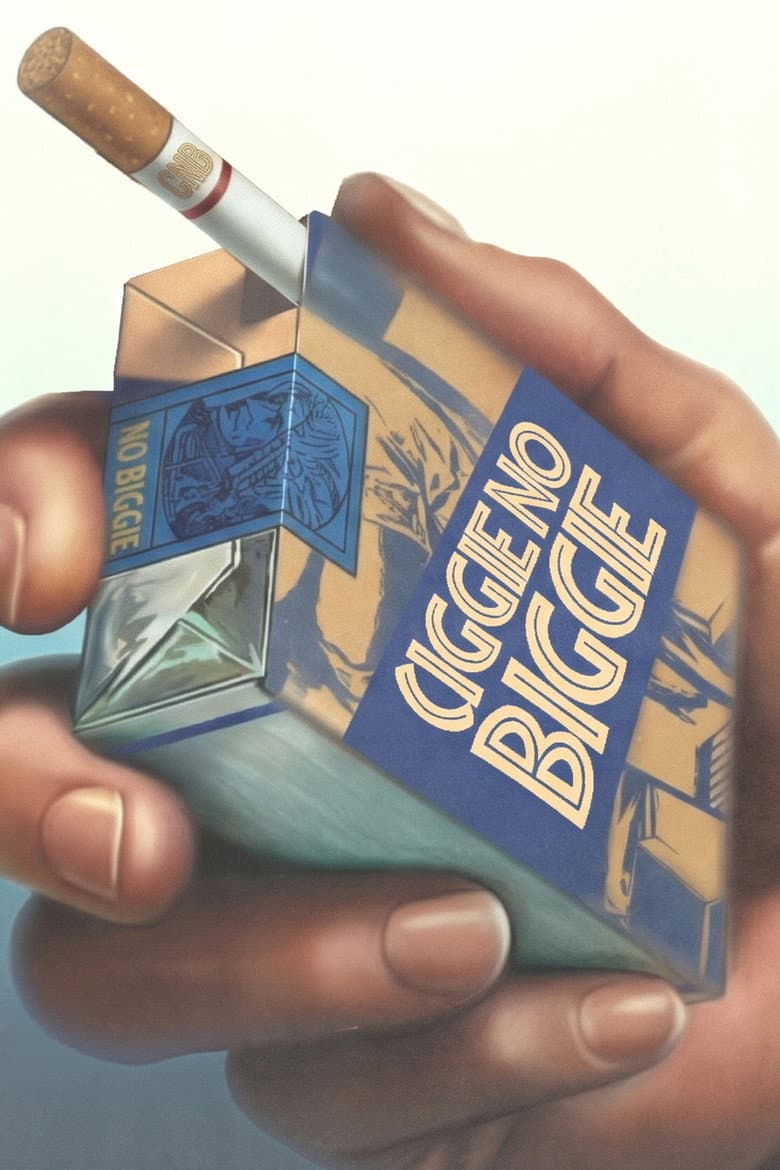
Some friendships don't end with a bang. They end with a cigarette. That, at least, is the wager Shreyansh Pandey makes in his short film Ciggie NO Biggie, a thirteen-minute Hindi comedy that has been quietly finding its audience since its release on September 4, 2026. The premise is deceptively simple: two long-lost friends meet for a reunion, and a single cigarette comes between them. Then the film does something slyer than its logline suggests - it hands the story over to the cigarette itself.
Pandey, working with a cast of three, has built what sounds like a chamber piece and a fable at once. Darpan Dhingra plays Darpan. Harshit Arora plays Harshit. Kaustubh Shahi rounds out the trio as Siddarth. Three names, three actors, one night, and an object that refuses to be merely an object. Anyone who has ever watched two old friends circle each other after years apart - the jokes that land, the silences that don't - will recognise the terrain. The twist here is that the title's flippant shrug, "no biggie," turns out to be the film's central tease. In a comedy this compact, the smallest thing in the frame is usually the thing holding the frame together.
The setup has the shape of a classic reunion comedy: old wounds, new egos, the awkward arithmetic of who has done better. But Pandey isn't interested in simply settling scores. A cigarette becomes the pivot on which the entire evening turns, a small, burning object that absorbs the resentments neither man will say aloud. And then the film grants it a fate of its own. That choice - giving agency to an inanimate thing - is the kind of formal gamble that could collapse a short film or elevate it. In Ciggie NO Biggie, it appears to be the engine. Comedy, after all, has always thrived on displacement: we laugh at what people won't confront directly, and here the displacement is literal.
At thirteen minutes, the film has no room to wander, and by all accounts it doesn't. Short films in the Hindi space often function as calling cards, but the best of them are complete thoughts, and this one seems constructed like a joke with a long fuse - setup, escalation, and a punchline that recontextualises everything before it. The presence of Shahi as Siddarth suggests the reunion isn't quite a two-hander; a third party in a story this tight usually arrives to destabilise, and his role may be the hinge on which the film's comic logic swings.
It should be said plainly: this is not a film arriving with a groundswell of scored acclaim. Its TMDb rating sits at 0/10, a figure that reflects an absence of aggregated user votes rather than any critical judgment. For a small Hindi short without a major studio push, that's less a verdict than a snapshot of obscurity - the fate of most independent shorts in a market that measures success in opening weekends. Ciggie NO Biggie hasn't had one, and wasn't built for one. What it has instead is a premise you can repeat in a single breath, which is more than most films can claim.
That repeatability matters. In an ecosystem where short-form video has trained audiences to expect a hook within seconds, a thirteen-minute Hindi comedy with a three-person cast and a conceptual conceit is almost an act of nostalgia - a reminder that brevity and wit were once the whole point of the form. Pandey's film doesn't fight the attention economy; it uses it. One cigarette. Two friends. One night. The title tells you not to take it seriously. The premise tells you that you probably should.
Whether Ciggie NO Biggie finds a wider life on streaming platforms or festival circuits remains to be seen, but its release date places it in a growing wave of Hindi shorts that treat the format as a storytelling choice rather than a stepping stone. For Dhingra, Arora, and Shahi, it's a three-way exercise in timing and restraint - the kind of material that exposes an actor instantly, because there's nowhere to hide and no subplot to duck into. For Pandey, it's a statement of comic sensibility: take the smallest possible conflict, inflate it to the size of a friendship, then quietly hand the reins to an object that has no business deciding anything. The cigarette chooses its own fate. So, in a sense, does the film.