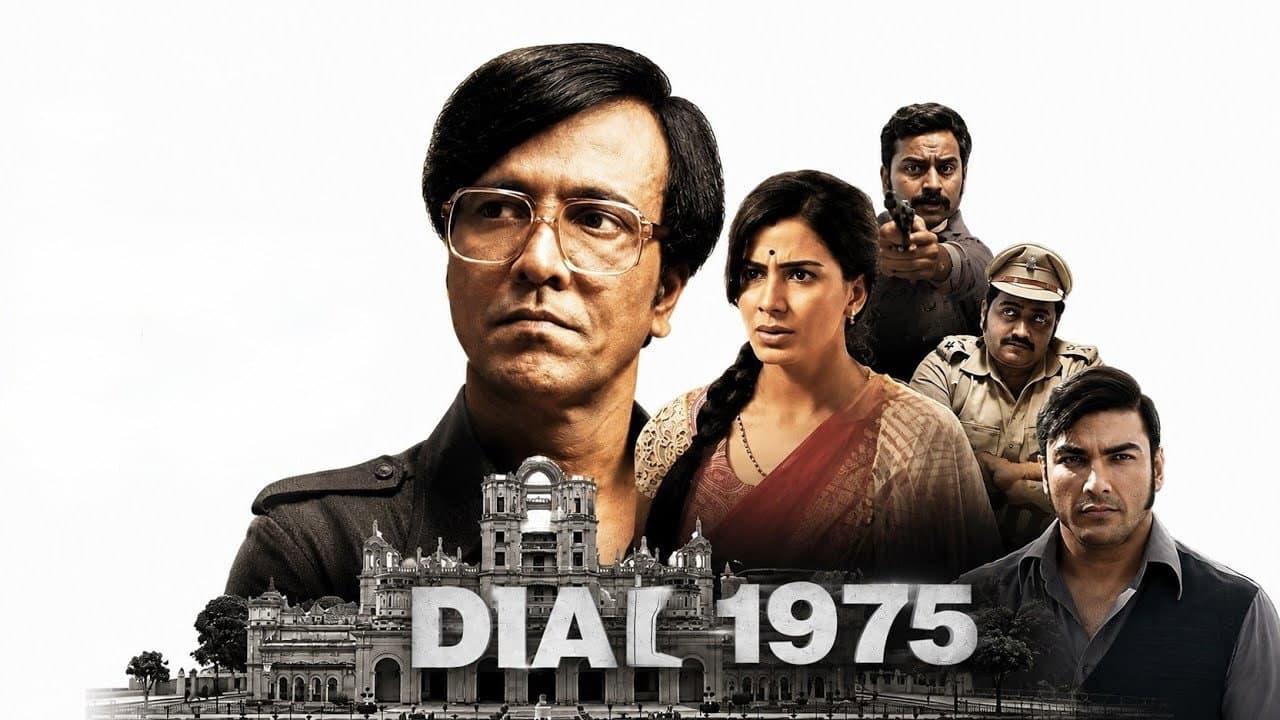
The year is 1975. Emergency has been declared. The phones are dead - not because of a technical fault, but because the lines of democracy have been cut. Now, imagine the jarring, almost absurd sound of a ringtone piercing that silence. That is the central conceit of Navneet Behal’s taut new thriller, Dial 1975, which hit theaters on July 1 and is already generating the kind of hushed, urgent word-of-mouth that befits its subject matter. This isn’t just a period drama; it’s a paranoid fever dream that asks a chilling question: what happens when the ultimate tool of surveillance lands in the hands of a state that is already listening to everything?
The film, which runs a lean but intense 134 minutes, wastes no time in establishing its unsettling premise. We are in a claustrophobic government office where Govind (a phenomenal Kay Kay Menon) toils as a mid-level bureaucrat. He is a man of ledgers and red tape, the kind of faceless cog that keeps the machinery of authoritarianism grinding forward. But Govind is also a man with a secret - a personal tragedy that has left him morally compromised and dangerously vulnerable. When a strange, brick-like device - the first mobile phone to ever arrive on Indian soil - is accidentally delivered to his desk, it feels less like a gift and more like a curse.
The device, we learn, was meant for a higher-up, a man with the shadowy name of Gorakhnath (Vishwanath Chatterjee), a spymaster who views this new technology not as a marvel of connectivity, but as the ultimate ear. Behal’s script brilliantly inverts history. We know the mobile phone eventually became India’s great liberator, a tool of democratization. But in Dial 1975, it is introduced as a possible instrument of absolute control. The film asks: what if the tool of freedom was first conceived as a leash?
Kirti Kulhari delivers a career-best performance as Meena, Govind’s wife, a woman who senses the seismic shift happening in her home. She is the audience’s moral compass, a fiercely intelligent woman who sees the phone not as a treasure, but as a ticking bomb. Her dynamic with Menon crackles with tension. He is a man drowning in his own compliance, while she is desperately trying to pull him to the surface. In one of the film's most poignant scenes, she whispers a devastating truth that lingers long after the credits roll: “The state is telling us to fear the enemy outside, but the real enemy is the one who silences our voices inside.”
The supporting cast is a rogue's gallery of power and menace. Pravessh Rana is terrifyingly effective as Prakash, the local police inspector whose loyalty to the Emergency is absolute and visceral. He represents the brute force that backs up the bureaucracy. Tom Alter, in what is a haunting posthumous performance, plays Irish, a mysterious foreign operative who understands the phone’s global implications far better than the Indians fumbling with its buttons. His presence adds a layer of Cold War espionage to the domestic dread.
Behal’s direction is masterful in its restraint. He doesn't rely on loud car chases or bombastic dialogue. Instead, the suspense is built on the sound of a rotary phone that hasn't rung yet, the click of a lock, the scraping of a chair on a wooden floor. The cinematography is drenched in sepia and sickly yellows, evoking the oppressive summer heat and the moral decay of the period. The constant, low hum of a ceiling fan feels like a metronome counting down to doom.
The film’s title is a double-edged sword. To “dial” is to initiate contact, but 1975 is a year seared into the national consciousness as the death of civil liberties. This isn't a patriotic potboiler or a simple recounting of history. It’s a genre piece that uses the Emergency as a pressure cooker to explore themes of complicity, fear, and the fragile nature of truth. There’s a particularly nerve-shredding sequence involving Ehsan Khan’s Saxena, an intelligence officer who tests the phone’s range, which becomes a metaphor for how far the state’s arm could reach into the private lives of its citizens.
What elevates Dial 1975 above a mere historical thriller is its chilling resonance. It’s a movie about a moment in time that feels terrifyingly timeless. The specific method of control has changed - we all now carry devices far more powerful than Govind’s brick - but the questions remain. Are we connecting, or are we being tracked? Are we talking, or are we informing on ourselves?
Without giving away the gripping final act, the film suggests that technology is amoral. It is what we do with it that defines us. Govind, painted into a corner by his past and the present crisis, faces a choice that will define his soul. Menon plays this internal battle with a feral intensity, his eyes often holding the pain that his lips refuse to speak. His journey from passive functionary to desperate action is the beating heart of the film.
With a TMDb rating that is currently a blank slate, this film is a pristine opportunity for audiences to discover it fresh. Dial 1975 is not an easy watch. It is suffocating, tense, and often bleak. But it is also exhilaratingly intelligent, a testament to the power of Bollywood to deliver high-concept drama without sacrificing substance. In a year where we are constantly looking back at our screens, this is one call you shouldn’t miss. But be warned: once you pick up, you may never feel safe hanging up again.