The summer of 2026 delivered many blockbusters, but none arrived with the quiet, seismic force of Hanuman Ansh. Released on June 19, this deeply spiritual family drama from director Vishal Chaturvedi has done something remarkable: it has become a word-of-mouth phenomenon, currently holding a stellar 8.4/10 rating on TMDb and turning a deeply personal story of grief into a collective cinematic experience. It is not a film you merely watch; it is a film you feel in your chest, a slow-burning devotional epic that redefines the meaning of a "hero."
At its core, this is the story of a boy drowning in sorrow. After the devastating loss of his mother, his world collapses into a monochrome of absence. He does not seek revenge or justice; he seeks something far more elusive - a direct line to God. The film opens with this raw, unbearable ache, and young Vihaan Shedge, in a breakout performance, captures that specific, hollow grief of a child who has discovered that the universe is not fair. His desperation is palpable, his question hanging in the air: Why did she have to go?
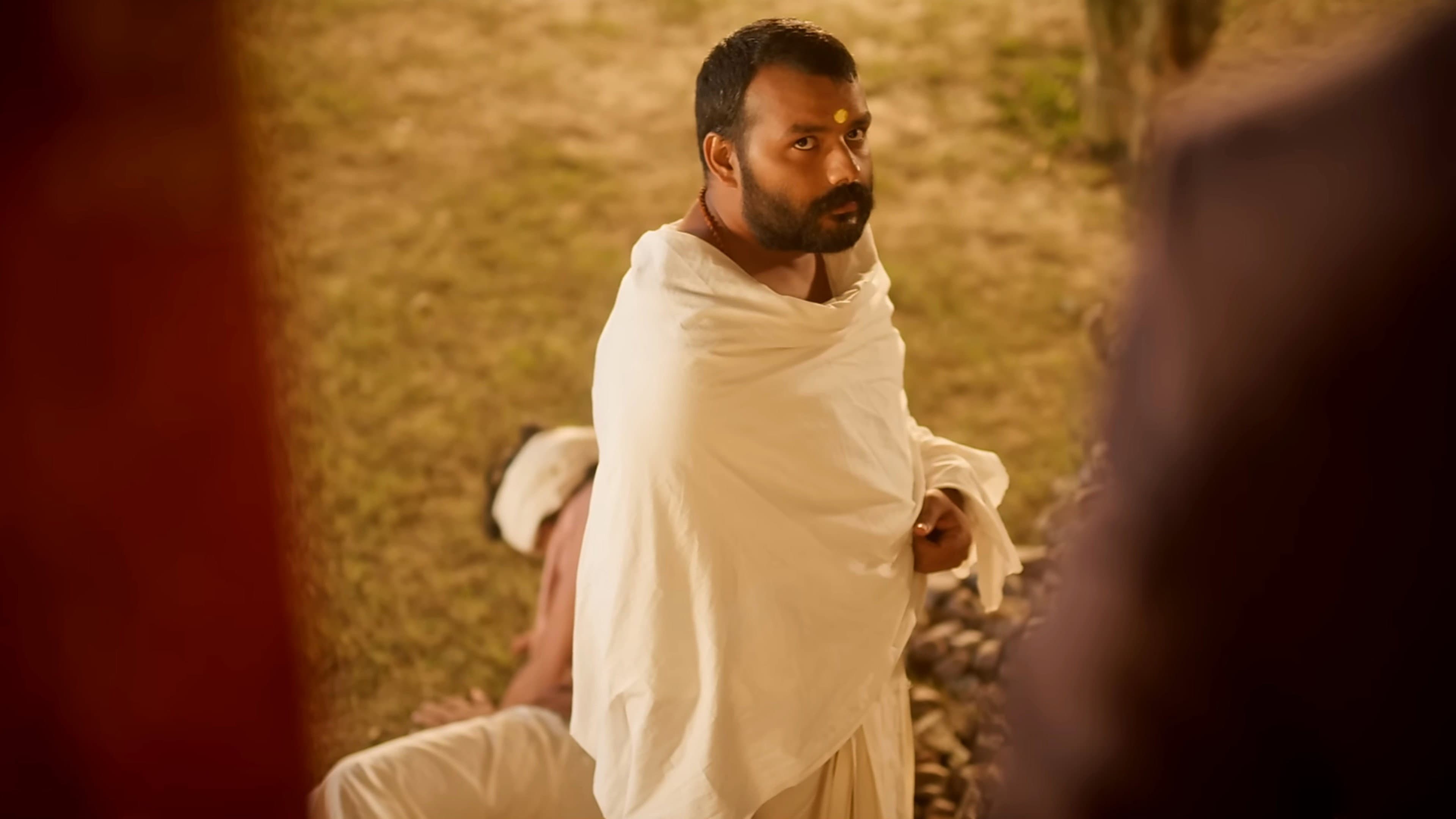
His search leads him from the sterile halls of urban temples to the chaotic, living faith of the countryside. And here, the narrative takes a turn that is as surprising as it is profound. The boy does not find a deity wrapped in gold and silk. He finds a man wrapped in a simple plaid blanket. He finds Neem Karoli Baba, brought to life with mesmerizing, twinkling-eyed authenticity by Shobhinaw Satyaa.
Satyaa’s performance is the spiritual engine of the film. This is not a Bollywood caricature of a saint, all flying saffron and booming laughter. Satyaa plays Baba as a force of nature disguised as a grandfather - impatient, loving, profoundly observant, and hilariously blunt. He doesn't deliver sermons; he hands out fruit. He doesn't perform miracles for the camera; he performs them in the mundane details of life, seeing the divine in a shared meal or silent company. When the boy finally confronts him, demanding a reunion with his mother, the film delivers a gut-punch of wisdom rather than spectacle.
Chaturvedi’s direction is masterful in its restraint. He gives us the India most of us know - the dusty lanes, the roadside stalls, the crushing heat. There is no VFX-laden heaven, no grand special effects. The "miracles" in this film are subtle: a fever breaking, a stranger’s kindness arriving at the exact moment of despair, the filling of a hungry stomach. The screenplay suggests that the divine is not a magic trick but a presence - found in the act of feeding someone, in offering a silent blessing, in simply showing up.
The supporting cast is impeccable. Purnima Tiwari delivers a heartbreakingly stoic performance as Rambeti, the boy's grandmother, who carries her own quiet grief while trying to anchor her grandson. Chandan Anand is electric as Bhonsle, a cynical, weary truck driver who becomes an unlikely guide, representing the skepticism of the modern world that is slowly chipped away by Baba’s inexplicable grace. Anil Rastogi, Gulshan Pandey, and Bhagwan Das Patel add wonderful texture to the world, creating a canvas of humanity that feels authentic and lived-in.
But the true soul of Hanuman Ansh lies in its articulation of service. The title cleverly references Hanuman, the ultimate devotee. Yet, the film recontextualizes this devotion. The boy learns that you do not become powerful by lifting mountains; you become powerful by lifting a ladle of food for someone who is hungry. You do not meet God by looking up; you meet Him by looking sideways, at the person next to you.
The 150-minute runtime is generous, but it is a meditative pace, not a sluggish one. It allows scenes to breathe. A long sequence of the boy helping to chop vegetables in Baba’s makeshift kitchen becomes a masterclass in spiritual therapy. The sound design is exquisite, using the ambient noise of bells, birds, and the crackle of cooking fires as a form of music. There is no heavy-handed background score to manipulate your emotions; the film trusts its story and its actors.
By the climax, you realize that Hanuman Ansh (An Act of Hanuman, or a fraction of His essence) is not about the boy becoming a mythological hero. It is about him becoming human in the most expansive sense. He learns that love is the greatest miracle, and that service is the highest prayer. The moments of catharsis here are not loud; they are quietly devastating and life-affirming.
In a landscape of action spectacles and high-concept thrillers, Hanuman Ansh is a radical outlier. It is a film that asks what if the answer to despair was simply to feed someone? What if heroism meant the silent endurance of pain for the sake of others?
It is rare for a film to leave an audience feeling not just entertained, but genuinely altered. This isn't just a movie; it is a gentle hand on the shoulder, a reminder that in the midst of our most profound loss, we are capable of the most profound love. Run to a theatre, not for a spectacle, but for a blessing. Hanuman Ansh is that rare cinematic blessing, and it deserves every moment of your attention.