The first thing you notice about Shankar Gurrukkal is the chaos in his eyes. It’s a specific kind of turbulence, the sort that makes a room feel smaller and everyone in it more fragile. In Tere Ishk Mein, director Aanand L. Rai doesn’t ask us to sympathise with this volatility so much as to understand its gravitational pull. The film, which released in late November last year and has been quietly dissected by audiences ever since, is not a simple love story. It’s a study in the pathology of attraction, wrapped in the all-too-familiar garments of a doomed romance.
The premise is deceptively clinical: Mukti Behniwal (Kriti Sanon), a psychology student, takes on the task of rehabilitating Shankar (Dhanush). He is described, in polite company, as “volatile.” In less polite company, he’s a ticking bomb with a charming smile. Rai, who has a knack for locating the extraordinary in the ordinary, uses this setup to explore something deeper than a redemptive arc. This isn’t about fixing a man; it’s about the dangerous hubris of believing you can.
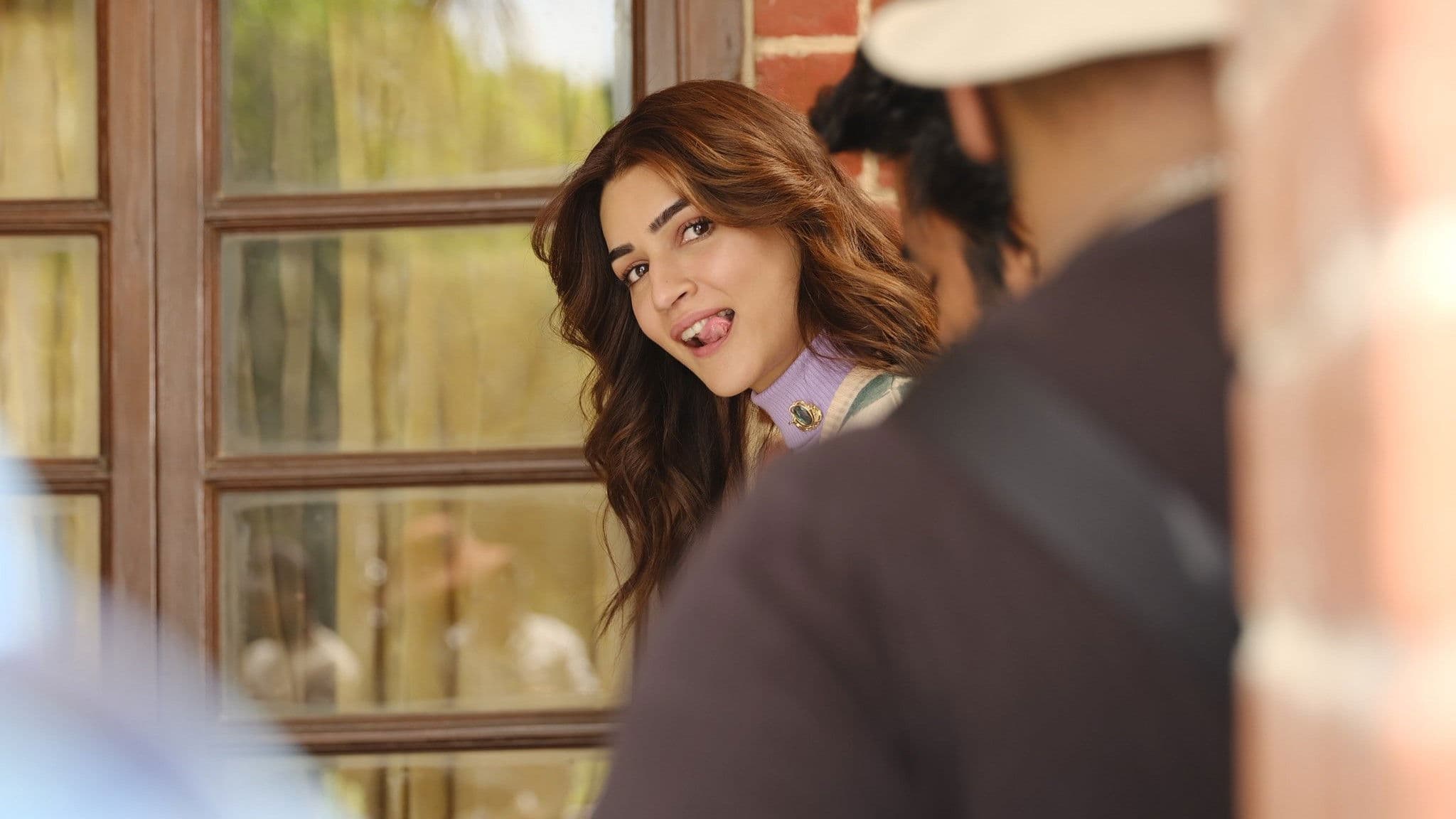
What makes Tere Ishk Mein compelling is its refusal to let you settle into a comfortable rhythm. The runtime is a hefty 169 minutes, but the pacing is deliberate, almost languorous in its first hour. Rai builds the world of Shankar’s fractured family - with Prakash Raj delivering a masterclass in weary paternal disappointment as Raghav - before slowly pulling Mukti into its orbit. Sanon, as the rational, sharp-witted Mukti, is the film's anchor. She grounds every scene with a clinical precision that makes her eventual unraveling all the more devastating. It’s a performance that reminds you why she’s one of the most versatile actors working today.
The romance, when it evolves, feels less like a choice and more like a collision. There are no grand gestures here, no rain-soaked song sequences that promise eternal devotion. Instead, there are fractured conversations, moments of unexpected tenderness that are immediately undercut by Shankar’s next outburst. The doomed nature of their relationship is never in doubt. The TMDb score of 5.364/10 suggests a polarizing split, but the IMDb rating of 7.5/10 paints a different picture - one of a discerning audience that appreciates the film's refusal to spoon-feed its emotional beats.
Aanand L. Rai, known for his work on Tanu Weds Manu and Zero, constructs a narrative that feels like a tightening spiral. He populates the edges with a remarkable ensemble - Priyanshu Painyuli’s Ved, Paramvir Singh Cheema’s Jasjeet Shergill, and Vineet Kumar Singh’s Group Captain V Shekhawat all add texture and weight to the world. But the film’s true supporting pillar is Mohammed Zeeshan Ayyub as Murari, who provides the film’s conscience, a voice of weary reason in a sea of emotional chaos. He serves as the audience’s surrogate, watching the tragedy unfold with a helpless grimace.
What is most striking about Tere Ishk Mein is its uncompromising look at the mechanics of abuse and codependency. Mukti isn’t a naive girl swept off her feet; she’s a professional who believes her training can withstand his storm. She learns, in the most brutal way possible, that the heart does not always follow the thesis. Dhanush, as Shankar, delivers a performance that is both magnetic and repellent. He doesn’t let you off the hook. He doesn’t ask for your forgiveness. He simply exists in his fractured state, daring you to look away. Shankar’s father, Raghav, is a man broken by his son’s actions, and the dynamic between them is raw, almost difficult to watch.
The last act of the film is where Rai truly earns his keep. It’s here that the “doomed romance” tagline becomes a thesis statement. There is no salvation, no last-minute epiphany. Instead, there’s a quiet acceptance of a terrible truth, a resignation that feels more painful than any on-screen argument. The film asks a haunting question: what happens when you love someone not in spite of their damage, but because of it? Several sequences will linger with you long after you’ve left the theatre - a silent conversation on a balcony, a hand that almost reaches out, a final shot that suggests a cycle about to repeat itself.
In a landscape where Bollywood romances often default to glossy escapism, Tere Ishk Mein is an anomaly. It’s a drama that trusts its audience to handle discomfort. It’s less a film you enjoy and more one that you survive. The relationship between Shankar and Mukti isn’t one you root for; it’s one you recognize with a shudder of familiarity. For those willing to sit with its uncomfortable complexities, it’s a profound piece of cinema. For those who came for a conventional love story, it may feel like a betrayal. But the truth is, love seldom follows the course mapped out by a psychology textbook. And as Tere Ishk Mein reminds us, sometimes our most profound lessons are learned in rooms we should have left long ago.