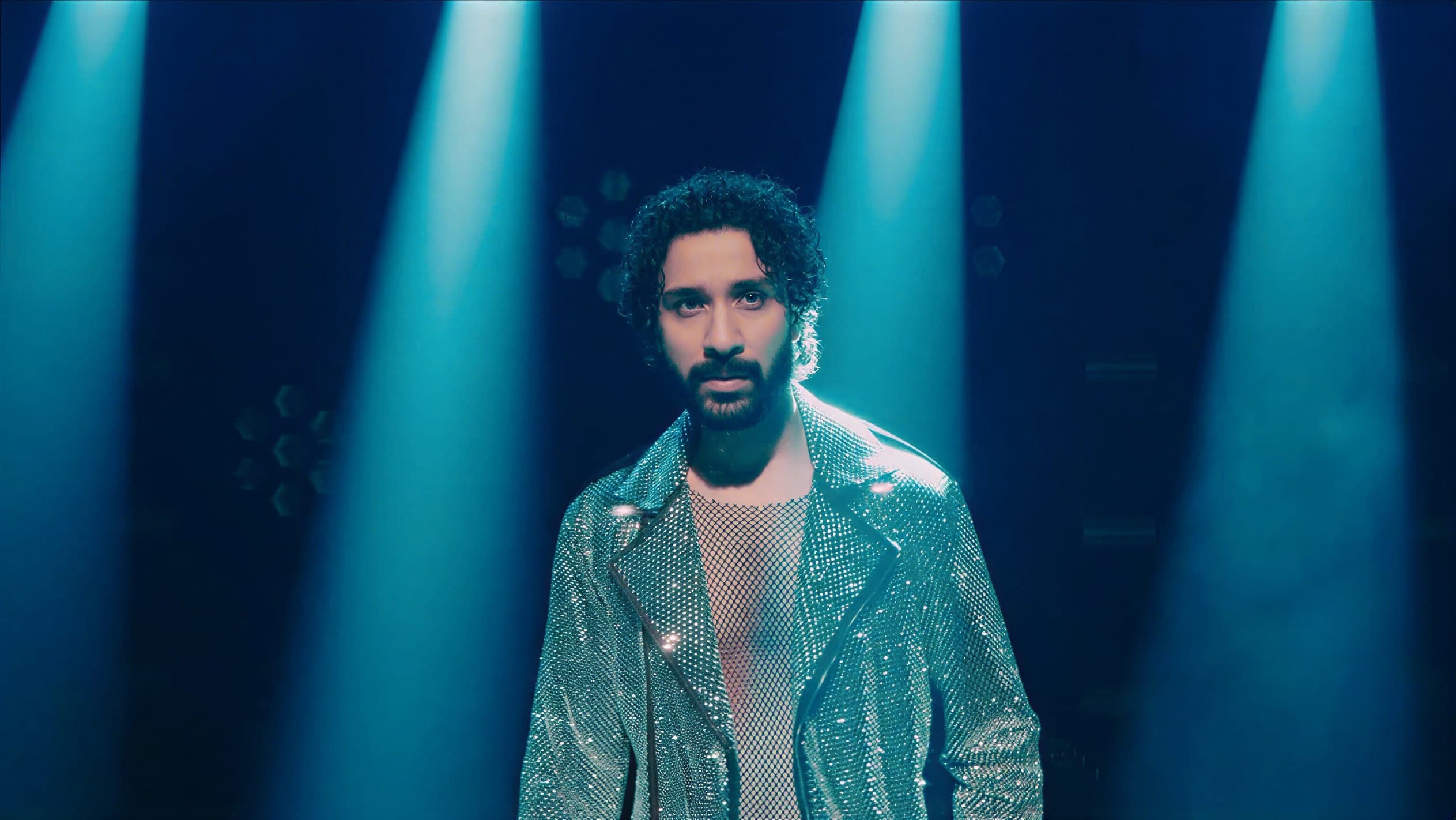
The opening image of Vivek B Agrawal’s Bhai Tera Star Hai is almost poetically ironic: a man in a cheap, sparkling blazer staring at his own reflection in a grimy London pub mirror, rehearsing a smile that looks more like a wince. That man is Ajay Singh, played with wiry, manic energy by Raghav Juyal, and within twenty minutes he has lost more money than he will ever earn on a cricket bet he couldn’t afford. This is not a story about stardom, despite the title’s cheeky promise. It is a story about the terrifying, hilarious gap between the person you claim to be and the person you actually are - and the violent, absurd consequences of that gap when a deadline looms.
The film, which hit theatres on July 30, 2026, and runs a hefty 150 minutes, is a pure comedy in genre but a thriller in its bone structure. Agrawal, known for his sharp ear for dialogue and a visual style that favors kinetic chaos over static setups, has crafted a London that feels less like a tourist postcard and more like a pressure cooker. Ajay, a struggling actor who landed a bit part in a British TV series, owes a dangerous bookie a sum he cannot repay. His solution? Lie. Specifically, he tells the bookie’s enforcers that his sister - a successful, wealthy, and entirely fictional sibling - is flying into London that very evening to bail him out.
That single, flimsy falsehood is the domino that knocks over an entire evening of cascading disasters. The film’s genius lies not in its premise, which is simple, but in its execution. What follows is a farcical fugue state: a group of incompetent criminals, each with their own misguided agenda, converge on a single apartment block. There is a botched robbery, a mistaken identity that spirals out of control, and a series of physical comedy set pieces that feel both meticulously choreographed and delightfully spontaneous. The script, credited to Agrawal alongside his writing team, never lets the audience catch its breath, but it also never forgets that every absurd beat is rooted in a character’s genuine desperation.
Juyal, who has long been a scene-stealer in supporting roles, finally gets a full meal here. His Ajay is a bundle of nervous tics and rapid-fire rationalizations, a man who lies so instinctively that he often seems surprised by his own fabrications. He is not a hero; he is a survivor, and Juyal makes that distinction both hilarious and painfully relatable. The supporting cast is a masterclass in comic timing. Sanjay Kapoor, as the most senior and most baffled of the criminals, delivers a performance of slow-burn, deadpan frustration, his eyebrows doing more work than most actors’ entire bodies. Niharika NM and Barkha Singh, as two women whose paths collide with Ajay’s chaos, each bring a different flavor of pragmatic absurdity, while Vikalp Mehta and Vivan Bhatena round out the ensemble with performances that feel like they were tuned to the same frantic frequency.
What elevates Bhai Tera Star Hai beyond mere silliness is its thematic honesty. At its core, this is a film about the pressure to perform a version of success that you haven’t achieved. Ajay’s lie about his sister isn’t just a plot device; it’s a symptom of a deeper cultural malaise. He is an actor, but the biggest role he ever plays is "a man who has his life together." The film, in its most poignant moments, acknowledges that the pandemonium on screen is merely an external manifestation of an internal crisis. When Ajay is cornered in a bathroom, sweating through his cheap shirt, Juyal’s eyes betray a genuine terror that cuts through the comedy. The laughter becomes a defense mechanism, both for the character and for the audience.
Agrawal’s direction keeps the energy high, but he also knows when to pull the camera back. The London setting is used brilliantly - not as a glamorous backdrop, but as a maze of cramped flats, neon-lit convenience stores, and rain-slicked alleys. The cinematography captures the city’s gritty underbelly with a loving eye, and the editing is brisk without becoming frantic. There is a centerpiece sequence involving a delivery of a mysterious suitcase and a case of mistaken identity that is destined to be studied in screenwriting classes for its precision and timing.
Of course, the film is not without its faults. At 150 minutes, the middle act occasionally threatens to overstay its welcome, and a subplot involving a celebrity impersonator feels slightly redundant. Yet the finale, which manages to tie every errant thread into a tight, explosive knot, earns its runtime. The resolution is both satisfying and thought-provoking, refusing to offer a clean, moralistic ending. It asks a simple question: after an evening of pure, unscripted chaos, who is the real "star" - the one who lies to survive, or the one who survives the lie?
For a Hindi-language comedy from Bollywood, Bhai Tera Star Hai is a surprisingly sturdy piece of entertainment. It is loud, chaotic, and occasionally exhausting, but it is also relentlessly funny and unexpectedly moving. In a summer dominated by sequels and spectacle, this film dares to bet everything on a manic actor, a terrible lie, and the universal fear of being exposed. It’s a gamble that pays off. The TMDb rating is currently a blank slate, a zero, which feels almost appropriate: this is a movie that invites you to fill in the score based on how hard you laugh at the sight of a man negotiating with a hitman while wearing a bathrobe. That, in itself, is a kind of stardom.