The city never sleeps, and neither do the hearts navigating its tangled bylanes. When Anurag Basu first gave us Life in a Metro in 2007, it felt like a warm, melancholic exhale - a mosaic of loneliness and longing against the Mumbai skyline. Now, nearly two decades later, he returns with Metro... In Dino, a film that doesn’t just revisit that world but expands its emotional geography. Released in July 2025, this 159-minute drama is less a sequel and more a spiritual continuation, a patient, sprawling look at love when it stops being a fairy tale and starts being a daily negotiation.
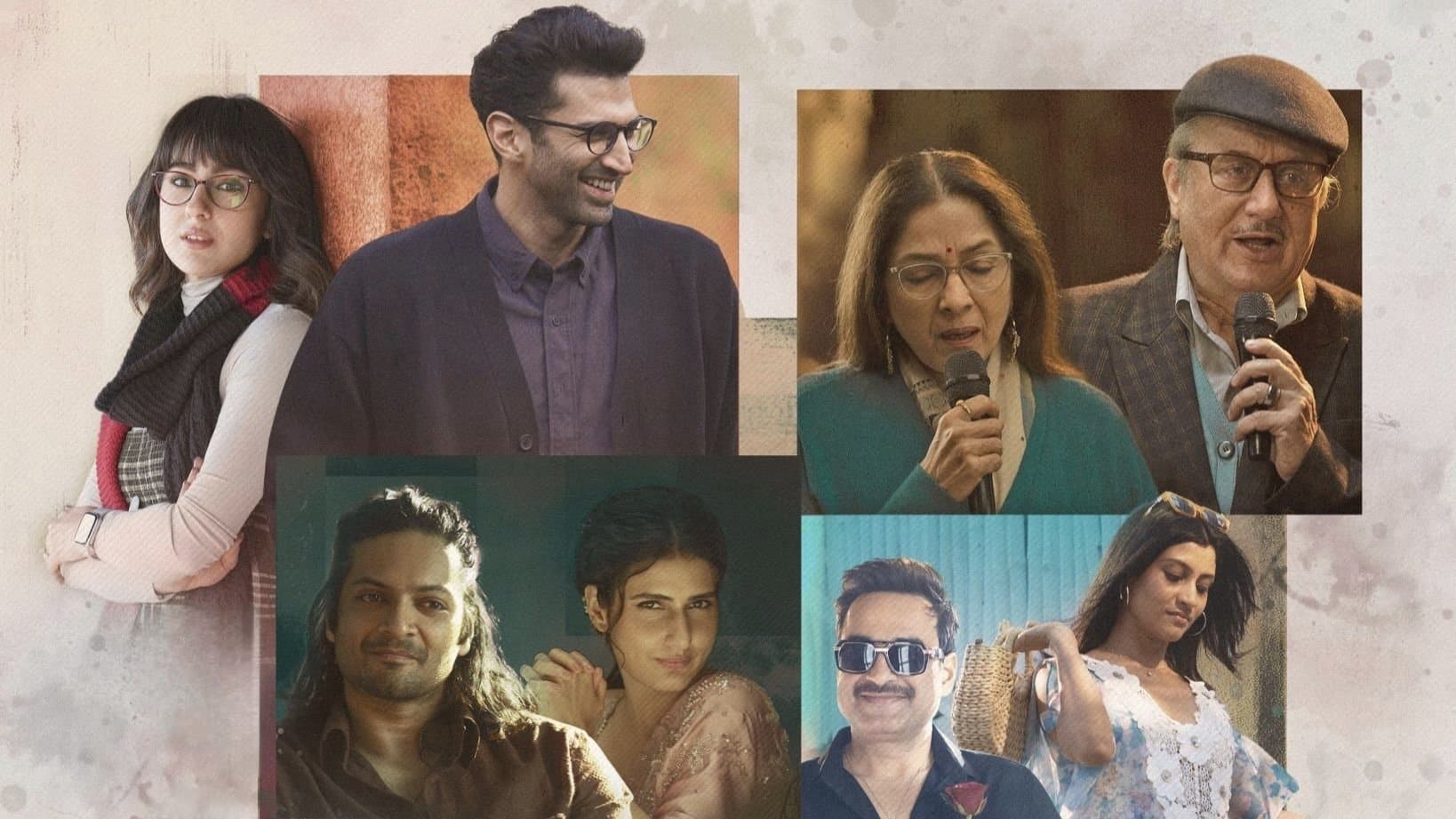
The setup is familiar yet freshly unsettling. We follow several couples at different stages of their relationships, each standing at a personal crossroads. There is the older pair, played with immense grace by Anupam Kher and Neena Gupta, who remind us that age doesn’t dull the ache of miscommunication. Then there’s the chaotic middle - Pankaj Tripathi’s Monty and Konkona Sen Sharma’s Kajol, whose pairing feels like a masterclass in awkward, hopeful chemistry. And at the younger end, Aditya Roy Kapur’s Parth and Sara Ali Khan’s Chumki, alongside Ali Fazal and Fatima Sana Shaikh, grapple with the dizzying speed of modern attachment. Basu’s signature style is intact: the rain-slicked streets, the sudden bursts of music that feel like intrusive thoughts, and a cast that knows how to hold a silence.
What sets Metro... In Dino apart is its unhurried courage. In an era of rapid-fire edits and streaming-style pacing, Basu lets scenes breathe. A conversation between Kher and Gupta about a forgotten anniversary isn’t just dialogue; it’s a battlefield of unspoken resentments and tiny, humiliating concessions. Tripathi, as Monty, delivers a performance that is both brash and heartbreakingly vulnerable - a man who uses loud humor as a shield against his own irrelevance. Meanwhile, Sara Ali Khan, often pigeonholed into bubbly roles, finds a quiet steel in Chumki. She’s not just the young lover; she’s the one who asks the terrifying question: “What if we stay together and still feel alone?”
The film’s score, composed by Basu with Pritam’s assistance, is a character itself. Songs aren’t just interludes; they are emotional escape valves. One particularly affecting sequence sees Kapur’s Parth walking through a crowded local train station while a melancholic track swells - he’s surrounded by thousands, yet his face is a map of isolation. It’s pure cinematic language, the kind that Basu has perfected. The comedy, though, is undervalued. Tripathi’s banter with a perpetually confused waiter, or Neena Gupta’s deadpan dismissal of her husband’s attempts at romance, provides the necessary levity that keeps the film from drowning in its own existential weight.
Critically, the reception has been a study in middle-of-the-road consensus. With a TMDb score of 6.417 and an IMDb rating of 6.6, it isn’t the unqualified triumph of Basu’s earlier work, but it’s far from a misfire. The criticism is valid: some threads feel undercooked, particularly the Ali Fazal-Fatima Sana Shaikh subplot, which gestures at modern polyamory and digital infidelity but pulls back at the last moment. It’s a frustrating tease. Yet, the film’s strengths lie precisely where it doesn’t rush to conclusions. It refuses to offer neat resolutions. The couples don’t all get their happily-ever-after; some just get a grudging, more honest understanding.
Perhaps the most resonant performance comes from Konkona Sen Sharma, whose Kajol is a woman exhausted by her own pragmatism. In a scene opposite Tripathi, she delivers a monologue about how love becomes a series of logistics - who picks up the kids, whose career gets prioritized, who sleeps on the couch after a fight. It’s a gut-punch because it’s so painfully mundane. That’s the heart of Metro... In Dino: it finds the extraordinary in the ordinary compromises we make.
The film asks a simple, devastating question: is it enough to stay together because breaking up is too much work? For some of these characters, yes. For others, it’s the push they need to leap into the unknown. That ambiguity might frustrate viewers looking for a clear message, but it’s also what makes the film feel authentic. Love, as Basu sees it, is not a destination. It’s a series of traffic lights - sometimes green, sometimes a long, red wait.
As the credits roll, with the city’s skyline glittering in the background, you might not remember every plot twist. But you’ll remember the feeling - that heavy, familiar weight in your chest. Metro... In Dino doesn’t reinvent the wheel, but it keeps it turning. In a world that often treats romance as disposable content, this film insists on sitting with the mess. That, in itself, is worth the ticket.