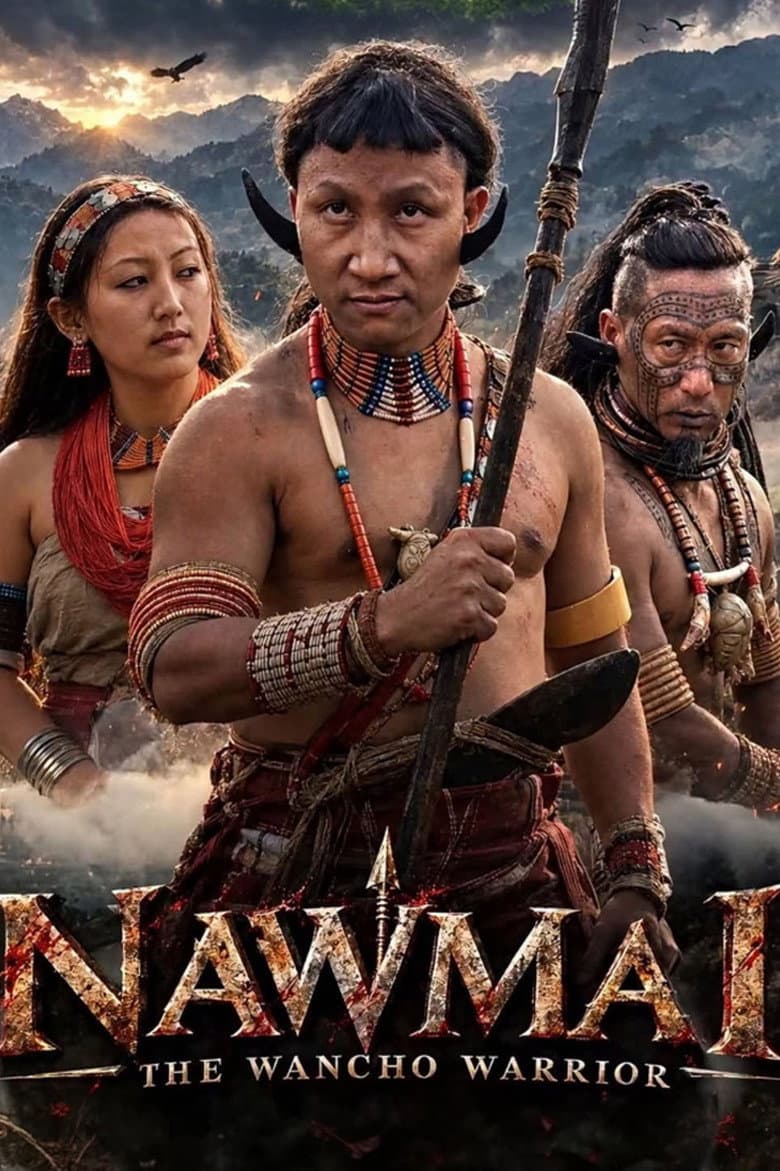
The drums of war have a peculiar rhythm in the hills of Arunachal Pradesh. They echo off mist-shrouded peaks, rolling through valleys where oral histories are sung rather than written. It is from this fertile, unforgiving terrain that Hindi cinema's most unexpected spectacle of 2026 has emerged. Nawmai: The Wancho Warrior, directed by Jovi Wangjin Wangsha, arrived in theatres on September 18 with little of the usual Bollywood fanfare - no item numbers, no foreign locales, no star kids. What it offers instead is something rarer: a window into a world most Hindi-speaking audiences have never seen, wrapped around a tale of forbidden love and brutal retribution.
The film plunges viewers into the heart of a bitter feud between Rankho and Longmei, two men whose enmity predates the events on screen. Their conflict, however, takes an unexpected turn when Prince Wangthak falls for Princess Sencha. It is a romance that would be complicated enough on its own, but Wangsha's screenplay stacks the deck further: Sencha's tyrannical uncle, Liwang, has seized her throne. When Liwang captures the princess and demands the return of lost lands, the simmering hostility between the villages erupts into a full-scale war. At 113 minutes, the film wastes little time on exposition, trusting its audience to keep pace with the political machinations while never losing sight of the emotional core.
For Wangsha, a relatively fresh voice in Hindi cinema, the project has been a labour of devotion. "We were not making a documentary, but we were determined not to turn these people into caricatures," the director said in a recent interview, translated from Hindi. "Every ritual, every ornament, every song you hear in the background - we consulted elders. The Wancho culture is not a costume we borrowed for a weekend shoot." That commitment shows. The production design, reportedly built largely on location with input from community members, gives the film a tactile authenticity that green screens cannot replicate. The film marks a significant moment for Hindi cinema's ongoing, often clumsy, attempts to represent India's indigenous communities. Too often, such portrayals have leaned on stereotype or reduced tribal life to exotic backdrop. Nawmai appears to sidestep that trap, at least according to early chatter among those who have seen it.
The casting is equally noteworthy. Powang Wangsa and Lemngam Atraham, both relatively unknown faces to mainstream audiences, carry the film's emotional weight. Wangsa's Prince Wangthak is said to be a study in restraint - a man torn between duty to his village and the pull of his heart. Atraham's Princess Sencha, meanwhile, is no passive damsel; she is a ruler stripped of power but not of agency, and her arc reportedly forms the film's spine. Their chemistry, according to those who have caught early screenings, lends the film a tenderness that keeps the battle sequences from tipping into mere spectacle.
And spectacle there is. The war between the villages, staged across thick forests and steep ridges, has been described by the director as "a clash of brothers" - not good versus evil, but a tragic unraveling of kinship. Hindi war films often favour slow-motion heroics and gravity-defying stunts. Wangsha, by contrast, has spoken of wanting "the mud, the exhaustion, the fear." Whether that translates to a new visual language for the genre remains to be seen, but the intent alone signals a filmmaker unwilling to settle for formula.
Since its release, the film has generated a quiet, persistent buzz - not the deafening roar of a franchise tentpole, but something more organic. The TMDb rating currently sits at 0/10, a figure that reflects the platform's user-generated nature and the film's limited initial visibility rather than any settled critical consensus. Such anomalies are common for smaller releases with devoted but numerically modest audiences. What matters more is the conversation the film has sparked: about representation, about the stories Hindi cinema chooses to tell, and about who gets to tell them.
Nawmai: The Wancho Warrior may not dominate multiplexes or inspire a thousand Instagram reels. But it does something arguably more valuable. It widens the frame. In a film industry frequently accused of homogenising its narratives, here is a film that insists on specificity - a particular people, a particular place, a particular grief. Whether audiences follow it into those hills is an open question. But the invitation itself feels like a small, necessary victory.