Radhika Apte built a reputation without ever chasing the centre of the frame. She came to films by way of the stage, and that grounding shaped everything that followed. Her body of work in Hindi cinema is not especially large. It is, however, unusually varied, and it rewards close attention.
This piece looks at how that career took shape, what each film added, and why a reader who follows Hindi cinema from outside India should know her name.
From Stage To Screen: A Performer Built On Instinct
Apte began in theatre with the troupe Aasakta in her home town. Stage work teaches a performer to hold a room with very little: a voice, a body, a pause. That training shows in her screen choices.
Her first feature appearance was a brief role in the Hindi fantasy Vaah! Life Ho Toh Aisi! (2005). A starring role followed in the Bengali social drama Antaheen (2009), and she made her Marathi film debut the same year with the tragic romance Samaantar. Work in more than one language came early, and it never stopped. This piece stays with her Hindi output, because that is where her reputation was built.
Her Hindi filmography, in order of release, runs from I Am (2011) through Badlapur, Hunterrr, Manjhi: The Mountain Man and Parched, all from 2015, then Phobia (2016), the Lust Stories anthologies, Andhadhun, Baazaar and Pad Man, and on to the present.
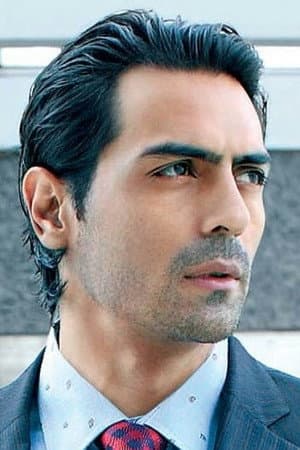
 Photo: TMDb
The Breakthrough Years: Badlapur, Hunterrr And Manjhi
One piece of industry vocabulary helps here. A performer is said to have "broken through" when a run of roles turns a working name into a recognisable one, regardless of billing or screen time. Apte's breakthrough came in 2015.
That run included Badlapur, a thriller in which she appears as Koko, and the comedy Hunterrr. Manjhi: The Mountain Man cast her as Phaguniya in the story of a man who, after his wife dies trying to cross a mountain, sets out to carve a road through it. Parched gave her the role of Lajjo.
Together these parts established a pattern. She was not chasing the middle of the frame so much as the emotional pressure inside it. A year later, Phobia drew wide appreciation and confirmed the pattern rather than breaking it.
The Body Of Work: What Each Film Added
I Am (2011), in which she plays Natasha, belongs to her earlier period. It is an anthology, meaning a single film made of separate short stories that share one theme. Everything after that reads like a deliberate refusal to repeat herself.
Lust Stories (2018) is a collection of short films on lust, love and relationship, each directed separately. Apte appears as Kalindi and is also credited with the screenplay and story for her segment, the clearest evidence that her involvement goes beyond performance. That same year she appeared as Sophie in Andhadhun (2018), a thriller about a blind pianist whose life is changed by mysterious events and who must report a crime he never actually witnessed. She was also part of Baazaar (2018) as Priya Rai, and of Pad Man (2018) as Gayatri Chauhan.
Raat Akeli Hai (2020) and Raat Akeli Hai - The Bansal Murders (2025) both place her in the role of Radha. The later title returns to the same world and the same character name, which makes the two films a useful pair to watch together: the same performer, the same name, and two different moments in a career. IFC Films has distributed Indian titles in the United States, which is one route by which viewers abroad encounter this kind of work.
Monica, O My Darling (2022) is a crime story in which a robotics expert joins a murderous plot after an affair takes a turn, and in which nothing is what it seems. Apte plays ACP Vyjayanti Naidu, a reminder that she is as comfortable inside a stylised genre piece as inside a social drama. Her most recent Hindi credit here is Lust Stories 3 (2026), where she appears as Padma, returning to the anthology format that first let her write as well as perform.
Where She Sits In Hindi Cinema, And Why The Name Matters
Apte occupies a particular position. No single franchise or fixed screen persona defines her. Her career is a sequence of moods: the thriller, the comedy, the period drama, the slice of life, the crime picture. What connects them is an interest in characters under strain, often women whose inner lives carry more weight than their screen time.
For a reader outside the region, the reason to learn the name is simple. Hindi cinema is often described through its biggest spectacles, and coverage tends to follow the same few titles. Apte's career shows the other side of it: an industry where a performer can move between formats, write for herself, and stay in the room for two decades without ever settling into one kind of part. The British Film Institute publishes introductions to Indian cinema that are useful for anyone building a viewing list.
Start with Badlapur and Andhadhun, then watch the two Radha films side by side. The range becomes obvious very quickly.