
Suniel Shetty: A Career In Hindi Cinema is best understood as a study in contrast. He could play the stoic man of action and the flustered friend in the same decade, sometimes the same year. For a viewer outside India meeting his name for the first time, the fastest way in is to watch that range rather than a single performance. His filmography moves between police dramas, vigilante stories, ensemble comedies and family narratives. The through line is not a single signature role but a durable willingness to serve whatever the story needs. This career feature draws only on confirmed titles and years, and traces how one performer became a fixture across several of Hindi cinema's most popular modes.
The Action Years And The Roles That Defined Them
A Hindi cinema career often begins with a genre role that fixes how the industry sees a newcomer. Dilwale (1994) cast Shetty as Inspector Vikram Singh, placing him inside the police drama tradition that dominated the period. Roles like this taught audiences to read him as a physical presence first. That reading stayed with him for years.
Aaghaaz (2000) gave him Govind Narang, a man who relocates to Bombay with his sister and refuses to look away from injustice. The film turns on his collision with a gangster, Johnny, and his brother, Danny Handsome. The plot summary describes violence against Govind and an assault on his sister, the kind of grim turn that defined the vigilante dramas of the era. Shetty's screen task here is endurance: absorb the blow, then answer it.
Main Hoon Na (2004) reversed the polarity. As Raghavan, also named Major Raghav Dutta, he played the opposing force to an army major working undercover as a college student. The film's mission is both professional and personal, protecting a general's daughter from a radical militant while searching for an estranged half brother. Playing the threat rather than the rescuer let Shetty use the same physical authority for menace. This is a useful lesson for viewers new to the industry: the same build and gravity that make a hero credible can make a villain more dangerous, because the audience already trusts the body on screen.
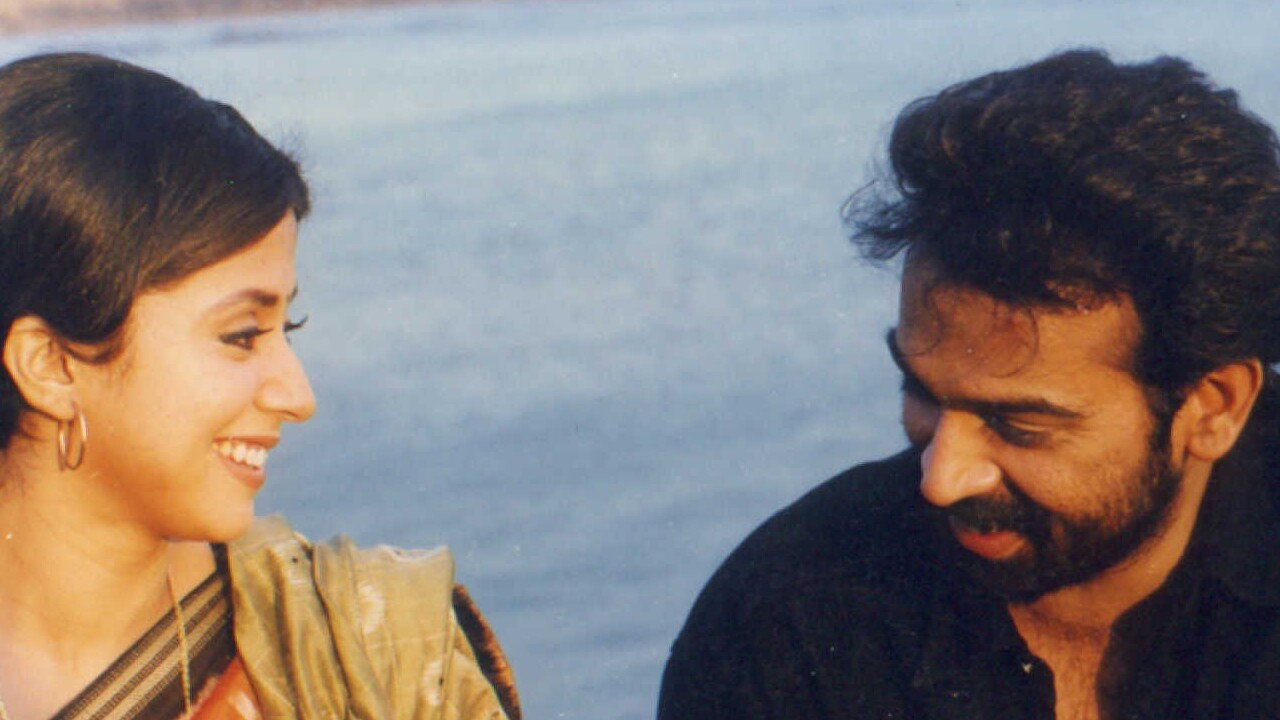 Photo: TMDb
Comedy, Chemistry And The Films That Travelled Farthest
If one role carried his name beyond India, it is Shyam. Hera Pheri (2000) and its follow up Phir Hera Pheri (2006) placed him in an ensemble where panic, greed and loyalty collide. Comedy of this kind depends on timing between performers. The two films are why a large audience associates him with laughter before action. The humour does not come from jokes alone; it comes from three men reacting to the same crisis in three different directions, and Shetty's contribution is the anxious centre that holds the chaos together.
Hulchul (2004), with Shetty as Veer, kept him inside the multi character family comedy. Films like this function as a showcase for how an established performer supports a larger cast rather than carrying every scene. Aap Ki Khatir (2006) gave him Kunal Shah in a London set story about a widowed father, Arjun Khanna, his daughter Shirani, and a second marriage that rearranges two households. Paheli (2005) lists him as Sunderlal in a special appearance, the industry term for a brief role by a known performer that adds weight without carrying the narrative. Both show a working approach that values participation over billing.
Refugee (2000) cast him as Ranger Mohammad Ashraf. Welcome (2007) lists him as himself, uncredited, a cameo in which the performer appears as a version of his public image. Cameos of this kind are a small but telling part of commercial Hindi cinema, where a familiar face in a single scene can signal warmth or scale to an audience.
Where He Sits, And Why The Name Matters
Shetty's career is a map of Hindi cinema's commercial middle: action dramas, ensemble comedies, family stories, and a steady willingness to appear in scene sized parts. The through line is reliability. He returns to men under pressure, men in uniform, men whose loyalty is tested, and men whose panic is funny. That consistency is its own kind of craft. It explains why directors across genres kept finding a place for him.
Two confirmed 2026 titles, Welcome To The Jungle as Yeda Anna and Border 2 as Captain Bhairon Singh, B.S.F., extend both halves of that identity. The first places him in a jungle mission built on confusion, criminals and survival. The second returns him to the uniform. Taken together, they show a performer still working both registers that built his name.