The silence of the Rezang La pass is deafening in Razneesh Ghai’s 120 Bahadur, a film that opened in November last year and has quietly become the standard against which modern Indian war cinema is measured. It isn’t the silence of peace, but the terrible, snow-muffled quiet before an avalanche of artillery. Ghai, known for his muscular action set-pieces, has done something far more ambitious here: he has turned a last stand into a meditation on duty, brotherhood, and the unbearable weight of a whispered command.
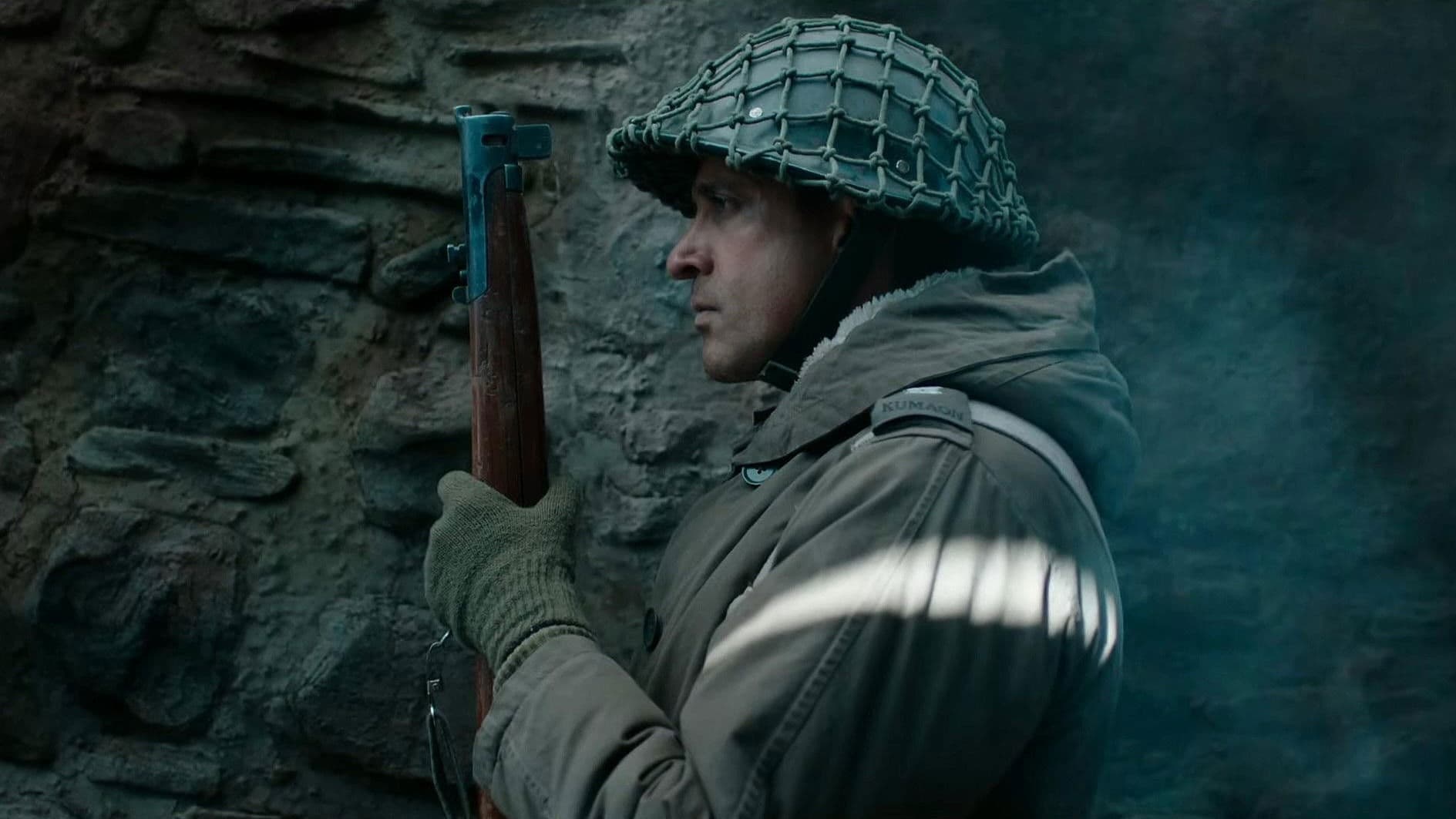
The film, clocking in at a lean 137 minutes, zeroes in on the 1962 Battle of Rezang La in Ladakh, where a company of 120 soldiers from the 13 Kumaon Regiment faced a division of the Chinese People’s Liberation Army. The historical record is brutal: outnumbered nearly 30 to 1, the Indian soldiers held the pass for over twelve hours, inflicting heavy casualties before being overwhelmed. Only a handful survived. Ghai doesn’t sanitize the horror. The snow is not pristine; it is soon churned into a red-brown slush. The wind carries not just the chill but the metallic tang of gunpowder and fear.
At the heart of this storm is Farhan Akhtar’s Major Shaitan Singh, a performance that sheds his usual urban charisma for a stoic, bone-deep gravitas. Akhtar’s Singh is not a roaring patriot. He is a quiet, map-reading soldier who knows the arithmetic of loss. One of the film’s most devastating sequences involves him calmly redistributing ammunition among his men, knowing full well it won’t last the hour. He doesn’t deliver a Churchillian speech; instead, he tells his junior officer, Ramchander Yadav (a superb Sparsh Walia), "We are not here to win. We are here to make winning impossible for them." That line, translated from the film’s Hindi dialogue, encapsulates the entire ethos of the piece. Akhtar’s eyes carry the dread of a man who has already seen the end but refuses to blink first.
The supporting cast is a gallery of weathered faces. Ankit Siwach as Ramlal and Vivan Bhatena as Suraj Ram anchor the early, quieter passages where the men joke about ration packets and letters from home. Brijesh Karanwal, playing the veteran Jairam Kaka, provides the film’s soul - a man who understands the terrain of the mountains and the terrain of a young soldier’s heart. There is a particularly moving scene where he teaches a terrified recruit, Nanha (Sahib Verma), how to grip his rifle without his teeth chattering. It’s not about bravery, he says; it’s about muscle memory. When the battle erupts, that lesson pays off in a hail of grenades.
What elevates 120 Bahadur above a mere chronology of firing lines is Ghai’s handling of space. The Rezang La pass is a natural amphitheater of death, and the cinematography captures its claustrophobic vastness - the enemy always seems to be coming from everywhere, swarming over ridges like dark water. The sound design is a masterpiece of dissonance: the crack of .303 rifles punctuated by the high-pitched scream of mortar shells, then sudden, terrifying gaps of silence where only the wind and the moans of the wounded exist.
Eijaz Khan, as the Commanding Officer, provides the film’s strategic backbone. His scenes with Akhtar are clipped, tense radio conversations about reinforcement that never arrive. The film does not flinch from the strategic failure higher up the chain, but it never indulges in cynical conspiracy theories. Instead, Khan’s final radio message - "Hold at all costs. The pass is the door to Ladakh. We do not open the door." - lands with a tragic, iron finality.
The battle sequences are kinetic but not chaotic. Ghai choreographs each skirmish with brutal clarity. You see the grenade bounce before it explodes. You see the jammed rifle bolt. You see the young soldier whose hands shake as he fixes a bayonet. It is visceral, exhausting, and deeply unglamorous. The heroism is not in the charge but in the refusal to retreat, even when retreat would be logical.
The film’s mixed critical rating - a moderate 6.4 on TMDb but a stronger 7.1 on IMDb - reveals a divide. Some critics have argued that the middle act drags, that the constant shelling becomes numbing. There is some truth to that. The relentless barrage is emotionally draining, and a few supporting performances veer into melodrama. But that numbness, one could argue, is the point. By the final reel, the audience isn’t watching history; we are standing on the pass with frozen fingers, counting our last bullets.
120 Bahadur does not end with a triumphant victory parade. It ends with a roll call - a quiet, devastating litany of names. Major Shaitan Singh, Ramchander Yadav, Ramlal, Suraj Ram, Jairam Kaka, Nanha. The names hang in the air like the mountain mist. This is not a film about winning; it is a film about the cost of refusing to lose. In the annals of Indian war cinema, it has carved its own cold, hallowed pass. It is an uncomfortable, brilliant masterpiece - a reminder that sometimes, the bravest thing a soldier can do is not to come home, but to make sure the door stays shut.