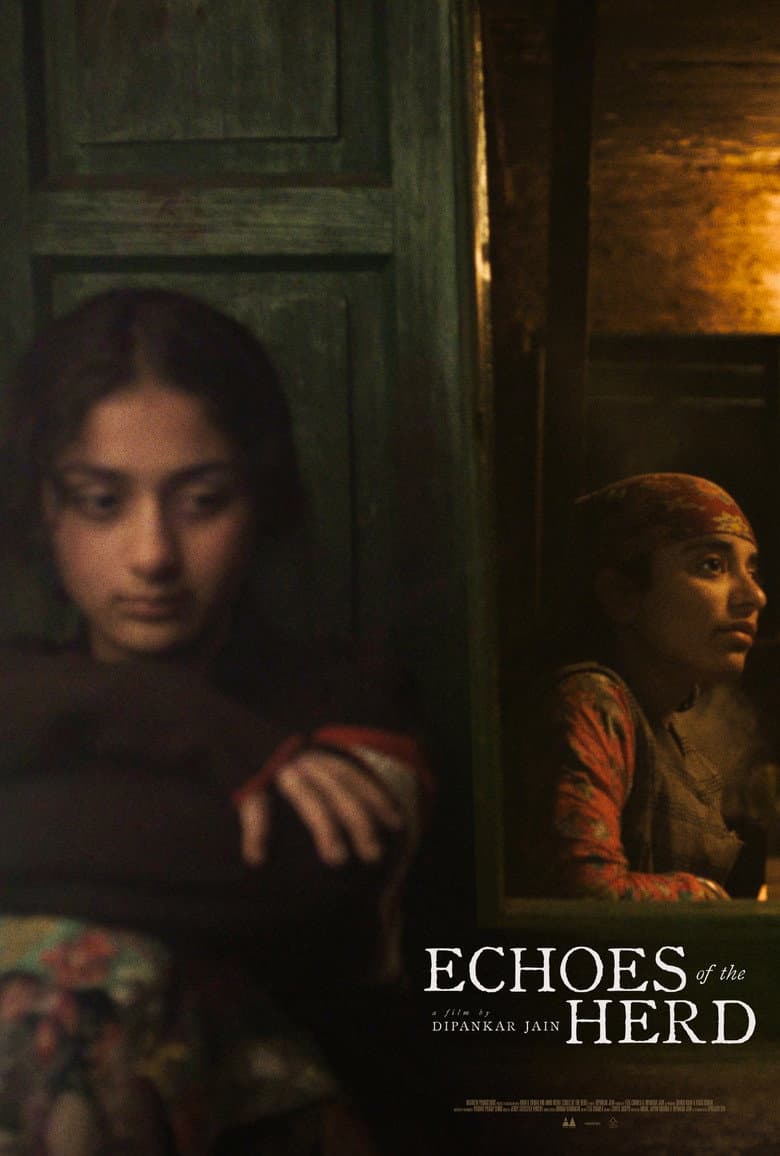
There is a particular kind of silence that settles over the high Himalayas - the kind that makes a man hear his own heartbeat, the crunch of boots on old snow, and perhaps, if he listens closely enough, the voices of generations who walked these same trails before him. Director Dipankar Jain seems to have spent a great deal of time listening to that silence, and "Echoes of the Herd," his quietly ambitious new Hindi drama, arrives in theatres this December carrying its weight like a seasoned shepherd carries his staff: patiently, deliberately, without fuss.
Release Date & Where to Watch
Mark your calendars for December 20, 2026. That is when "Echoes of the Herd" begins its theatrical run, and honestly, this is a film that deserves a big screen. The scale of the Himalayas, the texture of wool and rock and snow, the hushed intimacy of a father and daughter living separate lives in the same vast landscape - these are things that shrink on a phone and expand in a cinema. At just 77 minutes, Jain's film is a lean, unhurried piece of storytelling, the sort of compact runtime that suggests confidence rather than limitation. A wide release is expected across major Indian cities, with metro multiplexes likely to carry the film alongside the usual December crowd-pleasers. For those who prefer to wait, streaming details should emerge closer to the release date, but the festival buzz suggests this one is best caught early, in a darkened hall, with nowhere else to be.
Cast & Crew
Jain has assembled a cast that leans on faces rather than fame, and that feels entirely right for material this grounded. Sanjeev Kumar steps into the weathered boots of Tara, the ageing Gaddi shepherd whose body has learned the mountain's grammar over a lifetime of migrations. It is the kind of role that demands stillness more than speech, and early word suggests Kumar delivers exactly that. Palak Sharma plays Saiba, Tara's 13-year-old daughter, and the film rests heavily on her small shoulders - the dreamer on one side of the story, the traditionalist on the other, both shaped by the same unforgiving terrain. Bhumika Thakur appears as Ruzu and Durga Kamboj as Medha, rounding out a supporting ensemble that gives the remote village its lived-in texture.
Behind the camera, Jain serves as director on a story that clearly comes from personal observation rather than secondhand research. The 77-minute runtime hints at a filmmaker who trusts the audience to meet him halfway - no padding, no manufactured melodrama, just the quiet accumulation of detail. This is Hindi-language filmmaking in its most elemental register, and the early festival response has been warm, though the film's TMDb rating currently sits at an unformed 0/10 simply because audiences have not yet had the chance to weigh in. That number will tell a very different story by New Year's.
Story & What to Expect
The premise unfolds along two parallel tracks that never quite converge, and that separation is precisely the point. High in the Himalayas, Tara leads his herd across perilous mountain passes during the seasonal migrations, sustaining a way of life that his forefathers shaped and that he now watches slowly erode. Every crossing is a negotiation with the land, every step a small act of defiance against a world that no longer needs shepherds the way it once did. Far away, in a remote village, Saiba dreams of continuing her education even though schooling there ends after the eighth grade. Two different futures, shaped by the same rugged land. Tradition and aspiration, quietly meeting.
Expect a film of contrasts: the vast against the intimate, the roar of wind against the whisper of a classroom. Jain appears to be working in the tradition of contemplative Indian cinema - patient, observational, more interested in the space between words than in speeches. Do not walk in expecting dramatic confrontations or swelling musical numbers. What "Echoes of the Herd" offers instead is something rarer in mainstream Hindi cinema: the chance to sit with people whose lives are rarely filmed and to understand, without being lectured, why their choices matter.
Why It's Worth Watching
First, because the story is urgent in a way that sneaks up on you. The Gaddi way of life is fading, and Saiba's truncated education is not fiction for countless children in remote India. Jain has found a way to make an environmental and social reality feel personal rather than preachy, and that is no small achievement. Second, the craft: 77 minutes is a disciplined choice, and a film that respects your time this thoroughly tends to repay it. Third, the performances - Kumar's quiet gravity and Sharma's young, watchful hope sound like the kind of pairing that lingers long after the credits. And finally, December is full of noise. This is the rare release that asks you to lean in rather than sit back. In a season of spectacle, "Echoes of the Herd" promises something worth hearing: the sound of a world passing on, and a girl deciding whether to follow it or change it.