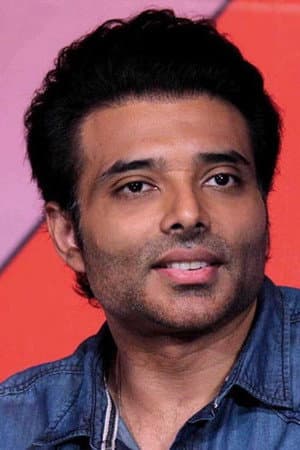
Uday Chopra: A Career In Hindi Cinema is not the story of a leading man carrying films on his shoulders. It is the story of a performer who found his place in ensembles, built a recognisable screen identity in a long-running franchise, and then moved behind the camera to help create the material himself. For readers who follow Hindi cinema from outside India, that shape is worth understanding. It explains why a name can travel widely even when the face on the poster belongs to someone else.
A Filmography Built On Second Leads And Comic Sidekicks
The confirmed record begins quietly. In Dilwale Dulhania Le Jayenge (1995), a landmark romance about Raj following Simran to India to win her family over, Chopra appears uncredited as Man on Bike. It is a footnote, an origin point rather than a claim of prominence, and it is best read that way: a small part in a film that became part of the cultural furniture.
The first credited part with real screen time arrives with Mohabbatein (2000). He plays Vicky, one of three friends at a strict all-male university whose search for love runs against the headmaster's rules. Two years later came Mujhse Dosti Karoge! (2002) as Rohan Verma and Mere Yaar Ki Shaadi Hai (2002) as Sanjay Malhotra, friend-and-romance parts released in the same year. That pair fixed the register he would return to: the likable, slightly hapless young man, never the centre of gravity but always part of the emotional weather.
Smaller contributions sit alongside those parts. Kal Ho Naa Ho (2003) carries an uncredited Day 6 Narrator credit, and Main Hoon Na (2004) lists an uncredited special appearance. Both are noted plainly here, without embellishment, because the filmography states them and nothing more.
The Dhoom Turn
Then came the part most viewers will know him for. A franchise, for readers outside the region, is a series of films built on the same premise with recurring characters, each new title adding to a shared world rather than starting fresh. Dhoom (2004), Dhoom 2 (2006) and Dhoom 3 (2013) form exactly that. Across all three Chopra plays Ali, later Ali Khan, the sidekick whose presence threads the series together across nine years.
That three-film run is the clearest illustration of how a supporting part can become a franchise's connective tissue. Ali is comic relief, a friend in the margins of the action. Yet the role returns each time the series does, and that durability is its own kind of achievement.
The Films He Helped Shape Behind The Camera
The filmography becomes more interesting once you look past performance. Pyaar Impossible! (2010) carries him as Abhay Sharma on screen and also as producer, story and screenplay. Three of those terms deserve a plain explanation. The story is the original premise of a film. The screenplay is the scene-by-scene written version that the production works from. The producer is the person who assembles and finances the production, bringing the pieces together. A single title carrying all four credits is the clearest statement of intent in the whole record.
Neal 'N' Nikki (2005), where he plays Gurneal "Neal" Ahluwalia, is the closest the confirmed filmography comes to putting him at the centre of a film, a title role rather than a supporting one. And Alpha (2026) lists him for story: a thriller about Sita, a super-soldier raised in isolation by a rogue commander, who learns the truth about her family and her stolen childhood and teams with a long lost sister against her creator. The credit stands on its own as a writing contribution to a recent film, and that is where the record stops.
What The Credits Have In Common
The through line across all of it is collaboration. Ensembles, franchises and multi-hand credits rather than solo showcases. The titles carry that point better than any summary could.
Where He Sits, And Why The Name Travels
Place him as a recognisable supporting presence in commercially successful Hindi films of the 2000s and 2010s, with a parallel writing and producing strand running alongside. He is not a lead in the sense the industry usually means, and ranking him would miss the point. The useful question is why the name travels at all.
The answer is Dhoom. It is among the Hindi franchises with the widest reach beyond India, and Ali is the character audiences met there, whether on a big screen in Mumbai or a laptop somewhere far from it. A reader who has seen one of those films has already met the work, even if the name did not stay with them. Industry reference sources such as IMDb and Rotten Tomatoes list the franchise and its cast for anyone who wants to trace the parts.
The right note to end on is the shape of the career rather than a verdict. Here is a performer who found a durable place in ensembles, held a franchise thread across years, and then moved toward creating the material himself. A story credit on Alpha is the latest confirmed marker of that direction. For an outside audience, that is a career worth knowing by name.