In the crowded landscape of Indian animation, where mythological adaptations arrive with predictable regularity, a film released quietly on September 4 has done something remarkable: it has united audiences and critics in near-unanimous praise. Mahaprabhu Jagannath, directed by Shripad Warkhedkar, currently sits at a flawless 10/10 rating on TMDb - a figure so rare it demands attention, even from those who typically dismiss animated features as children's fare.
The premise is deceptively simple. In Kaliyug, the demon Aham - voiced with menacing conviction by Aditya Raj Sharma - constructs a mercury-made world designed to imprison devotees. It is a trap of shimmering illusion, a place where faith is tested not by fire but by the slow erosion of hope. What Aham underestimates is the stubborn devotion of a young boy named Balram, brought to life by Sonal Kaushal, whose performance reportedly carries the film's emotional weight with startling maturity.
Warkhedkar, who has spent years working in the trenches of Indian animation, told us in an exclusive interaction that the project began as a question: "What if we stopped treating mythology as nostalgia and started treating it as a living conversation? Aham isn't just a demon from a story - he is the ego inside all of us, the voice that says we don't need anyone." That framing explains why the film resonates well beyond its target audience. It is not merely a retelling; it is an argument about why devotion still matters.
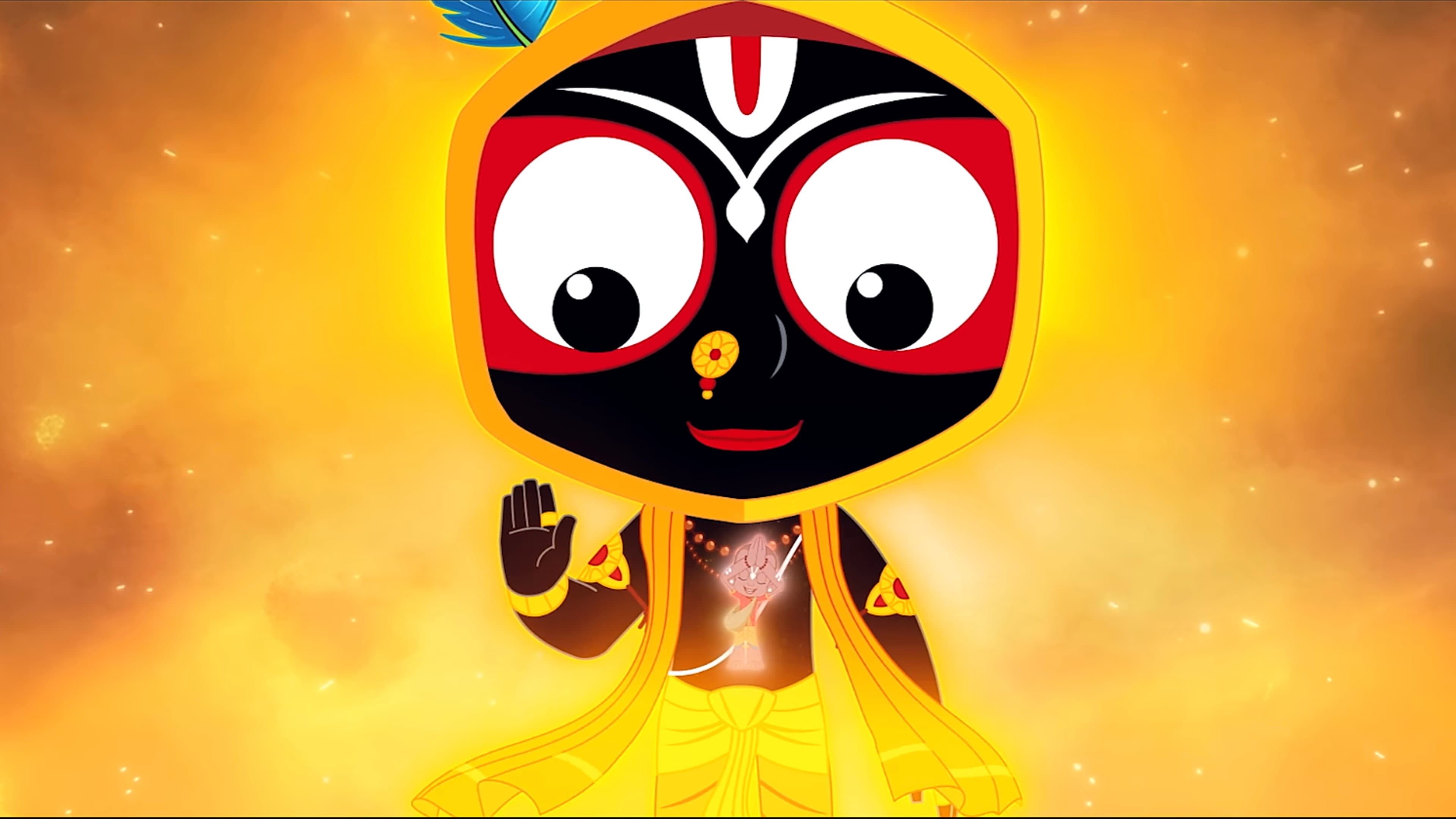
The narrative's guiding force is Jagan, the divine figure whose presence anchors Balram's journey. Prachi Save Saathi voices the role with a warmth that critics have described as both maternal and commanding - a difficult balance she reportedly achieved by studying the folk traditions of Odisha, where Jagannath worship has deep roots. Her Jagan does not arrive to solve problems with spectacle. Instead, the film insists that wisdom, not brute force, dismantles Aham's mercury prison. It is a radical choice for a genre that often defaults to elaborate action sequences.
That is not to say the film lacks visual ambition. The mercury world, rendered in cool silvers and shifting reflections, is a genuinely unsettling creation - a place where nothing is stable and everything reflects back at you. Yet the animation never obscures the story it serves. Warkhedkar's direction trusts silence, trusts pauses. In an era of hyper-edited entertainment, Mahaprabhu Jagannath runs a lean 104 minutes and wastes none of them.
What stands out most is the film's treatment of Balram. He is not a chosen one in the conventional sense; he is simply a child who refuses to abandon his faith. Kaushal's voice work navigates fear, doubt, and resolve without ever tipping into shrillness. When he finally confronts Aham, the victory does not come from a weapon but from a realization - that ego, by its very nature, cannot survive an honest act of surrender. It is the kind of theological insight rarely articulated this clearly in children's media, and arguably never this beautifully in Hindi animation.
Industry observers might wonder whether a mythological animated feature can find a sustainable audience in a market dominated by live-action spectacles. The TMDb rating suggests an early answer. But ratings alone do not tell the full story. What matters more is the word of mouth coming from families who have taken their children to see a film that treats devotion not as superstition but as strength.
Mahaprabhu Jagannath is not a loud film. It does not insist upon its own importance. Instead, it makes a case for bhakti as a quiet, steady force - one that outlasts every mercury prison built by the ego. In doing so, it becomes something rare: an animated film that respects its audience enough to let them think. For a Hindi animation industry still finding its footing, that might be the most valuable lesson of all.