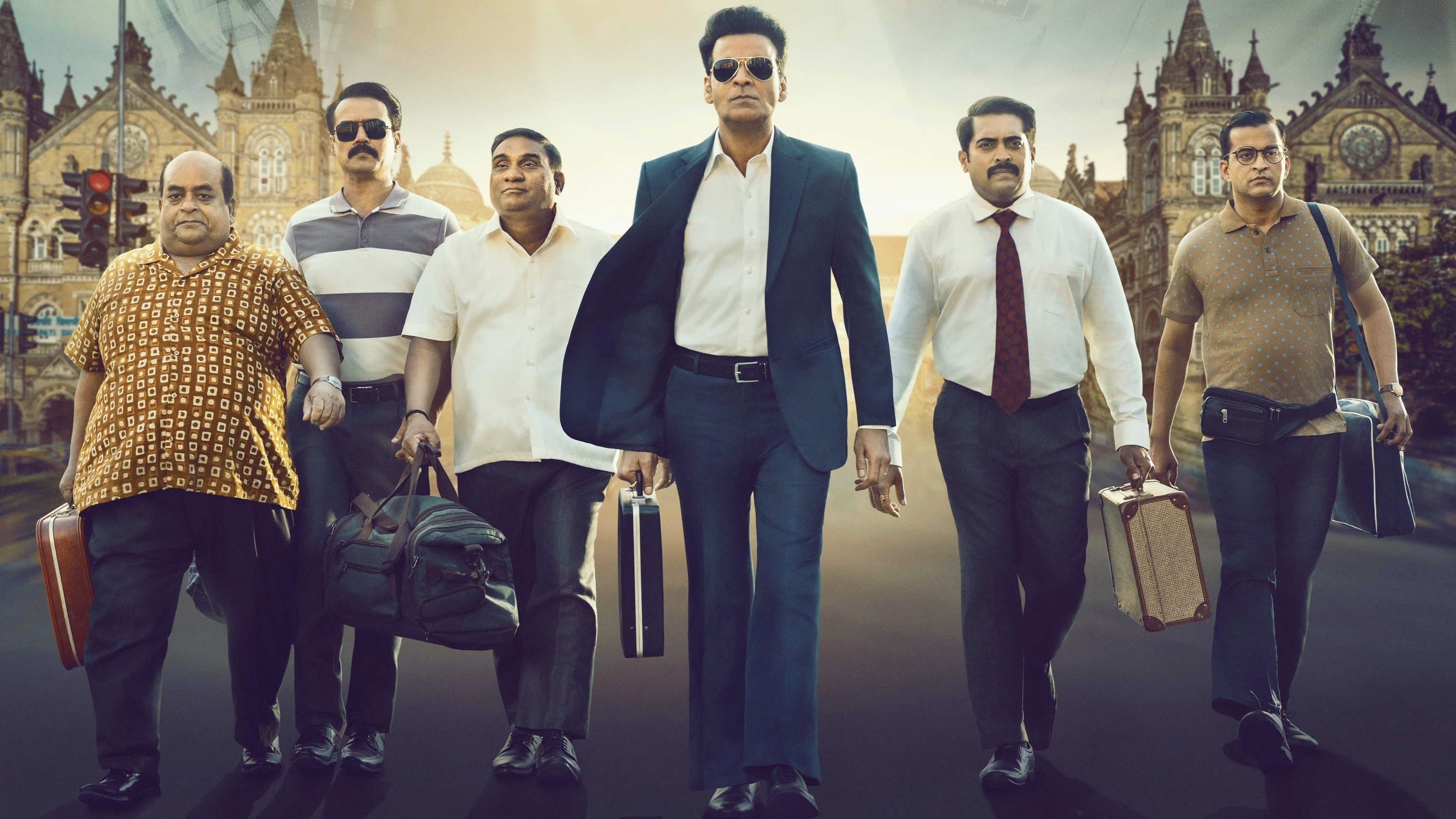
The opening of Inspector Zende feels less like a thriller and more like a waiting room. A hard-boiled cop, played with weary precision by Manoj Bajpayee, sits across from a prisoner who refuses to break. The air is thick with unspoken history. Then, a single, absurdly mundane detail - a misplaced cup of tea - shatters the calm, and the film’s true tone snaps into focus. It’s a comedy, sure, but the kind that flinches when you laugh.
Director Chinmay Mandlekar, making a bold leap from his work in Marathi theatre, has crafted a genre-bender that never lets you settle. Inspired by the legend of the real-life Inspector Madhukar Zende, the film fictionalizes his cat-and-mouse saga with a gleefully chaotic antagonist: Carl Bhojraj, played by Jim Sarbh with the slick menace of a man who’s read too many true-crime novels and believes he’s the author.
The plot is deceptively simple. Serial killer Bhojraj escapes prison in 2024 and resurfaces in Mumbai, a city he treats like his personal playground. Inspector Zende, now coasting toward retirement with a paunch and a pension plan, is reluctantly pulled back into the fray. His superiors, led by a wonderfully gruff Sachin Khedekar as DGP Chandrakant Purandhare, want results. His wife Vijaya (Girija Oak, lending quiet gravity to every scene) wants him home. But Zende knows something the case files don’t: Bhojraj isn’t just a killer. He’s a performance artist.
What follows is less a procedural and more a duet of wills. Mandlekar and writer (credited as a collective) structure the film like a series of short, sharp confrontations - a stakeout that turns into a dance-off, a murder that’s staged like a Bollywood finale, a chase through a fish market that ends in a philosophical debate about fate. The comedy isn’t slapstick; it’s situational, born from the absurdity of men who take themselves too seriously in a world that refuses to cooperate.
Bajpayee is the anchor, delivering a performance that finds the humour in exhaustion. His Zende is not the invincible supercop of commercial cinema. He’s a middle-aged man with a bad knee, a worse temper, and a terrifyingly accurate memory for everyone who’s ever wronged him. He grunts, he glares, he sighs. His chemistry with Sarbh is the film’s engine - they barely touch, but every scene crackles with the tension of two predators circling a shared, unfinished meal. Sarbh, for his part, leans into the theatricality. His Carl Bhojraj is a chameleon who changes accents and costumes with the frequency of a fashion week calendar, yet Sarbh keeps him dangerously grounded. He’s not mad; he’s just found the world’s most complicated puzzle.
The supporting cast elevates every frame. Bhalchandra Kadam as the perpetually flustered constable Patil provides the film’s rhythmic comedic relief, while Harish Dudhade and Vaibhav Mangle play a pair of rival underworld fixers who seem to have wandered in from a gangster epic and can’t understand why they’re in a comedy. Onkar Raut’s Patekar, a rookie cop with a YouTube channel, is a sharp satirical jab at modern policing.
Inspector Zende isn’t a laugh riot. Its comedy is dry, often bleak, and occasionally swallowed by the thriller elements. The tonal shifts are deliberate but can be jarring; a scene involving a brutal murder is followed by a sequence lifted straight from a silent comedy. It’s a risky gambit, and it won’t work for everyone. The TMDb rating of 6.5/10 feels about right - this is a film that respects its audience’s intelligence but tests its patience.
The film’s runtime of 112 minutes is mercifully lean, but those minutes are packed with subplots - a journalist snooping around, a retired colleague with a grudge, a sub-inspector’s wedding that goes gloriously wrong. Mandlekar’s direction keeps the pace brisk, but he never sacrifices character for plot. The Mumbai he captures is not the glossy postcard version but the clogged, chaotic, monsoon-soaked city of street vendors and damp chawls.
What lingers after the final, satisfyingly ambiguous ending is the film’s central question: What does justice look like when the law has a sense of humour? Zende’s methods are unorthodox, his ethics flexible, but his heart is in the right place - mostly. For Hindi Movie Buzz, this is a breath of fresh air. Inspector Zende doesn’t reinvent the wheel; it just gives the wheel a personality disorder and lets it spin. It’s a darkly funny, sharply acted, and quietly profound film about the absurdity of chasing a ghost - and the melancholy of catching one.