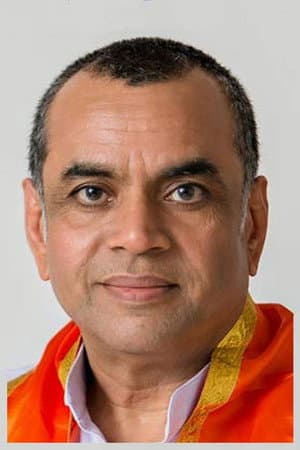
Few performers in Hindi cinema have reinvented themselves as often, or as convincingly, as Paresh Rawal. Hindi cinema, often called Bollywood, is the Mumbai-based film industry that produces Hindi-language features. Rawal was born on 30 May 1959 and made his film debut in 1984. Over the decades that followed, he became a familiar face in supporting and villain roles, and from 2000 onward he shifted largely into comic parts. The through line is versatility. Here is a performer who can anchor a comedy, play a chilling antagonist, or carry a drama without ever seeming out of place. This career feature traces that arc through the films that define it.
A Career Built on Reinvention
The career of Paresh Rawal is best understood as a study in phases. The first belongs to the 1980s and 1990s, when he worked mainly in supporting and villain roles. Those years taught him screen authority, the ability to hold a scene simply by standing in it. Yodha (1991) belongs to that stretch, an early marker of a performer learning how much menace and weight a small part can carry.
Then came the turn. From 2000 onward he shifted largely into comic parts, and the shift stuck. What makes the reinvention unusual is that it never erased what came before. The comic timing rests on the same control that once made him a credible antagonist. When he later returned to authority figures, in Tiger Zinda Hai (2017) as Firdauz, also known as Tohbaan, and in Uri: The Surgical Strike (2019) as NSA Govind Bhardwaj, the gravity was still there, waiting.
Across four decades the pattern is not a single defining lead role. It is range, reliability, and the ability to make any scene better. For background on the industry that shaped him, the Encyclopaedia Britannica entry on Indian cinema offers useful context for readers outside the region.
The Roles That Built the Reputation
Comedy and the Hera Pheri Effect
For many viewers, Rawal is inseparable from Baburao Ganpatrao Apte in Hera Pheri (2000), the harried landlord whose exasperation turned into one of Hindi cinema's most quoted performances. That role helped reset his screen image and opened the door to a long run of comic work. Hulchul (2004) cast him as Kishan Chand in a story of feuding families and a fake romance that turns real, with Rawal's timing keeping the chaos buoyant. In both films the comedy is built on pressure. Characters are pushed past patience, and they react rather than perform.
Villainy and Screen Authority
Before the comedy era, Rawal's early career leaned toward antagonists and supporting figures. The 1990s were formative, and Yodha (1991) belongs to that stretch. Later he returned to authority figures with gravity. In Uri: The Surgical Strike (2019) he played NSA Govind Bhardwaj, and in Tiger Zinda Hai (2017) he played Firdauz, also known as Tohbaan. These parts show what the comedy years never fully hid: a performer who can make officialdom feel human and villainy feel ordinary.
Drama and Transformation
Rawal's dramatic register is on full display in Sanju (2018), where he played Sunil Dutt, a performance that required him to embody a real and widely recognised public figure. In OMG: Oh My God! (2012) he played Kanjibhai, a role that balanced satire with belief. In Aankhen (2002) he appeared as Ilias. Across these films the pattern is clear. He gravitates to parts that let him shift tone rather than repeat a single register.
Where the Work Stands
Rawal's recent slate shows no narrowing of range. Thamma (2025) cast him as Ram Bajaj Goyal. In Bhooth Bangla (2026) he plays Jagdish Kewalramani in a story about an inherited palace, a wedding, and supernatural events in rural Mangalpur. Maa Behen (2026) gives him the role of Chandru Dwivedi, and Welcome To The Jungle (2026) places him as Das among a group of characters stranded in a dangerous jungle during a chaotic mission. Comedy, family drama, the supernatural: the categories keep changing while the performer stays central.
For readers outside the region, the name matters because it explains a certain kind of Indian film career, one built not on a single defining lead role but on range, reliability, and the ability to make any scene better. Rawal has moved from villain to comic mainstay to dramatic heavyweight and back again, and the filmography keeps growing. For a fuller sense of how deeply Hindi cinema runs on such character performers, the Britannica overview of Bollywood is a reasonable starting point. That is the argument for knowing who he is.