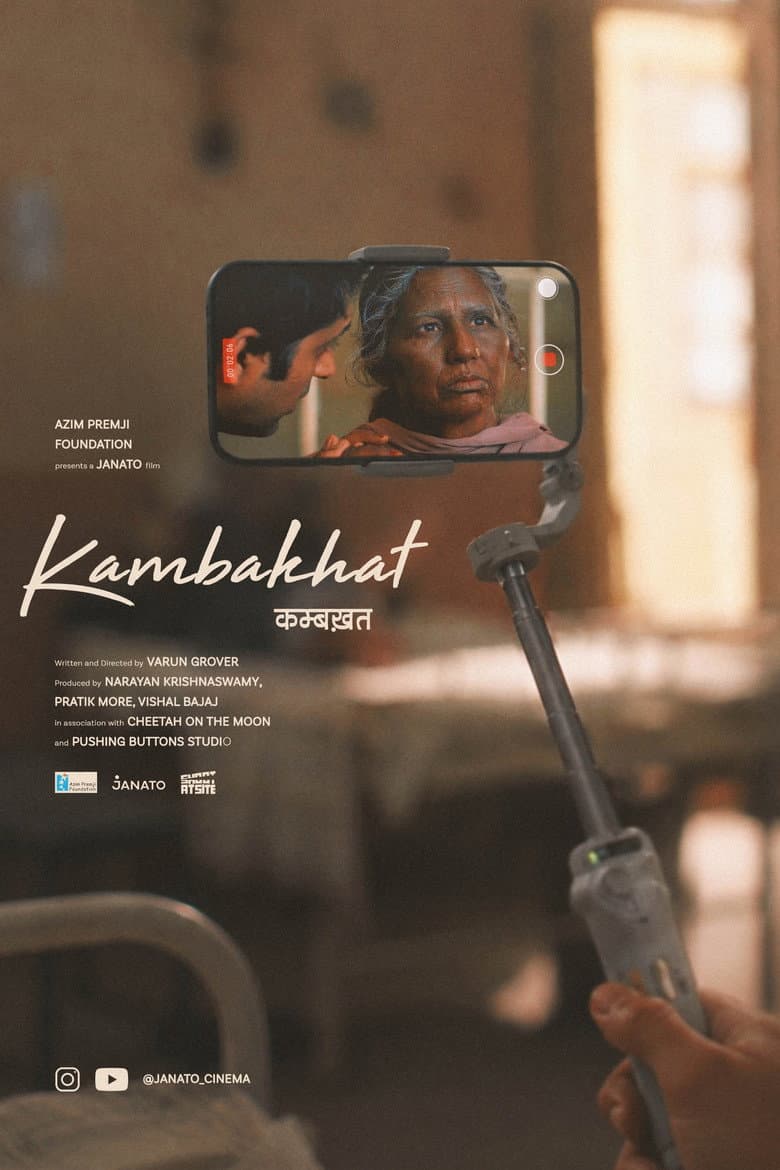
Varun Grover has spent his career listening for the notes other people miss. As a lyricist, he built a reputation for finding the quiet devastation inside a simple phrase. As a director, he now turns that ear toward a woman the world has stopped hearing. His new short film, Damned, runs just nineteen minutes and arrived on October 29, 2026, but it carries the weight of a whole vanished career inside its slender frame.
The premise is deceptively modern. A social-media influencer sets out in search of Naseem Bano, an old and largely forgotten folk singer whose entire claim to fame rests on a single, off-hand compliment paid to her by Nusrat Fateh Ali Khan back in 1988. He wants her to sing for his Instagram feed. She, meanwhile, has forgotten herself. That gap - between what the camera wants from a person and what the person can still locate inside her own memory - is where the film lives.
It is a story built for the algorithmic age. The influencer is not a villain, exactly; he is a young man with a phone and an audience, someone who has learned that nostalgia performs well and that an overlooked elder makes for a compelling reel. But the film refuses to reduce him to a symbol. What he wants is a song. What he finds is a woman whose past has loosened its hold on her. The tragedy is not that she refuses to perform. It is that she cannot remember what she is being asked to perform.
Grover, working in Hindi, keeps the scale intimate. This is a film of corridors and waiting rooms, of fluorescent light and the particular silence that settles over a hospital late at night. And it is in that silence - when the whole hospital sleeps - that the film delivers its quietest, most disarming turn. Naseem Bano, in the dark, has a flash of memory. Whether that memory returns her voice, her past, or merely a flicker of who she once was, the film wisely declines to spell out. The moment is not a triumph. It is a stirring, and the film treats it with the respect a stirring deserves.
For Grover, Damned marks a return to fiction behind the camera after a career spent largely writing for others. Those who know his lyrical work will recognise the sensibility: a fondness for the overlooked, a suspicion of easy sentiment, and an ear tuned to the words people use when they are trying not to say what they mean. His direction here is patient. He lets faces hold the frame. He trusts silence. In a nineteen-minute runtime, that patience is a discipline rather than an indulgence.
The film also asks uncomfortable questions about preservation. Who decides which artists are remembered, and on what evidence? A compliment, delivered in passing nearly four decades ago, became Naseem Bano's entire public record - a footnote to someone else's greatness. The influencer who seeks her out is, in his way, trying to write that record a little larger. But the film understands that documentation is not the same as care. To film a person is not necessarily to see them.
With its muted palette and its hospital-night setting, Damned leans into the space between memory and loss. It does not offer redemption neatly packaged for the feed. It simply watches, and asks the viewer to watch alongside it. The film's cast has been kept out of the promotional material, and the faces on screen do much of the arguing that dialogue might otherwise have carried. That restraint suits the material.
Hindi cinema has long had a comfortable relationship with the grand, caterwauling story of the forgotten star. Damned is not that film. It is a small, exact thing, made by someone who understands that a life can hinge on a sentence spoken once and never repeated. Naseem Bano's story is not yet over. But the film is careful to remind us that being remembered and being listened to are not the same thing - and that only one of them can happen through a phone.