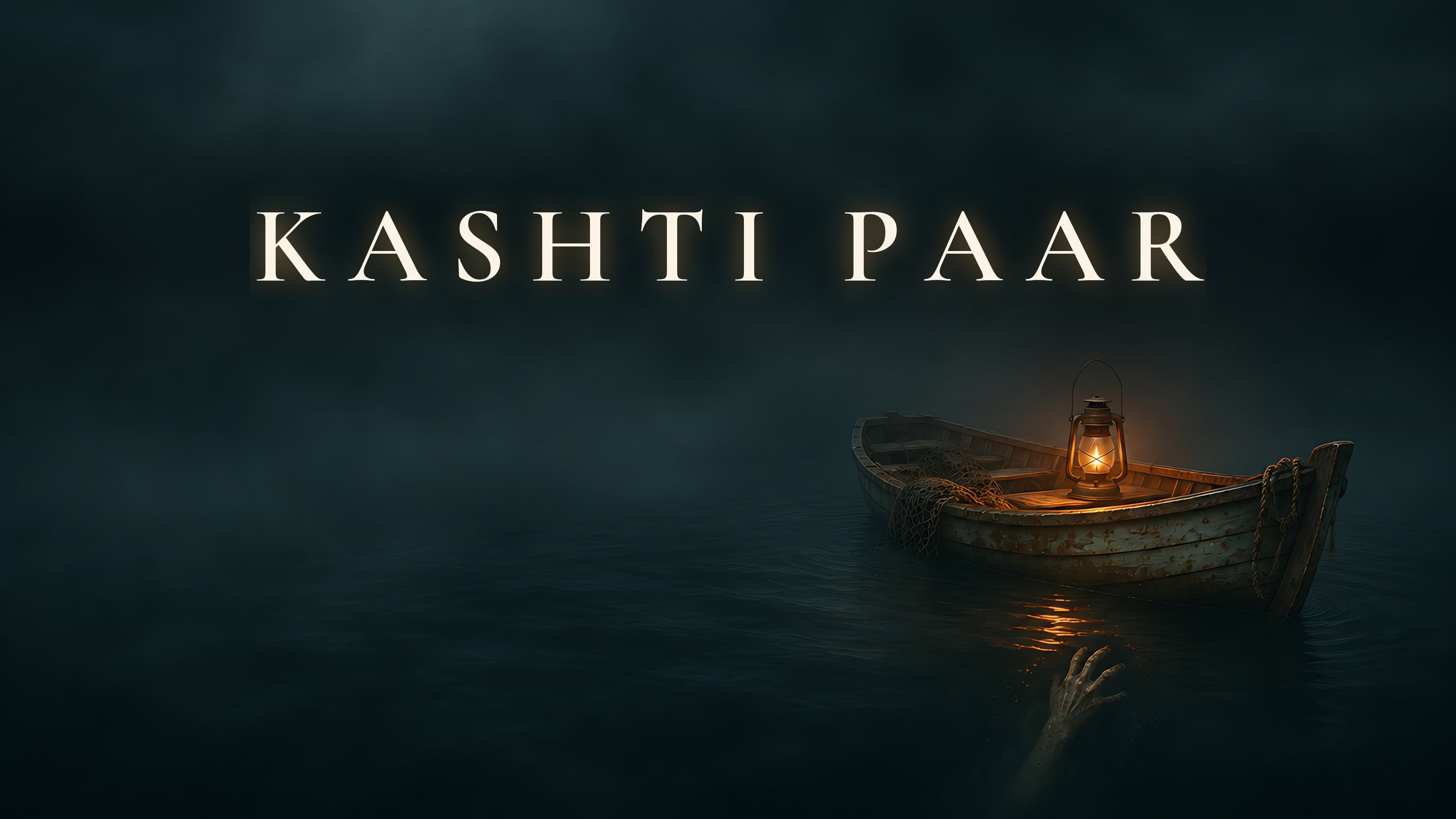
There is a moment in Vinay Wandalkar's Kashti Paar when the sea stops sounding like water and starts sounding like a memory. It is a small film by any conventional measure - four minutes long, released quietly on November 7, with a cast the credits decline to name - and yet it arrives carrying the weight of something much older than its runtime. This is a folk-horror parable told in near-silence, set along the Indian coast, and it belongs to Hindi cinema's growing appetite for the mythic and the miniature.
The story is spare and brutal. On a fishing boat, a fight for a place aboard turns to blood. Young Shreyas loses the man who raised him, and is left alone on a sea that, as the film's own description puts it, remembers every death. Then, in the mist, a girl with a lantern is waiting. That is the whole of it - a boy, a boat, a bereavement, and a light where no light should be.
Wandalkar, working without dialogue, builds the film out of texture rather than exposition. The creak of hulls, the slap of tide against wood, the breath of men who have no language left for what they are doing - these are the materials of the piece. Horror here is not jump-scares but accumulation: the sense that violence at sea does not end when the shouting stops, that the water keeps a ledger. The lantern girl, glimpsed rather than explained, sits somewhere between ghost story and coastal folklore, the kind of figure grandmothers warn children about in fishing villages where the horizon is both livelihood and grave.
The decision to cast anonymously is itself a statement. With no familiar faces to anchor us, Kashti Paar refuses the comfort of stardom. Shreyas is simply a boy, the lost guardian simply a man, and the sea simply the sea. It is an approach that could feel academic in lesser hands, but four minutes leaves no room for indulgence. Every frame must earn its place, and the film's brevity becomes its discipline - a short, sharp plunge rather than a slow wade.
It also places the film at an interesting crossroads in Hindi cinema's current moment. The industry has been steadily widening its tent to include the folkloric and the formally experimental, and Kashti Paar sits comfortably in that slipstream - a calling card from a director more interested in atmosphere than in the machinery of mainstream release. Its arrival on the festival-adjacent margins, rather than in a blaze of promotion, feels deliberate.
At the time of writing, the film carries no aggregated audience rating, and the names behind its performances remain unlisted - details that say less about its quality than about its scale. This is a work designed to be encountered rather than marketed, passed along like the stories it draws from.
What lingers is the image of the lantern itself: a small, stubborn flame held out over black water, offered to a boy who has just learned what the sea costs. Wandalkar never tells us whether it is rescue or reckoning. That ambiguity, held for four taut minutes and then released, is the film's real achievement. Kashti Paar does not explain the coast. It simply asks us to stand on the shore and listen to what the water remembers.