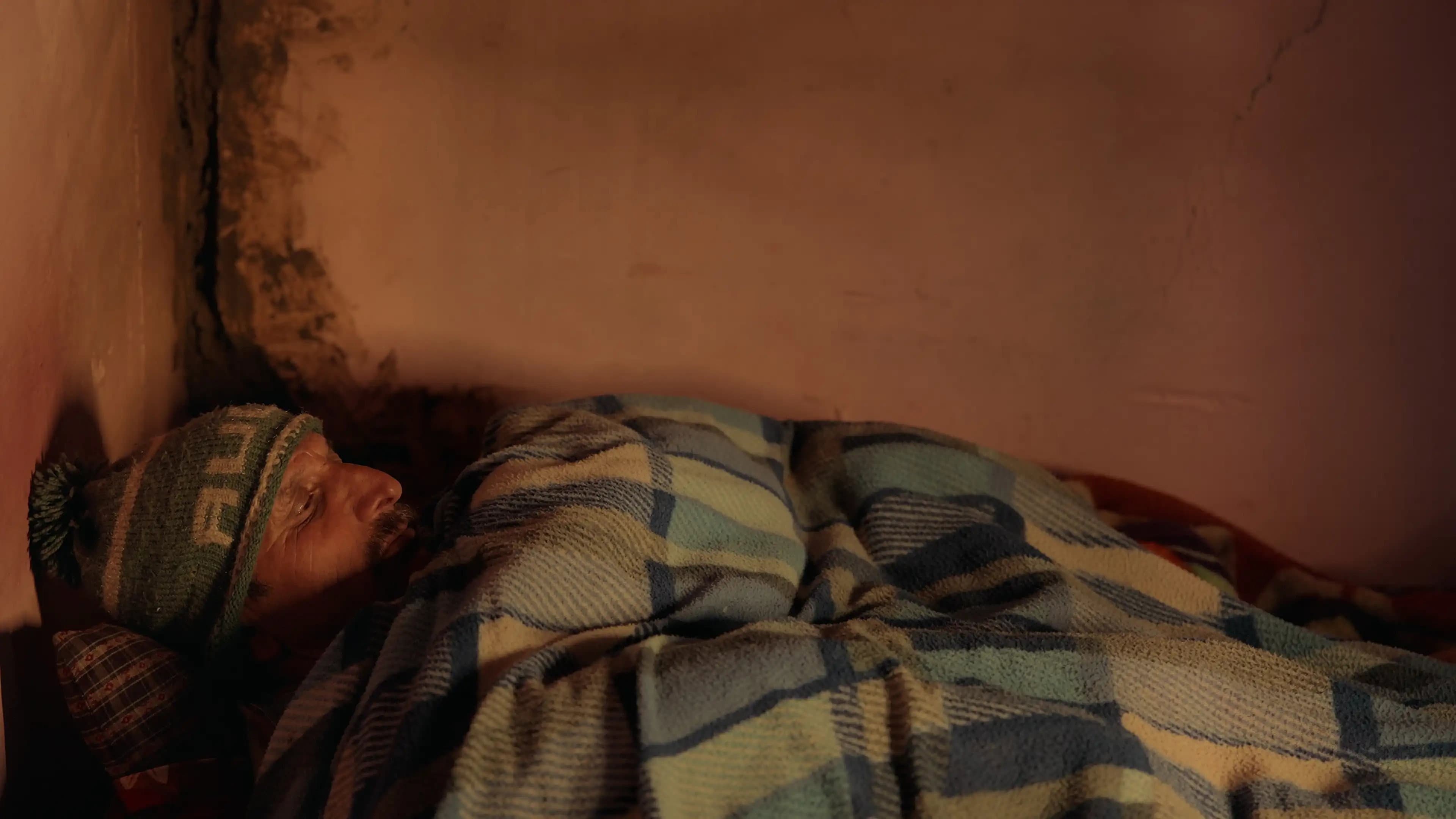
There is a particular kind of silence that settles over a town when the ground beneath it begins to give way. Pulkit Tomar’s new documentary, The Sinking Monastery of Light, opens in that silence. The film, which released on October 29, 2026, is a brief but potent 23-minute meditation on a Himalayan settlement slowly being swallowed by the earth itself. It is a Hindi-language documentary produced within the Bollywood ecosystem, and it arrives without fanfare or familiar faces. The cast is unknown, the TMDb rating sits at zero, and yet the film’s premise carries a weight that most big-budget spectacles never touch.
The town in question is never named in the marketing materials, and Tomar keeps his camera close to the ground - cracked walls, tilted doorframes, the slow creep of subsidence made visible in the way a window no longer closes properly. The monastery of the title, a structure of light and prayer, is not a metaphor. It is a real place, and it is sinking. The residents, who speak with the unhurried cadence of people who have long since stopped expecting rescue, reflect on what it means to leave a place that is leaving you. Their testimonies, translated from Hindi, carry the film’s emotional current. “We are not losing a building,” one elder says. “We are losing the map of our memories.” Another resident, a woman in her fifties, puts it more plainly: “When the ground moves, you learn which things you can carry and which things you must become.”
Tomar, previously known for short-form nonfiction work, shoots with a patience that borders on the devotional. There are no drone shots here, no grand aerial gestures to make the landscape picturesque. Instead, the film lingers on hands touching walls, on the way a lamp flickers during a tremor, on the sound of a prayer that continues even as the floor tilts. The runtime of 23 minutes is deliberate. This is not a sprawling survey of climate displacement or a policy documentary. It is a series of portraits, stitched together by the shared experience of living on borrowed ground.
The film’s timing is notable. Released in the final week of October, it arrived quietly in a season dominated by festival tentpoles and streaming spectacles. Yet The Sinking Monastery of Light has begun to find its audience through word of mouth - the kind of slow burn that documentary distributors often hope for but rarely achieve. The lack of recognizable cast members is not a liability here. It is the point. These are not characters; they are witnesses. And Tomar’s decision to keep them unnamed in the credits (listed simply as “unknown” in the film’s metadata) feels less like an oversight and more like a quiet act of humility. The film belongs to the town, not to the individuals who happen to be on camera.
What makes the documentary linger is its refusal to sentimentalize. The residents are not portrayed as noble victims or helpless casualties. They are people making calculations - about whether to rebuild a wall or abandon a room, about which heirlooms fit in a suitcase, about how to teach children the names of streets that may not exist in a decade. “Home is not a place you return to,” another voice says. “It is a place you agree to remember together.” That line, delivered without music or dramatic pause, is the closest the film comes to a thesis.
For Hindi-language documentary filmmaking, The Sinking Monastery of Light represents a quiet but significant addition to a growing canon of work about ecological fragility and cultural memory. It does not shout. It does not lecture. It simply watches, and in watching, it asks the viewer to consider what they would save if the ground began to move beneath their own feet. The film is currently screening in limited release, and for those who seek it out, it offers something increasingly rare in contemporary cinema: the space to sit with a question rather than an answer.