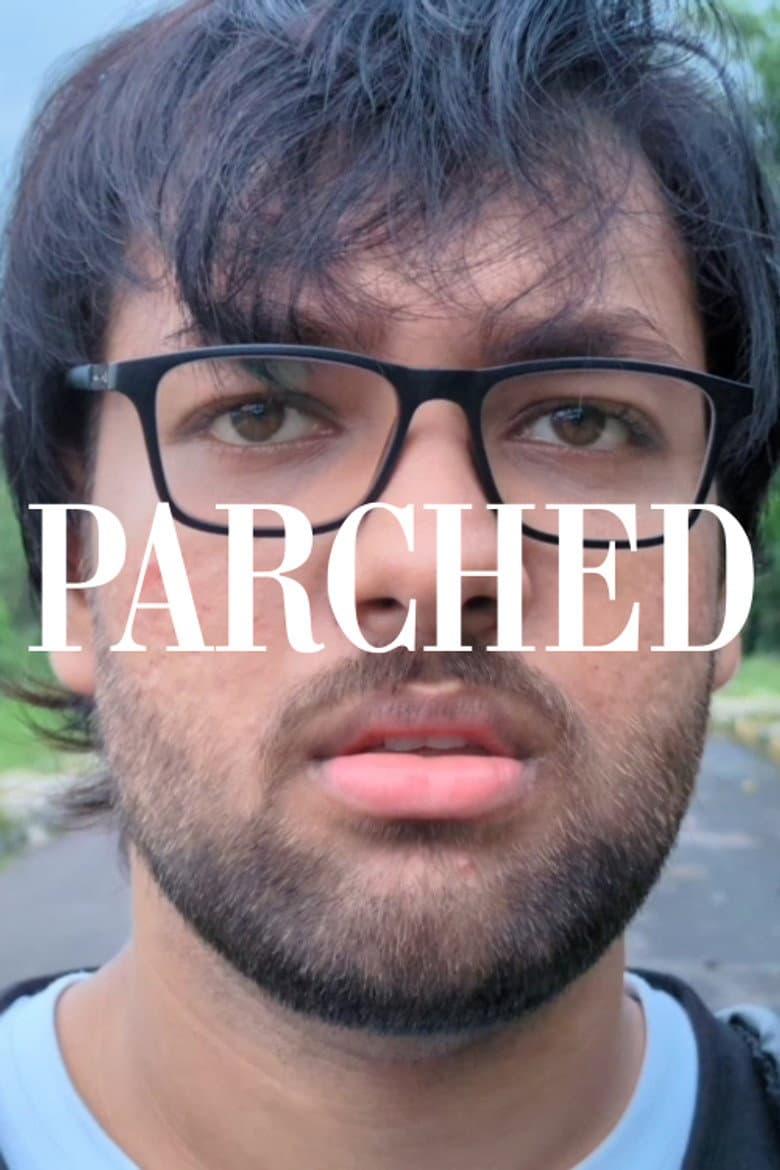
Three minutes. That's the entire runtime of Ranveer Chauhan's new thriller Parched, now in its third week across select theaters following a September 7 release. And yet in those three minutes, the filmmaker manages something most two-and-a-half-hour epics fail to achieve: he makes you feel the sand in your throat.
The premise is brutally simple. Ayan (Darsh Srivastava) is on a journey - we never learn exactly where he's headed, and Chauhan seems to consider that detail irrelevant. What matters is that the water runs out. That's it. That's the movie. A man, a road, and a countdown measured in sips rather than seconds.
It's a gamble that shouldn't work. Hindi cinema has spent decades training audiences to expect sprawl - the interval, the song, the subplot. A three-minute film, especially one that bypasses the traditional theatrical ecosystem, feels almost like a provocation. But Parched isn't interested in provocation. It's interested in pressure.
Srivastava, largely unknown to mainstream audiences, carries nearly every frame. His Ayan doesn't monologue or rage against the dying of the light. He rationes. He calculates. He licks cracked lips and keeps walking, and Srivastava plays the gradual erosion of hope with a restraint that borders on documentary. There's a moment late in the film - no spoilers, since the whole thing is shorter than a tea break - where Ayan simply sits down. The camera holds. Nothing happens. Everything happens.
Sharing screen space with him is Akrati Mishra, credited intriguingly as "Self" rather than a character name, alongside Satakshi Pandey as Vaishnavi. The trio's dynamic stays deliberately ambiguous; Chauhan trusts his audience to fill in the relationships rather than spelling them out. It's the kind of narrative confidence that comes from knowing exactly how much story three minutes can hold - and refusing to overstuff it.
The film's TMDb rating currently sits at 6 out of 10, a score that feels almost beside the point. Ratings measure consensus, and Parched seems engineered to divide: some viewers will call it a masterclass in economy, others will call it an incomplete idea stretched thin. Both camps are probably right. What's harder to argue with is the craft. The sound design leans on wind and silence rather than score. The editing refuses to linger, except when lingering is the whole point. Every choice serves the title.
Chauhan, previously known for work that flirts with genre without committing to it, has finally picked a lane. Parched is an adventure in the oldest sense - a body moving through hostile terrain - and a thriller in the most literal sense, because the audience spends the runtime genuinely uncertain whether anyone survives. There's no villain here except physics. No twist except thirst.
Whether this signals a larger shift toward micro-cinema within the Hindi industry is an open question. What's clear is that Parched exists at a strange crossroads: too short for conventional exhibition, too polished for the disposable content economy, too committed to its premise to be mistaken for a calling card. It is, in the most flattering sense, a film that refuses to be anything other than what it is.
And what it is, ultimately, is a reminder that tension doesn't require length. It requires stakes. Ayan's stakes fit in a bottle, and Chauhan never lets us forget it. Three minutes later, you'll want to reach for a glass of water - and then think twice about finishing it. That's the trick of the thing. Long after the credits, the drought stays with you.