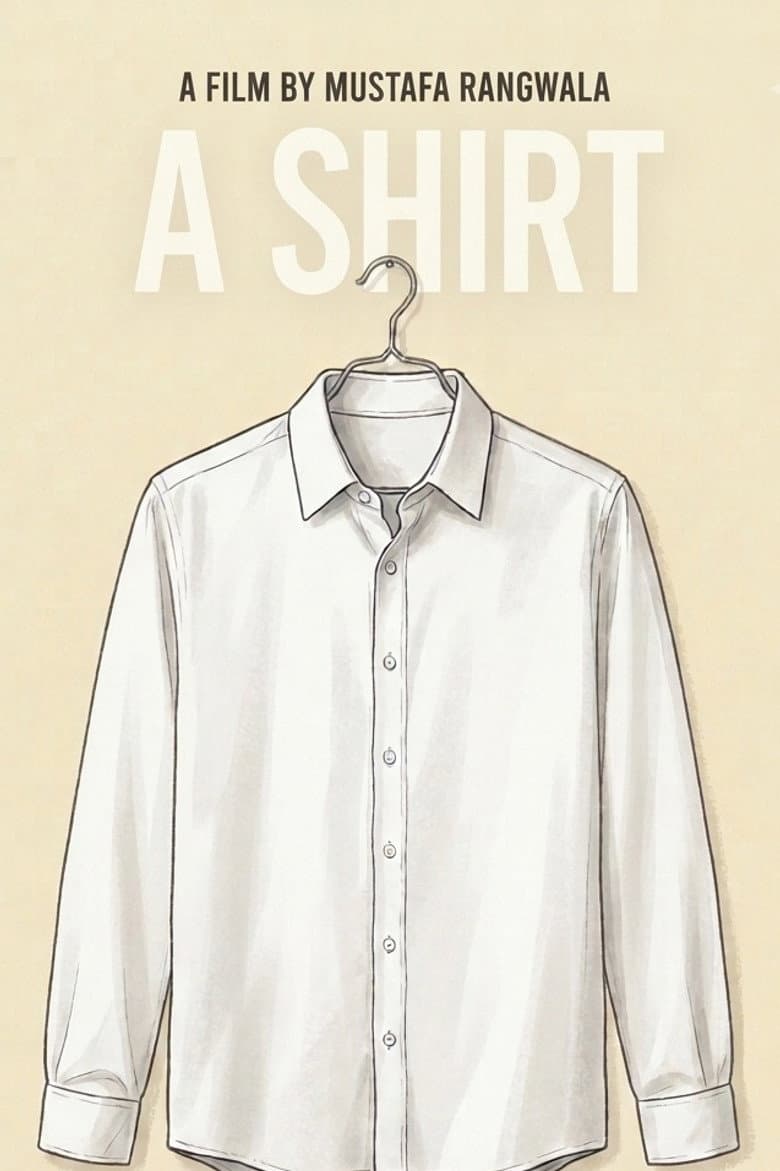
There is a moment, familiar to anyone who has ever rushed out of the door, when a person becomes a performance. The collar is adjusted. The hair is checked. The wallet is counted. And then the world is met with a version of the self that has been carefully assembled for public consumption. Mustafa Rangwala’s short film, A Shirt, takes this universal ritual and distills it into four potent minutes, exploring the quiet, often desperate chasm between the person we present to the world and the one we are when the door clicks shut.
Released on November 16, 2026, this Hindi-language drama is a micro-study in modern anxiety, a film that understands how much of our daily life is spent in a state of quiet performance. The premise is deceptively simple. A young man, played by the director himself, meticulously prepares for the day. We watch him straighten his collar, a gesture that feels less like grooming and more like donning armor. He counts his money, a small, tangible measure of his security and his worth in a world that demands both. Each action is deliberate, almost ceremonial. It is the ritual of becoming "presentable," of stepping out to face the world with a facade of composure.
Rangwala, who also stars as "Self," crafts a narrative that is both intimate and universally resonant. The "self" he portrays is not just a character but an archetype - the everyman navigating the pressures of urban existence. The shirt of the title is not merely a garment; it is the public armor itself, the uniform of the functioning adult. It is what we wear to job interviews, to dates, to family gatherings, and to the thousand small interactions that make up a life. It is the barrier between our vulnerable core and the scrutiny of strangers.
The film’s genius lies in its structure. The first half is a study in external presentation. The camera lingers on the details: the precise fold of the cuff, the way a bill is smoothed flat before being tucked away. It is a world of surfaces, where everything must appear correct. The tension is built not through dramatic confrontations but through the sheer, concentrated effort of maintaining a veneer. It is a performance of normalcy, and the audience is complicit, watching the actor prepare for his role on the stage of life.
Then, the film shifts. The facade strips away. The setting moves to a quiet terrace, a liminal space behind closed doors where the public gaze cannot reach. It is here that the stark contrast, promised in the film's overview, is revealed. The young man we saw so carefully constructing himself is now allowed to simply be. The tension of the performance dissipates, replaced by a quieter, more profound vulnerability. The armor of the shirt is metaphorically removed, and we are left with the raw, unpolished reality of the individual - his fears, his exhaustion, his quiet hopes.
This contrast is the heart of A Shirt. It is a commentary on the exhausting nature of social masking, a phenomenon that feels particularly acute in the digital age, where our lives are constantly on display. The four-minute runtime is a masterclass in economy. There is no dialogue to explain the character's feelings, no backstory to justify his actions. Instead, Rangwala relies on the power of visual storytelling - the repetition of the ritual, the weight of a gesture, the silence of the terrace. It is a film that demands the viewer's attention, asking them to find the story in the details.
The film's release comes at a time when conversations about mental health, authenticity, and the pressure to curate a perfect life are more prevalent than ever. A Shirt does not offer easy answers or a neat resolution. It merely holds a mirror up to a daily reality that many will recognize. It is a reminder that behind every composed face in a crowded room is a private world of complexity, and that the quietest moments, the ones we spend alone, are often the most telling. In its brief, silent observation, the film finds a profound and unsettling truth about the cost of the masks we wear.