The Rajasthan that Hindi cinema loves to frame is usually a postcard of gold sand and palace domes. Deepankar Prakash's upcoming drama Under The Turban proposes a different view: the same sun-baked courtyards, yes, but seen from behind a veil, from inside a kitchen, from the floor where two women sit and whisper. It is a small film by the sound of it - 86 minutes, three principal cast members, one house - and yet its premise carries the weight of a thousand households. Set for a December 20, 2026 release, this is the kind of quiet, character-driven Hindi drama that tends to arrive without fanfare and then refuse to leave your head.
Release Date & Where to Watch
Under The Turban opens in theatres on December 20, 2026, a Sunday slot that places it squarely in the year-end window when awards-conscious dramas traditionally test their luck with audiences. For now, the film is positioned as a theatrical release; no streaming partner has been announced, so the big-screen experience - and the intimacy it forces on viewers - appears to be the intended first port of call. Given the modest runtime of 86 minutes, exhibitors will have unusual flexibility in scheduling, and it will be interesting to see whether the film builds through word of mouth across the holiday weeks or opts for a limited-then-expanding rollout. Either way, mark the date: this one is arriving late in the year, and late-year arrivals with something to say are rarely accidental.
Cast & Crew
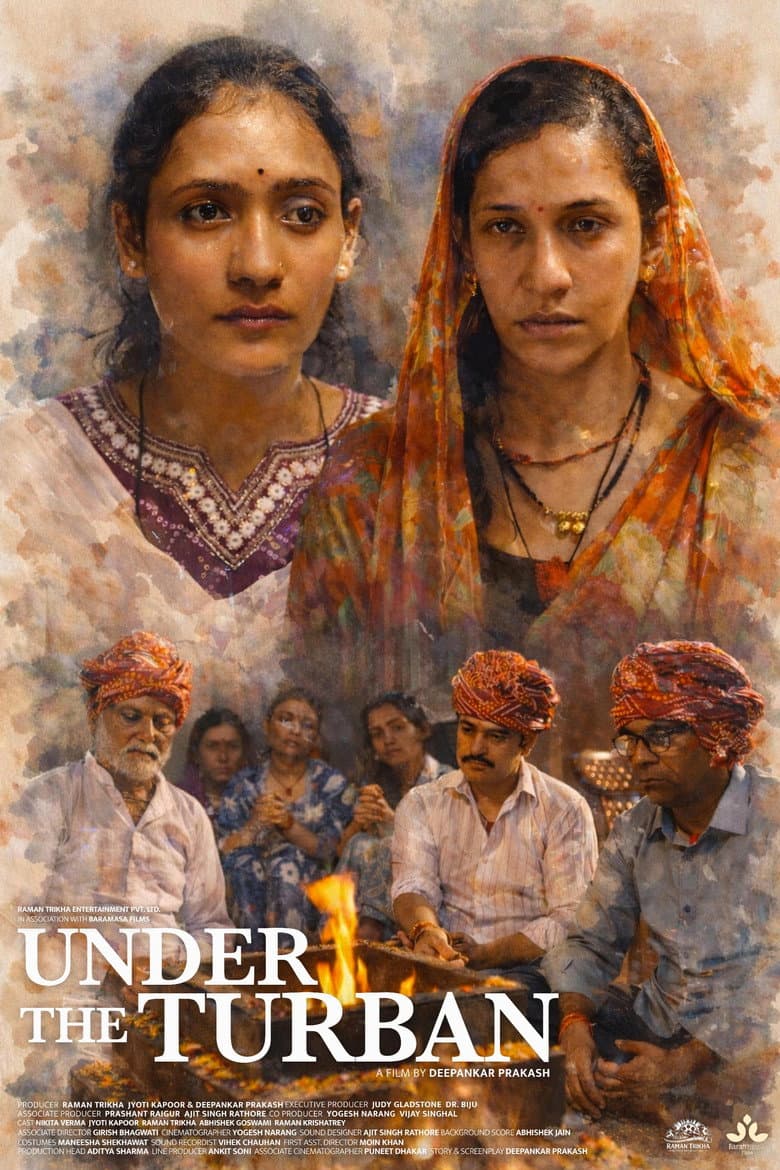
The film rests on three shoulders. Nikita Verma plays Rekha, Jyoti Kapoor plays Rashmi, and Abhishek Goswami plays Dinesh, the figure whose authority shapes the world his family inhabits. It is a lean cast, which in a chamber drama of this sort is a statement of intent: no subplots to hide behind, no star wattage to distract from the writing. Verma and Kapoor carry the emotional architecture of the piece as two women whose bond forms in the margins of a patriarchal home, while Goswami's Dinesh, by the sound of the synopsis, is the pressure that tests it.
Behind the camera, Deepankar Prakash directs - a name worth filing away. A film this contained lives or dies on directorial restraint, on the confidence to let silence do the talking, and the brief suggests Prakash is aiming for exactly that register. The film is a Hindi-language Bollywood production, and its genre designation is refreshingly plain: drama. No thriller dressing, no social-issue speechifying promised in the logline. Just a house, a hierarchy, and the people caught inside it.
Story & What to Expect
The premise is deceptively simple. In a patriarchal Rajasthani home, Rekha and Rashmi find each other - two women under the same roof, under the same rules, discovering in their shared oppression a companionship that becomes its own quiet defiance. What begins as solidarity hardens into resistance, and that resistance provokes the patriarch's harshest instincts. The synopsis is blunt about where this leads: the struggle ends in silence, leaving only the echo of unheard voices. That is not the arc of a crowd-pleaser. It is the arc of something closer to a lament.
Expect a film of interiors - courtyards, corridors, thresholds - where the real drama happens in glances rather than dialogue. The title itself is telling: a turban signifies authority and inheritance, and the film appears to examine what life looks like beneath that symbol for those who never get to wear it. The 86-minute runtime suggests a tight, unsparing narrative with little room for detours. Audiences should brace for a work of restrained craft rather than catharsis; if the ending is indeed silence, the film will be asking viewers to sit with discomfort rather than resolve it. That is a demanding ask, and a worthy one.
One practical note: the film currently carries a 0/10 rating on TMDb, which simply reflects that no user votes have been aggregated yet for an unreleased title - not a verdict on its quality. Treat any early score with the skepticism it deserves until general audiences have weighed in after December 20.
Why It's Worth Watching
First, because Hindi cinema does not make enough films like this. The Rajasthan of Under The Turban is not a tourist brochure but a pressure chamber, and stories about women's interior lives in traditional households remain underrepresented on the big screen - particularly ones that resist easy redemption. Second, because the cast is doing the heavy lifting without a safety net; Verma and Kapoor have to make a friendship legible in silences and small gestures, and that is the most difficult acting there is. Third, because Deepankar Prakash's choice to end in silence, as the synopsis promises, is an artistic gamble that signals a filmmaker more interested in truth than comfort.
But perhaps the strongest reason is scale. An 86-minute film with three actors and one setting is a reminder that cinema's most piercing observations often come from its smallest rooms. Under The Turban is not courting spectacle. It is courting attention - the kind you give when a voice you have never heard before finally speaks. On December 20, it will be worth giving.